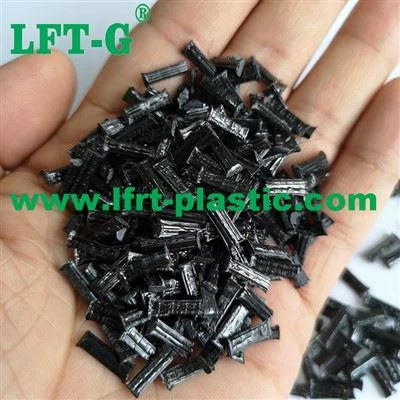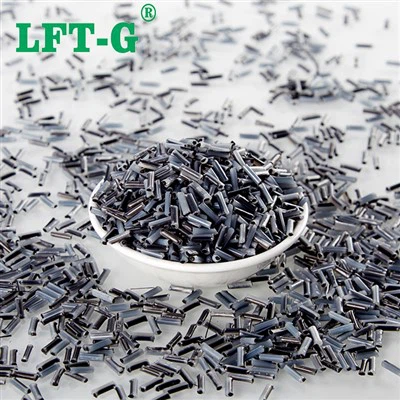


Material Overview
LFT‑G® PPS LCF40 – High‑Temperature Carbon Fiber Reinforced Polyphenylene Sulfide
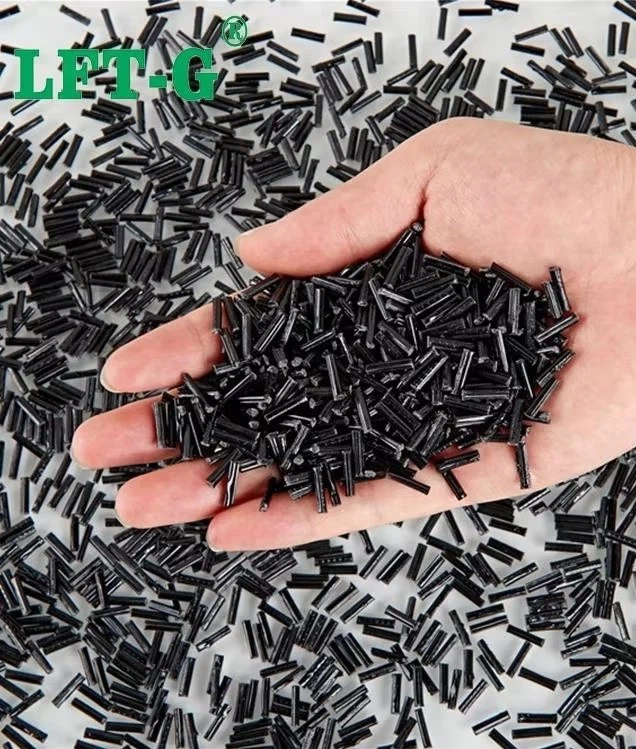

LFT‑G® PPS LCF40 is a long‑carbon‑fiber reinforced polyphenylene sulfide compound engineered for injection‑molded components operating in extreme thermal and chemical environments. The 40% continuous carbon fiber network delivers exceptional stiffness, creep resistance, and fatigue life at continuous service temperatures up to 230°C, while the PPS matrix provides inherent flame retardancy and broad chemical inertness.
The pultrusion process preserves fiber lengths exceeding several millimeters within each pellet, creating an interconnected reinforcing architecture that enables superior load transfer and crack propagation resistance. This structural efficiency translates into metal‑like rigidity at 40% lower density than steel, with design flexibility unattainable in thermosets or die‑cast alloys.
PPS LCF40 processes on conventional reciprocating‑screw injection molding equipment with minimal modifications. Near‑zero moisture absorption ensures consistent dimensional stability across varying humidity levels, while the material's inherent UL94 V‑0 rating at 0.8mm thickness eliminates secondary flame‑retardant treatments in electrical and electronic applications.
Engineering Advantages
Continuous 230°C Thermal Stability
PPS LCF40 maintains structural integrity at sustained temperatures exceeding 230°C, with short‑term excursions up to 270°C. Heat deflection temperature exceeds 260°C at 1.8 MPa, surpassing PA66 and PPA compounds by a significant margin. The carbon fiber network preserves stiffness and creep resistance even after 5,000+ hours of thermal aging.
Superior Chemical & Solvent Resistance
The PPS matrix exhibits exceptional resistance to a broad spectrum of aggressive media, including acids, alkalis, chlorinated solvents, fuels, and hydraulic fluids. Unlike polyamides, PPS LCF40 shows negligible swelling or property degradation after prolonged immersion in automotive and industrial fluids, ensuring reliable sealing and dimensional accuracy.
Ultra‑Low Moisture Sensitivity
With equilibrium moisture absorption below 0.05%, PPS LCF40 eliminates the dimensional shifts, property degradation, and blistering risks associated with hygroscopic thermoplastics. Parts maintain tight tolerances in high‑humidity environments, steam sterilization cycles, and underwater applications without pre‑conditioning.
Inherent Flame Retardancy & Low Smoke
PPS LCF40 achieves UL94 V‑0 rating at 0.8mm thickness without halogenated additives. Low smoke generation and self‑extinguishing behavior meet stringent aerospace, railway, and electrical enclosure requirements, eliminating the need for secondary flame‑retardant treatments and reducing system cost.
Performance Benchmark
LFT‑G® PPS LCF40 vs. PPS CF40
Each metric demonstrates the structural advantage of continuous carbon fiber reinforcement over conventional short‑fiber compounds in high‑temperature environments.
Long carbon fiber reinforcement fundamentally changes the performance envelope of PPS. Compared to short‑fiber PPS CF40, LFT‑G® PPS LCF40 delivers superior stiffness retention at temperature, dramatically lower creep, enhanced thermal conductivity, and extended fatigue life. The continuous fiber network enables stress transfer, crack bridging, and structural integrity that short fibers cannot provide - making this compound the preferred choice for high‑temperature, high‑load structural applications.
Industry Applications
LFT‑G® PPS LCF40 – Primary Application Sectors

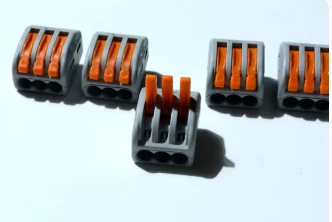

PPS LCF40 addresses the most demanding engineering challenges where temperatures exceed 200°C, chemical exposure is continuous, and structural reliability cannot be compromised. The compound enables metal replacement with significant weight reduction and design consolidation.
Automotive Thermal & Powertrain Systems
Turbocharger components, EGR valve bodies, thermostat housings, transmission oil pump covers, and high‑temperature sensor enclosures. PPS LCF40 withstands 200°C+ under‑hood temperatures, resists aggressive automotive fluids, and reduces weight compared to aluminum and stainless steel.
EV & Industrial Electronic Assemblies
Ideal for compact high-power electrical parts with strict safety requirements. It manufactures EV high-voltage connector shells, coil bobbins, heavy relay bases, LED heat sinks, and motor end caps. With UL94 V-0 flammability rating and CTI over 600V, balanced thermal conductivity prevents overheating for dense power electronic systems.
Industrial Chemical & Fluid Transfer Gear
Perfect for long-term use in corrosive fluid processing environments. Applicable to pump impeller rotors, compressor valve cores, precision flowmeter housings and industrial filter enclosures. It resists acids, alkalis, chlorinated solvents and hot steam, guaranteeing long service life in harsh chemical production workshops.
FAQ
Q: Why choose PPS LCF40 over PPS CF40 for high‑temperature structural parts?
A: Long carbon fibers create a continuous reinforcing network that dramatically improves creep resistance, stiffness retention at temperature, and fatigue endurance. PPS LCF40 retains over 78% of its flexural modulus at 200°C versus approximately 35% for short‑fiber PPS CF40, with creep strain reduced by more than 5× and fatigue life extended by 4×. This translates into thinner walls, lighter parts, and longer service life in high‑load applications.
Q: Can PPS LCF40 replace stainless steel or aluminum in fluid handling systems?
A: Absolutely. PPS LCF40 offers excellent corrosion resistance to a wide range of aggressive chemicals and eliminates the galvanic corrosion risks associated with metal components. It is approximately 40% lighter than aluminum and 70% lighter than steel, significantly reducing system weight. The material's inherent creep resistance ensures leak‑tight sealing over long service intervals, and injection molding enables design consolidation and cost reduction versus machined metal parts.
Q: What processing parameters are recommended for PPS LCF40?
A: PPS LCF40 processes on standard injection molding equipment with proper wear‑resistant components. Recommended melt temperature is 320‑350°C, mold temperature 140‑180°C, and pre‑drying at 150°C for 3‑4 hours to achieve moisture content below 0.05%. The material exhibits low, isotropic shrinkage and minimal warpage. A metering screw with 18:1‑22:1 L/D ratio and free‑flow check valve minimizes fiber breakage. Steel molds with corrosion‑resistant coatings are recommended for extended production runs.

Contact: Emily
Email: sale04@lfrtplastic.com
WhatsApp / Mobile: +86 188 5034 4811
Hot Tags: heat‑resistant pps lcf40 replaces metal | lft‑g, China, manufacturers, suppliers, factory, buy, customized