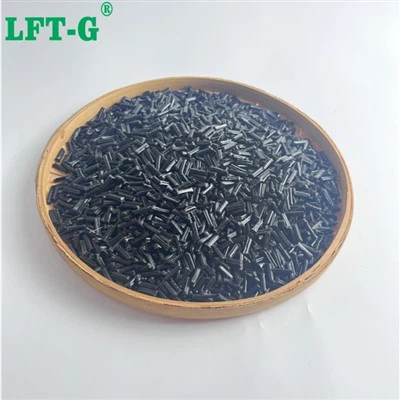


LFT‑G® PPS LCF40 – High‑Temperature Carbon Fiber Composite

Engineered as a 40% long carbon fiber reinforced polyphenylene sulfide compound, LFT‑G® PPS LCF40 is tailored for extreme thermal and chemical operating environments. Its continuous carbon fiber network brings outstanding stiffness, creep resistance and dimensional stability under continuous service temperatures reaching 230°C, while the base PPS matrix features built‑in UL94 V‑0 flame retardancy and wide‑ranging chemical inertness. This high‑grade composite suits component manufacturing scenarios requiring metal‑level rigidity, long‑term reliability under persistent heat exposure, and tolerance to harsh fluids, covering automotive, aerospace and general industrial end uses.
Key Performance Attributes of LFT‑G® PPS LCF40:
- Continuous 230°C Thermal Stability & 260°C+ HDT
- Superior Chemical Resistance to Acids, Alkalis & Solvents
- Inherent UL94 V‑0 Flame Retardancy at 0.8mm
- Ultra‑Low Moisture Absorption for Dimensional Precision
- Exceptional Creep & Fatigue Resistance Under High Loads
- Lightweight Alternative to Stainless Steel & Aluminum Alloys
Material Comparison Analysis
LFT‑G® PPS LCF40 vs. Conventional Engineering Materials 
Performance Comparison at a Glance
Stiffness Retention @ 200°C
Weight vs. Stainless Steel
Creep Resistance
Conclusion: LFT‑G® PPS LCF40 delivers superior stiffness retention at elevated temperatures, outstanding chemical resistance, and inherent flame retardancy – making it the optimal choice for demanding high‑temperature structural applications.
Processing Guidelines – Injection Molding
LFT‑G® PPS LCF40 processes on standard reciprocating‑screw injection molding machines equipped with wear‑resistant components. Maintaining proper melt temperature and mold conditions is critical to achieving optimum mechanical properties and dimensional stability.

Pre‑Drying
3–4 hrs @ 150°C
Moisture < 0.05% (desiccant dryer required)
Melt Temperature
320–350°C
Measured in barrel
Mold Temperature
140–180°C
Measured, not set (critical for crystallization)
Injection Pressure
80–150 MPa
Free‑flow check valve required
Screw L/D Ratio
18:1 – 22:1
Metering type, low‑compression
Purge & Shutdown
Purge with PE or PP
Do not leave carbon‑filled melt in barrel
Processing Notes: Use a large open nozzle and free‑flow check valve to minimize carbon fiber breakage. PPS requires high mold temperatures (140‑180°C) to achieve proper crystallization and dimensional stability. Avoid residence times exceeding 5 minutes at melt temperature to prevent crosslinking. Steel molds with corrosion‑resistant coatings are recommended for extended production runs.
Industrial Applications
LFT‑G® PPS LCF40 is engineered for applications where sustained heat exceeds 200°C, chemical exposure is continuous, and structural reliability is mission‑critical. This compound enables metal replacement with significant weight reduction, design consolidation, and elimination of secondary operations.

Automotive Powertrain & Thermal Management
Turbocharger components, EGR valve bodies, thermostat housings, transmission oil pump covers, and high‑temperature sensor enclosures. PPS LCF40 withstands 200°C+ under‑hood temperatures, resists aggressive automotive fluids, and reduces weight compared to aluminum and stainless steel.

Chemical Processing & Fluid Handling
Pump impellers, compressor valve plates, flow meter bodies, and chemical filtration housings. Unmatched resistance to acids, alkalis, chlorinated solvents, and high‑temperature water/steam ensures long service life in aggressive chemical environments.

Electrical & Electronic Enclosures
High‑voltage connector housings, bobbins, relay bases, LED lighting heat sinks, and motor end caps. Inherent V‑0 flame retardancy, CTI > 600V, and enhanced thermal conductivity make PPS LCF40 ideal for compact, high‑power electronic assemblies.

Aerospace & Industrial Structural Components
Brackets, actuator housings, landing gear components, and structural frames. High specific stiffness, low moisture sensitivity, and resistance to aviation fluids (Skydrol, jet fuel) enable significant weight savings without compromising structural integrity.
FAQ
Q: Why choose PPS LCF40 over PPS CF40 for high‑temperature structural parts?
A: Long carbon fibers create a continuous reinforcing network that dramatically improves creep resistance, stiffness retention at temperature, and fatigue endurance. PPS LCF40 retains over 78% of its flexural modulus at 200°C versus approximately 35% for short‑fiber PPS CF40, with creep strain reduced by more than 5× and fatigue life extended by 4×. This translates into thinner walls, lighter parts, and longer service life in high‑load applications.
Q: Can PPS LCF40 replace stainless steel or aluminum in fluid handling systems?
A: Absolutely. PPS LCF40 offers excellent corrosion resistance to a wide range of aggressive chemicals and eliminates the galvanic corrosion risks associated with metal components. It is approximately 40% lighter than aluminum and 80% lighter than steel, significantly reducing system weight. The material's inherent creep resistance ensures leak‑tight sealing over long service intervals, and injection molding enables design consolidation and cost reduction versus machined metal parts.
Q: What are the key processing considerations for PPS LCF40?
A: PPS LCF40 requires pre‑drying at 150°C for 3‑4 hours to achieve moisture content below 0.05%. Recommended melt temperature is 320‑350°C, with mold temperature at 140‑180°C to ensure proper crystallization. A metering screw with 18:1‑22:1 L/D ratio and free‑flow check valve minimizes fiber breakage. Steel molds with corrosion‑resistant coatings are recommended for extended production runs.

Contact: Emily
Email: sale04@lfrtplastic.com
WhatsApp / Mobile: +86 188 5034 4811
Hot Tags: heat‑ready pps composite – v‑0 rated | lft‑g, China, manufacturers, suppliers, factory, buy, customized