

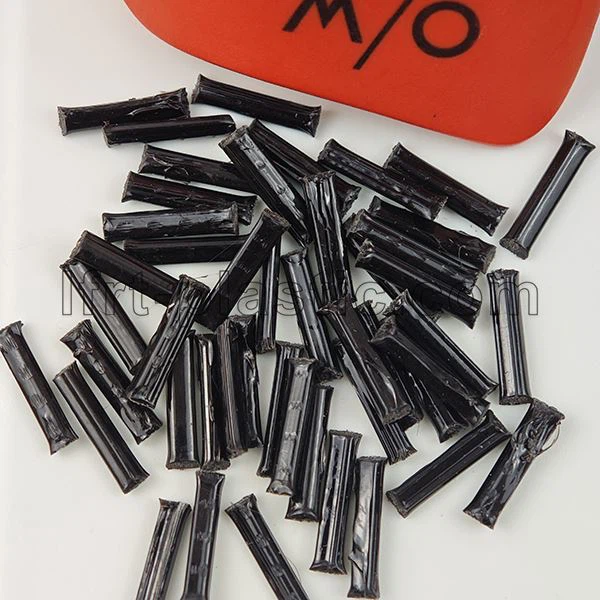
Long Carbon Fiber PPA Compound Resin
The LCF PPA composite material, namely long carbon fiber reinforced polyphthalamide, is a high-performance thermoplastic composite material. Due to its outstanding mechanical properties, thermal properties and chemical stability, it has shown broad application prospects in various industrial fields. By uniformly dispersing long carbon fibers into the PPA resin matrix, its performance has been significantly enhanced, making it an ideal substitute for traditional engineering plastics and metal materials.
Material Composition and Synergy Effect
The superiority of LCF PPA composite material stems from its unique material composition and the synergistic effect between the two.
Polyphthphalamide (PPA):
As a matrix resin, PPA is a semi-aromatic polyamide with aromatic rings in its molecular chain, which endows it with excellent high-temperature resistance, chemical resistance, and dimensional stability. However, the PPA resin alone still has room for improvement in terms of stiffness and strength, especially when subjected to high loads and impacts.

Long Carbon Fiber (LCF):
As a reinforcing material, carbon fiber is renowned for its extremely high strength, stiffness, and extremely low density. Unlike short-cut carbon fibers, long carbon fibers can maintain their relatively long lengths during injection molding and form an interwoven "framework" structure within the product. This unique structure effectively transfers external loads from the fragile resin matrix to the tough fibers, thereby significantly enhancing the mechanical properties of the composite material.
The combination of the two has achieved a "1+1>2" synergy effect. The PPA resin provides exceptional wetting and bonding for the carbon fibers, ensuring the effective transmission of loads; while the long carbon fibers, like countless tiny "reinforcing bars", significantly enhance the strength and stiffness of PPA, while also reducing the thermal expansion coefficient, enabling the material to maintain high precision even when subjected to temperature changes.
What is LCF PPA Good For?
Mechanical properties
High strength and high stiffness: This skeletal structure can effectively disperse and transfer external loads, enabling it to possess extremely high tensile strength, bending strength and bending modulus.
Excellent impact resistance: Unlike short-cut fiber reinforced materials, the interwoven network of long fibers can absorb more impact energy, giving it outstanding impact toughness and effectively preventing components from undergoing brittle fractures when subjected to sudden impacts.
Fatigue resistance: Under repetitive loading and unloading conditions, the splendid mechanical properties of LCF PPA composite materials enable it to maintain the integrity of the structure and extend the service life of the components.

Thermal Properties
High Heat Distortion Temperature (HDT): The introduction of carbon fibers significantly enhances the heat distortion temperature of the material. This means it can maintain its shape and size stability at higher temperatures.
Low Thermal Expansion Coefficient: The thermal expansion coefficient of carbon fibers itself is very small, which causes the thermal expansion coefficient of the composite material to also decrease. This ensures that components can still maintain high dimensional stability during temperature changes, which is crucial for parts requiring high precision alignment.
Lightweighting
Low density: The density of carbon fiber is low. Replacing metal components with LCF PPA material can significantly reduce the total weight of the product.
Chemical resistance and corrosion resistance
Extensive chemical resistance: It can withstand a wide range of corrosive fluids, such as fuel, lubricating oil, coolant, and brake fluid, and remains stable even under high-temperature conditions.
Corrosion resistance: Unlike metal materials, LCF PPA composite does not rust or corrode, significantly extending the service life of components and reducing maintenance costs.
What is LCF PPA Plastic Pellet Used For?
Automobile industry
Engine peripheral components: intake manifold, thermostat housing, water pump impeller and oil pan, etc.
Transmission system and chassis components: transmission bracket, clutch selector fork and structural components, etc.
Fluid pipelines and connectors: fuel pipeline, cooling pipeline connector.
Aerospace industry
Aircraft interior components: seat structure parts, luggage racks and floor panels. Unmanned aerial vehicle components: The fuselage and wings of the unmanned aerial vehicle.

Industrial and mechanical equipment
Pump and valve components: Pump body and valve inner liner.
Structural components and supports: Used for manufacturing mechanical parts that need to withstand high loads.
Sports and Consumer Goods
Golf clubs and heads: Utilizing their high strength, light weight and excellent vibration absorption properties, to enhance athletic performance.
Bicycle components: Frame, pedals and transmission parts Tool handle and casing: The robustness and durability of LCF PPA make it an ideal material for manufacturing high-quality hand grips for power tools and gardening equipment.
FAQ
Q: Why choose LCF PPA composite instead of metals?
A: The main advantages of LCF PPA compound resin are its lightweight nature and cost-effectiveness. Its density is much lower than that of metals, which can significantly reduce the weight of components. Moreover, the injection molding process is more efficient than metal processing, eliminating the need for secondary processing and thus reducing manufacturing costs.
Q: Can the LCF PPA composite material be recycled?
A: Theoretically, as a thermoplastic material, LCF PPA polymer is recyclable. However, the actual recycling process faces challenges, mainly in how to separate the carbon fibers from the resin matrix and ensure the performance of the recycled materials.
Q: What is the processing method of LCF PPA material?
A: The most common processing method for LCF PPA plastic pellet is injection molding. It has good fluidity and can efficiently produce components with complex shapes.
Hot Tags: cf ppa compound resin, China, manufacturers, suppliers, factory, buy, customized


