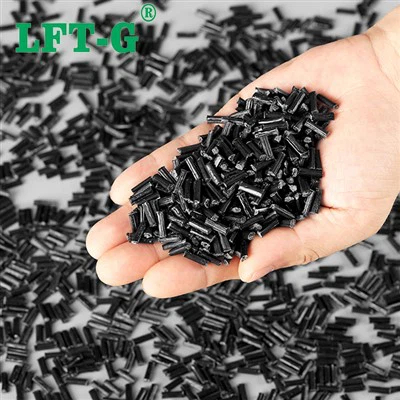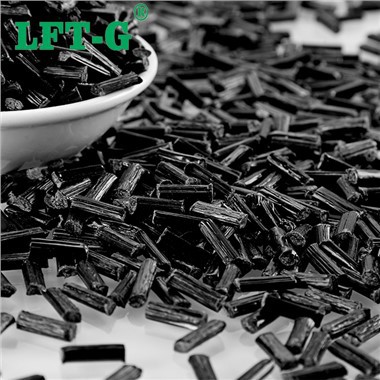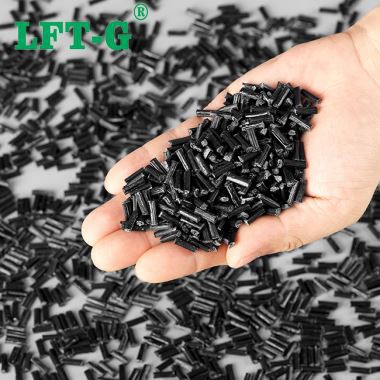


LCF PP Long Carbon Fiber Polypropylene Material
Long carbon fiber reinforced polypropylene composites is a high-performance fiber-reinforced thermoplastic composite material, which is composed of polypropylene (PP) as the matrix material and long carbon fibers (typically with a length of 5mm to 25mm) as the reinforcing material, and is compounded through a special process.
Compared with short carbon fiber reinforced PP (fiber length <1mm) compound resin, long carbon fibers can transfer loads more effectively, significantly improving the mechanical properties, impact resistance and fatigue resistance of the material, while maintaining the lightweight, corrosion resistance and easy-to-process characteristics of PP material.
Relatively speaking, when considering its service life, using this material to make products has the advantage of low cost.

Key Performance Advantages
High strength & high rigidity: The reinforcing effect of long carbon fibers is more significant than that of short fibers, with tensile strength and flexural modulus greatly enhanced.
Lightweight: Low density (about 1.0-1.3g/cm³), lighter than metals, suitable for weight reduction applications.
Enhanced heat resistance: The heat deflection temperature (HDT) can reach above 150°C.
Dimensional stability: Low coefficient of thermal expansion, not prone to deformation.
Good fatigue resistance: Long fibers can more effectively disperse stress and extend service life.
Conductive/antistatic: Carbon fiber can provide a certain degree of conductivity, reducing the accumulation of static electricity.
Comparison with SCF PP Composites
Long carbon fiber PP materials have more outstanding overall performance compared to short glass fiber PP materials.
The reinforcing effect of long carbon fibers enables the material to maintain its lightweight characteristics while demonstrating higher strength and rigidity, and its impact resistance and fatigue resistance are also more prominent. Unlike the homogeneous reinforcing effect of short carbon fibers, long carbon fibers form a more effective three-dimensional network structure in the matrix, enabling the material to better disperse stress when subjected to force.
In addition, long carbon fiber PP materials also has a lower coefficient of thermal expansion and better dimensional stability, and performs more reliably in environments with temperature changes. The unique electrical conductivity of carbon fiber also endows the material with anti-static and electromagnetic shielding functions that short glass fiber PP pellets does not possess, making its application range more extensive.
Application Field of LCF PP Material
Long carbon fiber PP material, as a high-performance composite material, is being applied on a large scale in multiple industrial fields due to its excellent strength-to-weight ratio, outstanding fatigue resistance and unique functional properties, and is continuously expanding into new application scenarios.
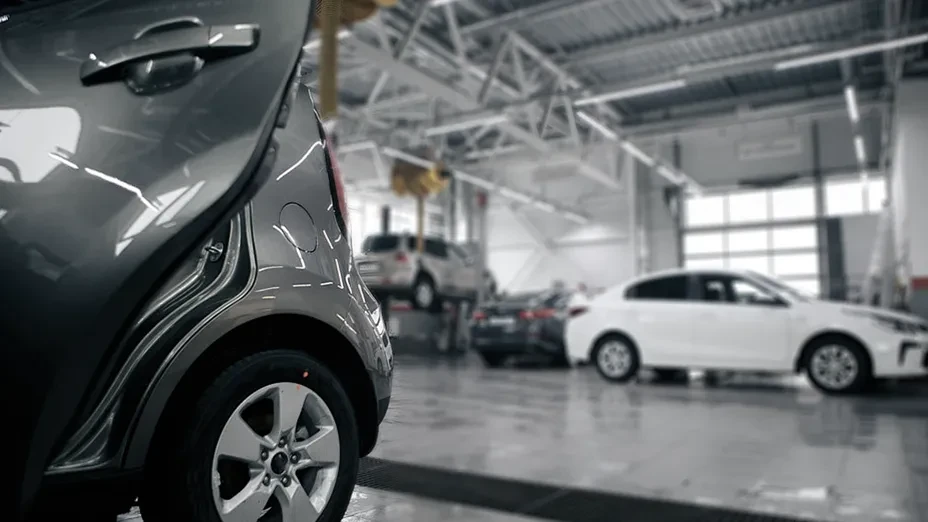
Automotive parts
Traditional automobiles: structural support components, interior frames, collision energy-absorbing parts
New energy vehicles: battery pack housing, motor bracket, charging interface assembly
It is lighter than components made of metal, corrosion-resistant and in line with the trend of light weighting.
Sports equipment
Professional equipment: bicycle racks, snow gear, water sports equipment
Outdoor products: mountaineering equipment, camping gear.
Electronic and electrical components
Communication equipment: 5G base station components, antenna covers
Consumer electronics: Structural components for high-end electronic products, frames for wearable devices
Home appliances: High-demand structural components, washing machine drums
Industrial equipment
Automation equipment: Robotic arms, key components of conveying systems
Precision instruments: High-stability structural frame
Tools and equipment: Professional-grade tool housing, industrial fan blades

These application fields jointly demonstrate the unique advantages of long carbon fiber PP materials in scenarios where comprehensive performance requirements such as lightweight, high strength, and corrosion resistance are needed. With the decline in material costs and the advancement of processing techniques, its application scope is expanding from high-end fields to a wider range of industrial applications.
Conclusion
Long carbon fiber PP material, as a high-performance thermoplastic composite material, significantly enhances the comprehensive performance of the polypropylene matrix through long carbon fiber reinforcement. It achieves excellent mechanical strength, heat resistance and functional integration while maintaining lightweight characteristics. This material can meet the strict requirements for material performance in fields such as automobiles, electronics, and medical care. However, its development still faces challenges such as anisotropy of fiber orientation, degradation of recycling performance and relatively high cost. In the future, breakthroughs need to be made in fiber processing, molding technology and recycling systems through technological innovation and industrial chain collaboration, in order to further expand its application prospects in high-end manufacturing fields. With technological progress and economies of scale, long carbon fiber PP is expected to play a more significant role in strategic emerging industries such as new energy vehicles and become a key material to replace traditional metals and engineering plastics.
FAQ
Q: What are the core differences between long carbon fiber PP and short carbon fiber PP?
A: Long carbon fibers have high tensile strength and better impact resistance because long fibers can effectively transfer stress and form a three-dimensional network.
Q: How stable is the performance of long carbon fiber PP in high-temperature environments?
A: Long carbon fiber PP has stable performance at high temperatures, and its heat distortion temperature can reach 150 degrees.
Q: What challenges does the recycling and reuse of long carbon fiber PP face?
A: Performance degradation, process limitations, and poor economy.
The materials of LFT-G® are diverse, including various contents and types. If you want to know more about this material, you can contact our material experts, who can provide you with more specific data. Click below,
LFT-G® LCF PP Materials
This document provides technical data on long carbon fiber reinforced pp materials (taking LFT-PP-BC04 as an example), specifically designed for the special requirements of high-performance structural components. This high-strength grade of production offers outstanding mechanical properties, maintaining a certain degree of durability under both high-intensity impacts and harsh temperatures.
Please refer to the specific data sheet you need to obtain the accurate LFT material value.
Mechanical PropertiesProperty |
Value |
Unit |
Test Standard |
|---|---|---|---|
| Tensile Strength | 105-125 | MPA | ISO 527 |
| Tensile Modulus | 16000-17000 | MPA | ISO 527 |
| Elongation at Break | 0.5-1.5 | % | ISO 527 |
| Flexural Strength | 125-145 | MPA | ISO 178 |
| Flexural Modulus | 12000-13000 | MPA | ISO 178 |
| Notched Izod Impact Strength | 45-55 | kJ/m² |
ISO 180
|
Other PropertiesProperty |
Value |
Unit |
Test Standard |
|---|---|---|---|
|
Specific Gravity
|
1.0-1.2 |
g/cm³
|
ASTM D-792
|
|
Molding Shrinkage
|
0.1-0.5 |
%
|
ASTM D-955
|
|
Deflection Temperature
(1.8MPa)
|
210-250 |
°C
|
ISO 75-2
|
|
Melt Temperature
|
35-70 |
°C
|
|
|
Mold temperature
|
6000-8000 |
°C
|
The pp material of LFT-G® contains various contents, and there are different corresponding materials according to different requirements. For detailed information about LCF40 PP material, you can download and view it through the link below.
Hot Tags: LCF PP Carbon Fiber Pellet, China, manufacturers, suppliers, factory, buy, customized