


High Toughness CF Carbon Fiber PP Polymer
LCF PP material stands for Long Carbon Fiber reinforced Polypropylene.
LCF PP (Long Carbon Fiber Reinforced Polypropylene) is a significant branch within the field of high-performance thermoplastic composites (LFRT - Long Fiber Reinforced Thermoplastics). It is a composite material made from polypropylene (PP) resin, with continuous carbon fibers (Carbon Fiber, CF) of a length greater than 5 millimeters serving as the reinforcing framework. It is produced through specific processes such as pultrusion impregnation. The emergence of this material does not merely involve mixing the two materials; rather, through the "long fiber" technology, its performance has been significantly enhanced, making it an ideal choice for lightweight and high-strength structural applications. It plays a crucial role in the process of "replacing steel with plastic" as well.
The core of LCF PP: Long Fiber Reinforcement
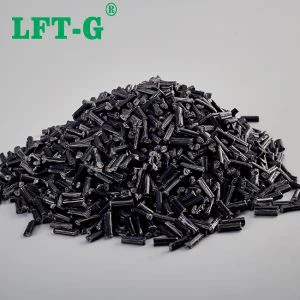
The significant performance differences between LCF PP composite and traditional short fiber reinforced PP (SCF) stem from its unique microstructure.
Short fibers (SCF): The fiber length is usually less than 1 millimeter and is dispersed in the matrix during injection molding, mainly serving as a filler and providing a slight reinforcement effect, but unable to form an effective stress transfer network.
Long fibers (LCF): The fiber length is consistent with the final particle length (such as 12 mm or 25 mm). During injection molding, these long fibers will intertwine and overlap with each other, creating a three-dimensional, continuous "fiber skeletal network" within the component.
When the components are subjected to external force impacts or loads, this skeletal network can effectively transfer and distribute the stress, preventing the stress from concentrating at a single point and causing material failure. The matrix resin (PP) is responsible for encapsulating the fibers, shaping them, and providing chemical protection.
The key performance advantages of LCF PP Material
The introduction of long carbon fibers has fundamentally improved the performance shortcomings of the PP matrix, enabling it to possess characteristics comparable to those of engineering plastics and even metals.
1. Outstanding mechanical properties
High specific strength and high specific modulus: This is the most significant advantage of LCF PP. Carbon fibers themselves have extremely high strength and modulus, far exceeding those of glass fibers. Compared to metals, LCF PP has an extremely low density, allowing the weight of components to be significantly reduced while maintaining the same rigidity or strength.
Excellent impact resistance: When subjected to high-speed impacts, the long fiber network absorbs energy through the mechanism of the fibers. This means that the fibers will detach from the matrix before breaking, and this process consumes a large amount of impact energy, making the material exhibit extremely high toughness, especially in low-temperature environments where standard PP performs poorly.
Outstanding creep resistance: Creep refers to the slow plastic deformation of materials under continuous stress (especially at high temperatures). The fiber framework inside LCF PP can effectively resist deformation under such long-term loads, making it suitable for structural components that require maintaining dimensional accuracy over a long period, such as supports and frames.
2. Optimized thermal performance
High heat distortion temperature (HDT): The HDT of LCF PP is significantly higher than that of unmodified PP and LGF PP. This indicates that it can maintain its structural rigidity at higher temperatures (such as in the engine compartment of a vehicle), thereby expanding its application scope.
Extremely low linear thermal expansion coefficient (CLTE): This is a key engineering characteristic of LCF PP. Its CLTE is very low and is close to that of metals.
Dimensional stability: Under extreme temperature changes (such as cold and hot cycles), the warpage deformation of the components is minimal, ensuring the assembly accuracy.
3. Retain the inherent advantages of the PP matrix
Outstanding chemical resistance: LCF PP inherits the excellent resistance of the PP matrix to various chemicals, acids, bases, salts, and common automotive fluids.
Low water absorption: PP is a non-polar material with extremely low water absorption. This makes LCF PP components exhibit significantly better mechanical properties and dimensional stability in humid environments compared to nylon (PA)-based composite materials.
CF PP: Typical Application Fields
The LCF PP plastic pellet, with its lightweight, high-strength and conductive properties, is rapidly replacing metals and other engineering plastics in multiple high-end manufacturing fields:
Automotive Industry:
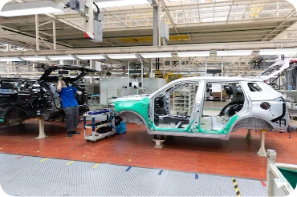
Structural Components: Dashboard (IP) frame, front module (FEM) bracket, battery (especially EV battery pack) tray and guard plate, seat frame, car tailgate (lift gate) inner panel, pedal assembly.
Engine Surroundings: Fan blades and frame (fan ring), engine hood cover.
Functional Components: Conductive fuel system components, ECU (Electronic Control Unit) housing requiring EMI shielding.
Industry and Machinery:
Fluid Handling: Used as an alternative to stainless steel or cast iron to manufacture the pump bodies, impellers, valves, etc. of chemical pumps (taking advantage of its chemical resistance and strength).
Automation/Robotics: Mechanical arm components, lightweight gears (taking advantage of its light weight and high rigidity).
Exercise and Leisure: Products such as drone frames, bicycle components, and kayak blades have extremely strict requirements for weight and rigidity.
Electronics and consumer goods:
Electronic enclosures: The cases or internal supports for servers and communication equipment.
High-end tools: Lightweight and high-strength enclosures for professional-grade power tools.
LCF PP (Long Carbon Fiber Reinforced Polypropylene) is a high-performance composite material. Through the long fiber skeleton network technology, it successfully combines the low cost and chemical resistance of the PP matrix with the extreme light weighting, high rigidity, high strength and conductivity of carbon fibers. It is not only an upgraded version of LGF PP plastic pellet, but also an ideal solution for many applications that require conductivity, shielding, or extreme light weighting, replacing die-cast metals. Understanding the importance of maintaining the fiber length during processing is the key to fully realizing its potential.
FAQ
Q: Why is it necessary to emphasize "low shear" in LCF PP injection molding?
A: The key is to maintain the fiber length. High shear (such as high back pressure, small gate) will cause the long fibers to break, resulting in a sharp decline in the impact toughness and rigidity properties of the material. In the process, special screws, large flow channels, and extremely low back pressure need to be used.
Q: Which one, LCF PP or LGF PP, causes more severe wear on the mold?
A: The wear resistance of LGF PP composite is much higher than that of LCF PP material. The reason is that the Mohs hardness of glass fibers is extremely high. LCF is more friendly to molds and wear parts.
Q: Are the mechanical properties of the LCF PP components isotropic?
A: No, it has significant anisotropy. The fibers will align along the direction of the melt flow.
Hot Tags: high toughness cf pp polymer, China, manufacturers, suppliers, factory, buy, customized


