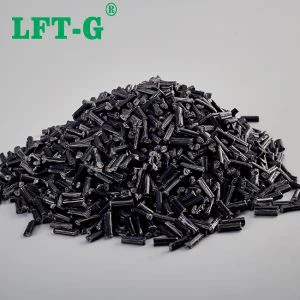
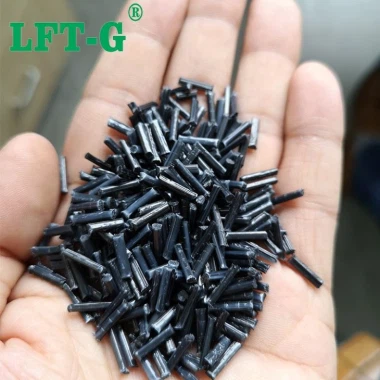
LFT-G® PA6 LCF50 50% Long Carbon Fiber Nylon 6 Compound
LFT-G® PA6 CF50 (Model: LFT-G® PA6 LCF50-BC05B) marks the absolute apex of structural thermoplastic compounding. By utilizing proprietary continuous pultrusion technology to perfectly cross-link a highly crystalline nylon 6 matrix with 50% high-modulus long carbon fibers, this engineered composite unlocks an extraordinary tensile modulus surpassing 34,000 MPa. It serves as a definitive metal replacement solution for ultra-high-load industrial setups.
Standard chopped PA6 CF50 alternatives suffer from severe internal fiber shearing, leaving short fiber fragments that act as stress concentration faults. Conversely, our premium long carbon fiber masterbatch preserves a continuous 3D internal mesh. This long-strand network spreads dynamic impact vectors across the entire component, providing immense dimensional accuracy, low density, and unparalleled fatigue life in severe operation spaces.
The Titanium Frontier: Standard PA6 CF50 vs. LFT-G® PA6 LCF50
Engineers source standard PA6 CF50 but frequently face brittle fracture limitations. See how upgrading to our continuous long carbon fiber network redefines mechanical performance boundaries.
Standard PA6 CF50 (Short Carbon Fiber Engineering Baseline)
❌ Discontinuous Reinforcement:
- Short chopped fiber fragments create severe stress convergence lines.
- High risk of sudden, brittle failure under high dynamic torque load.
- Marked differential shrinkage causing severe component warping.
- Structural Reliability: RISK-PRONE
LFT-G® PA6 LCF50-BC05B (Continuous Long Carbon Fiber Framework)
✅ Overlapping 3D Carbon Core:
- Continuous structural filaments dissipate external kinetic stress flawlessly.
- Delivers a 260% increase in localized high-impact energy retention.
- Perfectly balanced isotropic cooling eliminates assembly distortions.
- Structural Reliability: UNRIVALED
Typical Material Properties (LFT-G® PA6 LCF50-BC05B)
The engineering parameters below represent verified typical values for LFT-G® PA6 LCF50 in Dry-As-Molded (DAM) state. Reach out to our global technical office to request signed official Technical Data Sheets (TDS).
Processing parameters for molding LFT-G® PA6 LCF50. To protect the dense 50% carbon fiber nylon skeletal array from excessive mechanical shearing and premature strand fracture, maintain back pressure strictly under 50 psi and use low-compression screws.
Parameter
Recommendation
Drying Temperature
85 - 105 °C
Drying Time
4 - 6 hours (Desiccant air system required)
Rear / Feed Zone (Zone ①)
270 - 290 °C
Center / Melt Zone (Zone ②)
285 - 300 °C
Front / Nozzle Temp (Zone ③)
290 - 305 °C
Mold Temperature
95 - 125 °C
Multi-Industry Application Cases
Aerospace Deep-Space Telemetry Frameworks
Aerospace structural grids require absolute rigid performance and ultra-low coefficient of thermal expansion (CTE). LFT-G® PA6 LCF50 effortlessly swaps out specialized titanium sub-assemblies, providing equivalent structural stability and huge light-weight efficiency.
Heavy-Load Automation Exoskeleton Links
Optimized for high-stress defense robotics and advanced multi-joint robotic arms. The concentrated 50% long carbon fiber orientation creates superior torque handling capacity, preserving strict micrometer execution paths across extended lifecycles.
Wind Energy Generator Internal Housings
Next-generation nacelle components require non-corrosive alternatives to heavy cast iron blocks. LFT-G® PA6 LCF50 delivers massive modulus protection and absolute resistance to dynamic fatigue, lowering operational vibration wear significantly.
Frequently Asked Questions (FAQ)
Q: What mechanical advantage does PA6 LCF50 provide over standard PA6 CF50 compounds?
A: The critical difference lies in structural continuity. Standard short-fiber PA6 CF50 contains broken, microscopic fiber filaments that easily detach under heavy loading. LFT-G® PA6 LCF50 utilizes a continuous 3D overlapping carbon matrix, which elevates impact performance by 260% and maintains an incredible 33,500 MPa tensile modulus.
Q: Is 50% long carbon fiber nylon concentration difficult to run during injection molding?
A: While standard viscosity increases with 50% fiber volumes, it molds smoothly by adjusting minor setup configurations. We strongly suggest reducing back pressure below 50 psi and using low-compression screws. This safeguards the long carbon fiber array, allowing full delivery of the rated 33,500 MPa rigidity metrics.
Q: Can LFT-G® PA6 LCF50 effectively substitute for machined structural Steel or Titanium?
A: Yes. Boasting an engineered tensile modulus of 33,500 MPa, LFT-G® PA6 LCF50-BC05B provides specific strength characteristics that rival structural metals. It completely bypasses tedious CNC milling procedures and anti-corrosion codings, while slashing heavy component assembly weight by up to 65%.
Erase the severe weight and manufacturing constraints of high-load die castings. Reach out directly to the LFT-G® engineering branch for premium material evaluations and structural optimization insight.


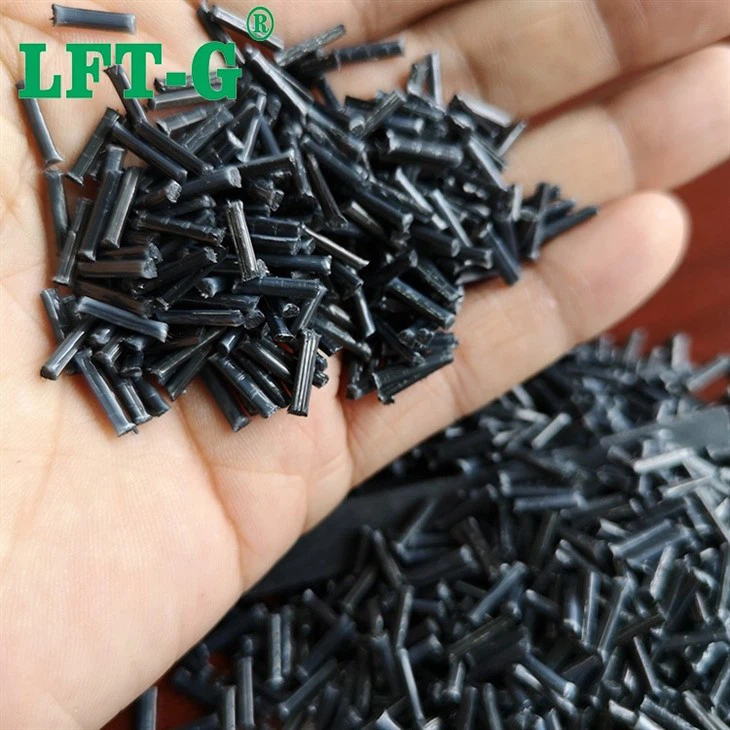


 LFT-G® PA6 CF50 (Model: LFT-G® PA6 LCF50-BC05B) marks the absolute apex of structural thermoplastic compounding. By utilizing proprietary continuous pultrusion technology to perfectly cross-link a highly crystalline nylon 6 matrix with 50% high-modulus long carbon fibers, this engineered composite unlocks an extraordinary tensile modulus surpassing 34,000 MPa. It serves as a definitive metal replacement solution for ultra-high-load industrial setups.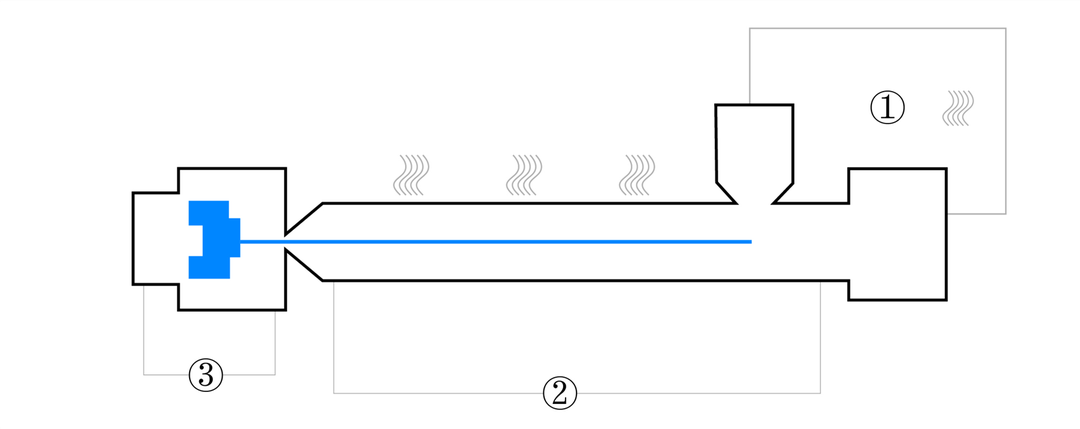


 Unleash Absolute Structural Modulus Capabilities Today