
Global Long Fiber Thermoplastics Market Forecast 2026–2031: Uncovering Core Growth Drivers
The long-fiber thermoplastics (LFT) market is entering a decisive growth phase. According to MarketsandMarkets, the market is projected to reach USD 4.06 billion by 2031, up from USD 2.86 billion in 2026, reflecting a compound annual growth rate (CAGR) of 7.2% over the forecast period. Glass-fiber-reinforced thermoplastics continue to dominate due to their balanced strength, stiffness, and impact resistance at a competitive cost, but the real story lies beneath the surface-in regional dynamics, emerging applications, and the accelerating shift toward carbon fiber.

Regional Growth Drivers: Three Markets, Three Engines
The LFT market is not a single story. Each major region is driven by distinct forces that shape demand, application priorities, and material preferences.
Asia-Pacific – The Volume Leader
Asia-Pacific is the largest LFT market, accounting for approximately 42% of global consumption. China leads with a 35% market share, followed by Japan at 30% and South Korea at 20%. The region's dominance is driven by massive automotive production, rapid EV adoption, and a strong manufacturing base for electronics and consumer goods. In 2026, LFT usage in EV production surged by 26% in Asia-Pacific.
Europe – The Circular Economy Driver
Europe accounts for approximately 26–40% of the global LFT market, underpinned by a strong automotive and industrial base. Leading OEMs such as Volkswagen, BMW, and Stellantis are integrating LFTs to achieve vehicle lightweighting and improved fuel efficiency. The real game-changer, however, is regulation: the EU's revised ELV Directive mandates that new vehicles contain 15% recycled plastic within six years and 25% within ten years, with at least 20% from closed-loop vehicle recycling. This is creating unprecedented demand for recyclable LFT materials that can meet both performance and sustainability requirements.
North America – The Performance and Aerospace Hub
North America holds approximately 22–25% of the global LFT market. The region is driven by advanced automotive and aerospace industries that demand high-performance materials. North America is the largest region for long-fiber thermoplastic pellets, buoyed by mature automotive OEMs and aerospace innovation. The push for lightweighting in both commercial aviation and next-generation mobility solutions continues to drive LFT adoption at the premium end of the market.
Emerging Applications: Beyond Automotive
While automotive remains the largest end-use sector, the lightweighting megatrend has moved beyond the automotive industry into three high-growth areas:
Robotics
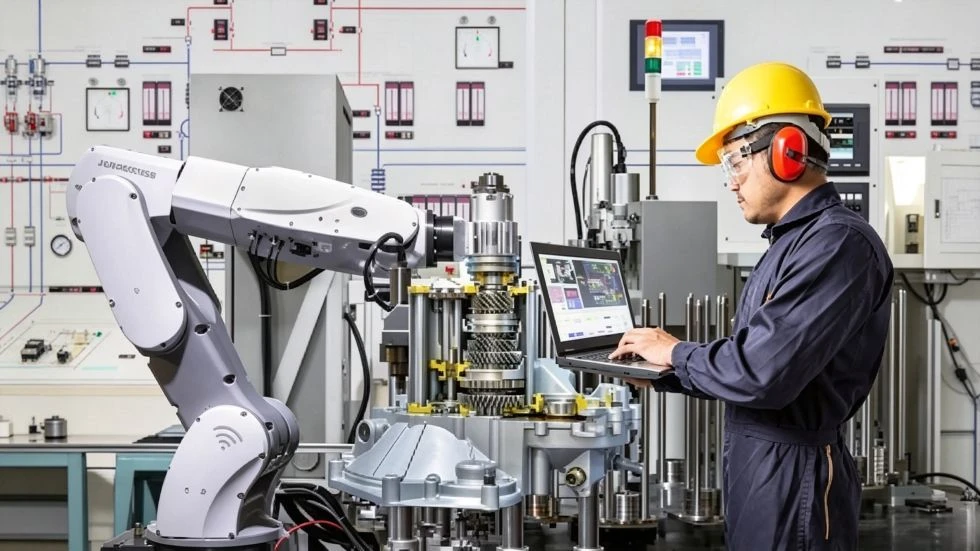
LFT solutions are already deployed in drone blades, robot joints, and low-orbit satellite honeycomb panels. The mobile robotics polymer materials market is expected to grow at a CAGR of 14.6% from 2026 to 2033, with engineering thermoplastics leading at approximately a 38% share for AMR chassis and service robot housings.
Renewable Energy
LFT materials are gaining traction in wind turbine components, energy storage boxes, and solar mounting brackets. The composite materials in renewable energy market were valued at USD 7.87 billion in 2025 and are projected to grow at a CAGR of 10.38% to reach USD 15.72 billion by 2032.
High-End Consumer Electronics
LFT adoption for structural parts in power tools, vacuum cleaners, and premium electronics is growing at a significant 15% year-over-year. Thin-walled components with high specific strength and impact resistance are driving this shift. Taiwan and South Korea reported a 19% increase in LFT adoption for electronics applications in 2026.
Glass Fiber vs. Carbon Fiber: Two Trajectories, One Market
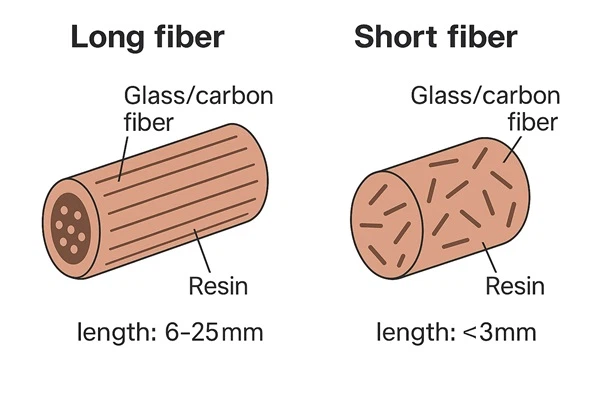
The fiber type segment tells a story of two growth trajectories:
| Fiber Type | Market Share (2025) | Projected CAGR (2026–2031) |
|---|---|---|
| Glass Fiber LFT | 78.8% (dominant) | Steady growth (base market) |
| Carbon Fiber LFT | ~20% (fastest-growing) | ~10.2% (highest CAGR) |
Glass fiber LFT remains the workhorse of the industry, favored for its balanced strength, stiffness, and impact resistance at a competitive cost. It is extensively utilized across automotive, electrical and electronics, and industrial applications-particularly in high-volume operations where cost-performance balance is essential.
Carbon fiber LFT, while smaller in absolute volume, is the fastest-growing segment, driven by its exceptional strength-to-weight ratio, high stiffness, and superior fatigue resistance. Key growth drivers include:
- Aerospace and automotive lightweighting: Carbon fiber thermoplastics enable significant weight reduction without compromising structural integrity.
- Sustainability push: Stringent environmental regulations are accelerating the shift toward high-performance, lightweight, and recyclable materials.
- Emerging applications: Renewable energy components (wind turbines) and high-performance consumer goods are expected to further boost segment growth.
Advancements in manufacturing technologies-such as automated processing and improved recyclability of thermoplastic composites-are reducing production complexity and supporting wider adoption of carbon fiber LFT.
Strategic Implications for Industry Leaders
For strategic planners, R&D directors, and market intelligence teams, the 2026–2031 outlook suggests several clear priorities:
1. Europe's regulatory wave is a competitive differentiator
The ELV Directive's recycled content mandates are not a compliance burden-they are a market opportunity. Suppliers who can deliver LFT materials with verified recycled content and closed-loop traceability will capture premium positioning in the European automotive supply chain.
2. Carbon fiber LFT is the high-growth frontier
With a projected CAGR of ~10.2%, carbon fiber LFT represents the fastest-growing segment. Companies that develop expertise in carbon fiber compounding, processing, and application engineering will be well-positioned to capture value in aerospace, high-performance automotive, and premium industrial applications.
3. Emerging applications are real, not hypothetical
Robotics, renewable energy, and high-end consumer electronics are already deploying LFT solutions. These sectors offer higher margins and less price pressure than traditional automotive-making them attractive targets for differentiation and value capture.
4. Asia-Pacific's volume leadership is not slowing
With 42% of global consumption and surging EV adoption, Asia-Pacific remains the engine of volume growth. The 26% increase in LFT usage for EV production in 2026 signals that the region's growth trajectory is accelerating.
Key takeaway: The LFT market is not a single growth story-it's a portfolio of regional and application-specific opportunities. Strategic success in 2026–2031 will depend on aligning material capabilities with regional drivers (automotive in Asia-Pacific, circularity in Europe, performance in North America) and investing in emerging applications that are rewriting the rules of lightweighting.
Get the full market intelligence report
Xiamen LFT Composite Plastic Co., Ltd. is a global supplier of long-fiber-reinforced thermoplastics with 20+ years of innovation. We specialize in LFT‑PP, LFT‑PA, LFT‑PPS, and LFT‑Elastomers – offering high‑strength, lightweight alternatives to metal for automotive, aerospace, and industrial applications.