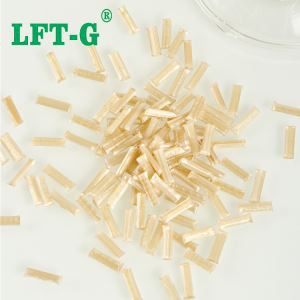

What is the influence of fiber length on composites?
Long Fiber reinforced composites (LFRT&LFRT)have been widely used in various industrial applications due to their high strength, stiffness, and lightweight properties. The fiber length is one of the most important factors that affect the mechanical properties of the composites.
Long fiber composites and short fiber composites are two common types of fiber reinforced composites. It is made by using continuous fibers of length greater than or equal to the thickness of the final composite. Short fiber composites, on the other hand, are made by using chopped fibers of length less than the thickness of the final composite.
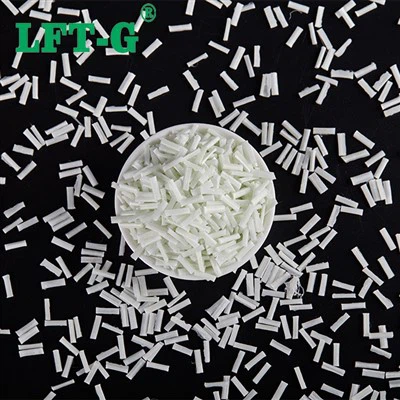
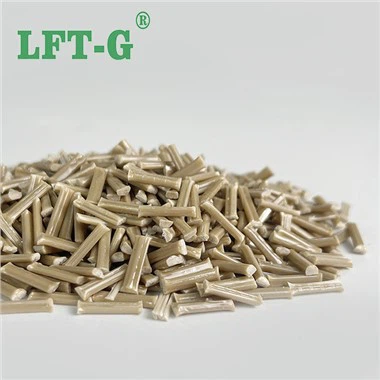
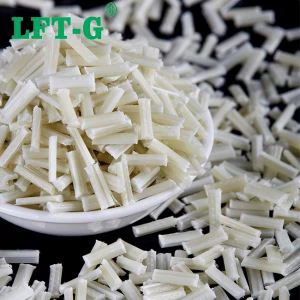
The long Fiber reinforced composites material(LFRT&LFRT), long fiber reinforced thermoplastic, is one of engineered reinforced composite. Fiber length is 5-25 mm. What is the influence of fiber length on composite? In general, as the fiber length increases, the possibility of disorientation and even aggregation of fibers can increase.And the long fibers in LFT-G® LFT-PP composites form a network skeleton in a certain direction, and this long fiber network skeleton has a good role in absorbing stress and impact from the outside, which cannot be done by the short fiber composite.
One of the main advantages of is long fiber reinforced composite material's ability to distribute stress more evenly throughout the composite. This is because the continuous fibers provide a continuous load path that runs the entire length of the composite. Moreover, have a higher degree of anisotropy compared to short fiber composite, which means that the mechanical properties of the composite vary significantly depending on the direction in which the stress is applied.