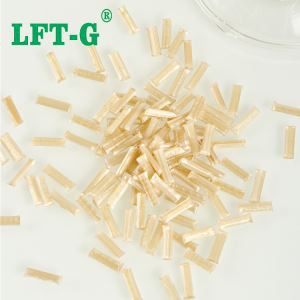

What is CF PP Material?
In-depth Analysis of CF PP Composite Materials: A Superior Choice for High-Performance Engineering
Abstract: Carbon fiber reinforced polypropylene (CF-PP) composite materials, as an advanced engineering material, are rapidly gaining prominence in the automotive, aerospace, sports equipment, and consumer electronics industries due to their outstanding light weighting, high strength, and cost-effectiveness. This article will conduct a comprehensive and in-depth analysis of CF-PP composite materials from multiple dimensions including material composition, manufacturing processes, performance characteristics, core challenges, market applications, and sustainability. The aim is to provide a highly professional reference guide for industry decision-makers, engineers, and researchers.
What is CF-PP composite material?
CF-PP composite material is a thermoplastic composite. It is made by using polypropylene (PP) as the matrix and introducing high-strength carbon fibers (CF) as the reinforcing material into it. This combination is not a simple physical mixture, but rather a synergistic amplification of the properties of the two materials: Polypropylene provides excellent chemical stability, low density, toughness and easy processing, while carbon fibers give the composite unparalleled stiffness, strength and dimensional stability.
Compared with traditional metal materials, the most significant advantage of CF PP plastic pellet lies in its extremely high strength and modulus. This means that under the same level of stiffness and strength, components made of CF PP material can significantly reduce weight, thereby achieving key goals such as energy conservation, performance improvement, and extended range. Additionally, as a thermoplastic composite material, CF PP composite has the outstanding advantages of short processing time, repeatable shaping, and recallability, which better align with the modern industrial pursuit of efficiency and sustainability.
Manufacturing process: Shaping of LCF PP
The final performance of CF-PP composite materials is largely determined by their manufacturing process. Different processes determine the length, distribution, and orientation of carbon fibers within the polypropylene matrix, thereby affecting various mechanical properties of the material.
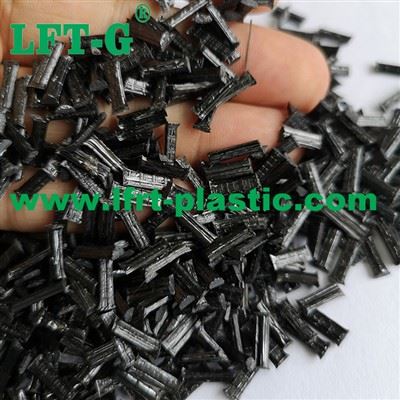
Short carbon fiber reinforced PP (SCF PP): The carbon fibers are typically less than 3 millimeters in length. It is mainly manufactured through mixing extrusion and injection molding processes. This process is highly mature, has high production efficiency, and is easy to produce complex-shaped components. However, during the extrusion and injection molding processes, the shearing effect of the screw will cause the fiber length to further shorten, thereby limiting the upper limit of its mechanical properties.
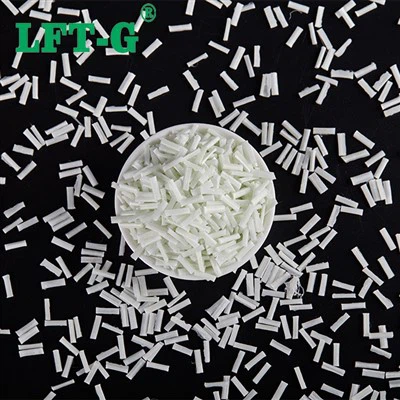
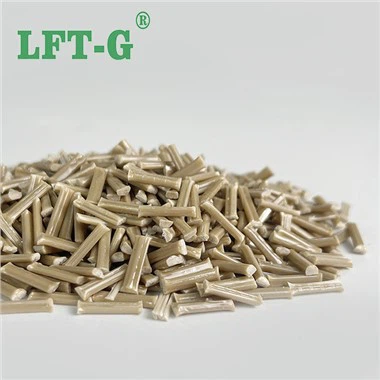
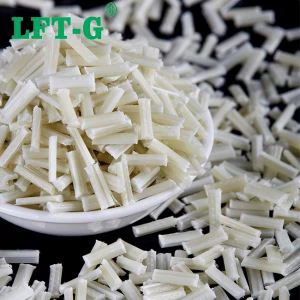
Long carbon fiber reinforced PP (LCF PP): The carbon fibers can be as long as 5–25 millimeters, or even longer. Usually, the long fibers are prepared as long fiber particles through the pultrusion impregnation process, and then formed by injection molding or compression molding. The longer fiber length enables stress to be more effectively transferred from the matrix to the fibers. Therefore, LCF PP has significantly improved impact strength, stiffness, and creep resistance compared to SCF PP.
LCF PP Composite: Performance characteristics
High Strength & Stiffness: The long carbon fibers provide exceptional strength and rigidity.
Lightweight: Carbon fiber is much lighter than steel, resulting in a lighter final product.
High Impact Resistance: The longer fibers contribute to better impact absorption and overall toughness.
Corrosion & Chemical Resistance: The material is resistant to various organic solvents and chemical corrosion.
Good Electrical Insulation: Polypropylene composites offer good electrical insulating properties.
Thermal stability: The incorporation of carbon fibers significantly increases the heat distortion temperature (HDT) of PP pellet, enabling it to maintain structural stability at higher temperatures.
The market application of LCF PP Plastic Pellet
Automotive industry: This is currently the largest and fastest-growing market for CF-PP. The application scope includes front modules, bumpers, dashboard frames, seat frames, battery pack shells, rear door inner panels, etc. Using CF-PP not only reduces weight but also enhances the integration of components and the design flexibility.
Consumer electronics: Laptop computer shells, tablet computer stands, drone bodies and rotors, etc. The required materials should be lightweight, sturdy and have excellent electromagnetic shielding performance.
Sports and leisure: Bicycle frames, rackets, snowboards, safety helmets, etc., aim for extreme lightweight and high strength to enhance athletic performance and safety.
Industrial applications: Mechanical arms, pump valve components, conveyor belt assemblies, etc., taking advantage of its wear resistance, corrosion resistance and high rigidity.


Core technical challenge
Fiber dispersion and impregnation: The melt viscosity of polypropylene is relatively high, which makes it difficult to fully impregnate and evenly disperse the carbon fiber bundles. This can easily lead to fiber agglomeration, forming stress concentration points, which affects the material performance.
Fiber length retention: During the extrusion and injection molding processes, how to optimize the screw design and process parameters (such as screw rotation speed, back pressure) to minimize fiber breakage to the greatest extent is the key to ensuring high-performance CF PP products.
Carbon fiber reinforced polypropylene (CF-PP) composite materials are no longer a niche specialty material; instead, they are becoming an undeniable force in the mainstream engineering plastics sector. It has successfully found an attractive balance point between high performance and economy, processing efficiency and recallability. In the future, as related technologies continue to mature and costs keep decreasing, CF-PP will undoubtedly play an increasingly important role in the light weighting and sustainable development of global manufacturing.