
The Capabilities of LGF ABS in Automotive Components
LGF ABS: Unlocking Innovative Industrial Materials
In contemporary industrial product design, particularly in the automotive manufacturing industry, light weighting, modularization, and cost control of systems have become the core three elements driving technological evolution. This trend poses unprecedented challenges to engineering materials: they must possess mechanical strength and toughness comparable to metals, while also offering high design flexibility and economic efficiency. Against this backdrop, long fiber reinforced thermoplastic composites (LFT) emerged, and among them, long glass fiber reinforced ABS (LGF ABS) composite has emerged as a highly representative solution in this field, thanks to its balanced performance.
An engineering interpretation of performance advantages

Outstanding energy absorption property: Its outstanding impact resistance, especially in low-temperature environments, is attributed to the fact that the fiber matrix can absorb a large amount of energy through its own minor deformation and interface detachment from the matrix when subjected to impact, effectively preventing the catastrophic expansion of cracks.
High-level dimensional stability: The glass fiber itself has an extremely low thermal expansion coefficient. When it forms a network framework within the ABS matrix, it can effectively restrain the thermal expansion and contraction behavior of the matrix. Therefore, LGF ABS material have an extremely low linear thermal expansion coefficient (CLTE) and molding shrinkage rate.
Excellent anti-rheological and anti-fatigue properties: Under continuous static loads (rheological) or cyclic loads (fatigue), the internal fiber framework plays a crucial supporting role, significantly slowing down the plastic deformation trend of the plastic matrix.
The essence of LGF technology
The LGF technology has achieved a revolutionary leap from "passive filling" to "active construction". During the injection molding process, glass fiber bundles with a length of over 5mm are fully immersed and expanded in the molten ABS resin. Guided by the high-pressure flow in the mold cavity, these long fibers interlock and intertwine with each other, eventually cooling and solidifying into a three-dimensional, continuous fiber network framework. This microscopic framework, like a three-dimensional steel mesh embedded in a building structure, enables stress to be rapidly conducted and dispersed along the continuous fiber paths throughout the component, rather than being confined to a single point. It is precisely this collaborative bearing mechanism that fundamentally resolves the contradiction of being unable to balance strength and toughness.
Application field: Promoter of structural and functional integration
The core application value of LGF ABS lies in promoting the "structural-function integration" design concept. It enables engineers to combine the complex assemblies that previously required multiple metal stamping, welding components and plastic trim pieces into a single part through a single injection molding process.


Automobile instrument panel assembly frame: This is the most classic application of LGF ABS. It integrates functional structures such as instrument mounting brackets, air conditioning ducts, defrost grilles, and airbag brackets into one. Compared to the traditional steel frame, it not only achieves weight reduction but also significantly simplifies the supply chain and assembly process, and greatly reduces the overall system cost.
Front-end module of the vehicle: This module is an important structure that houses the radiator, condenser, fan, headlights and bumper. LGF ABS not only provides sufficient rigidity and strength to support these components, but also offers protection during low-speed collisions. Its excellent dimensional stability also ensures the installation accuracy of each component, especially the beam direction of the headlights.
Door module carrier: The door lift mechanism, door lock, speaker and other components are integrated on an LGF ABS board, achieving modularization of functions. Its high rigidity ensures that the lifting guide rail does not deform, while its high toughness enhances the safety in side impact.
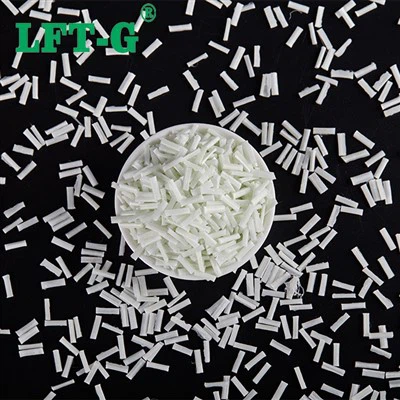
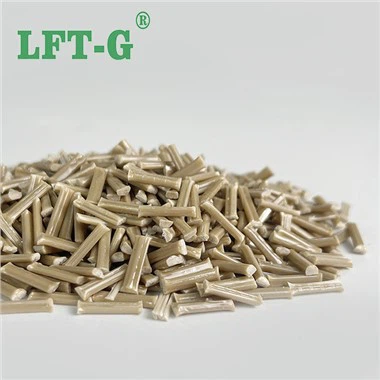
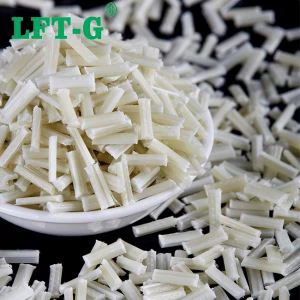
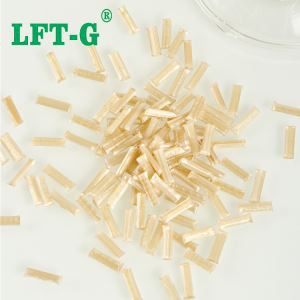
Long glass fiber reinforced Acrylonitrile butadiene styrene (LGF ABS) plastic pellet is not merely a simple material improvement; rather, it is a prime example of achieving a performance leap through reshaping the microstructure of the material. It precisely meets the core demands of modern industry for light weighting, high strength, and integrated design, as a crucial "enabling technology", it is constantly expanding the application boundaries of engineering plastics and providing engineers with a powerful tool to turn more complex, more efficient, and more economical designs from blueprints into reality. The understanding and application of LGF ABS compound resin have become one of the important indicators for measuring a country's level of material engineering in high-end manufacturing.