
The Application of LGF PA66 Material in Bicycle Pedals
LGF PA66: Rebuilding the Impact Force
In the evolution of bicycle performance components, the pedals are undergoing a profound transformation from traditional metals to advanced composite materials. Through this article, we will deeply analyze how long-fiber reinforced nylon 66 (LGF PA66), as the core material, not only achieves light weighting but also brings revolutionary breakthroughs to the structural design, power transmission efficiency, and user experience of bicycle pedals through its unique material properties and advanced manufacturing processes. We will explore the underlying material science principles and look forward to its innovative potential in the future trends of intelligence and customization.
Why is LGF PA66 an ideal structural material?
Classifying LGF PA66 composite simply as "high-end plastic" is a serious underestimation of its engineering value. It is a cutting-edge composite material, and its core performance lies in the "microscopic reinforcing rib framework" formed by the long glass fibers within the PA66 matrix. Compared to short fiber-filled materials, this three-dimensional interlocked fiber network brings about a leap in performance.
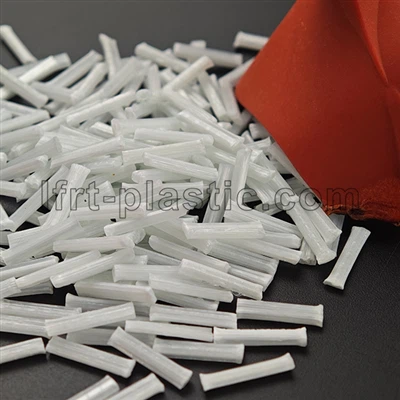

Outstanding flexural modulus and pedal rigidity: The primary indicator of a high-performance pedal is pedal rigidity. Any unnecessary deformation during the pedaling process means power loss. LGF PA66 compound resin provides an extremely high flexural modulus, ensuring that the pedal body undergoes negligible deformation at peak power output (such as sprinting or climbing). This guarantees the most direct power transmission from the shoe lock to the crank, providing a solid and reliable pedal platform for competitors.
Impact toughness and reliability under "skeleton" reinforcement: During mountain biking, impacts from rocks or accidental falls to the pedals pose a severe test on the pedal. The fiber network within LGF PA66 plastic pellet can effectively disperse and absorb energy when subjected to impact, preventing catastrophic brittle fractures and demonstrating excellent toughness. In contrast, some metal materials may undergo permanent deformation after reaching the yield limit.
Exceptional creep and fatigue resistance: A single ride involves tens of thousands of pedal strokes. Under long-term alternating stress, the creep resistance and fatigue resistance of the material are of utmost importance. LGF PA66 material exhibits an extremely low creep tendency, and can maintain the stability of its structural dimensions even under the preload of the lock ring and long-term pedal stress. Its outstanding fatigue life ensures consistent performance throughout the product's entire life cycle, which is the foundation for ensuring riding safety.
Structural design with material control
The most captivating innovation potential of LGF PA66 composite lies in its anisotropy – the characteristic where the material exhibits different mechanical properties in different directions. This might be a challenge, but it is also an advantage that can be "programmed". Based on this raw material, bicycle pedals can be made to present a more perfect state in the hands of designers and engineers.
The injection molding process enables designers to create complex ergonomic curves, integrated anti-slip studs, and optimized drainage structures. More importantly, the mature application of insert molding technology allows for the seamless integration of precisely machined metal components directly with the LGF PA66 matrix during injection molding. This "soft and hard combination" design not only ensures the accuracy and durability of the core rotating components, but also leverages the lightweight and vibration-absorbing advantages of the composite material shell.

LGF PA66: The Evolution of the Future
The application scope of LGF PA66 compound resin has not yet reached its limit. It is becoming an ideal platform for carrying forward the innovation of next-generation pedal systems.
Hybrid Composites: The future trend might be to incorporate a certain proportion of long carbon fibers (LCF) on the basis of LGF PA66 material, creating a "glass fiber + carbon fiber" hybrid reinforcing material. This material can maintain excellent impact toughness while further enhancing rigidity and reducing weight, providing more extreme performance for top-level competitive products, and balancing costs at the same time.
Function Integration and Intelligence: The stable electrical insulation and plasticity of LGF PA66 composite make it highly suitable as a carrier for integrated electronic components. It can be foreseen that in the future, the strain gauges, sensors, and even wireless charging coils of power meters' foot pedals can be perfectly embedded into the foot pedals through insert molding technology, achieving higher integration, lighter weight, and more reliable intelligent hardware.
Sustainability and Green Manufacturing: As environmental regulations become increasingly strict, the use of recyclable thermoplastic PA66 matrix, combined with injection molding technology, gives LGF PA66 plastic pellet pedal boards a natural advantage in terms of sustainability.
The significance of LGF PA66 material for bicycle pedals goes far beyond the simple substitution of plastic for steel. It is an enabling technology that tightly integrates material science, engineering design, and manufacturing processes. It allows designers to precisely control the performance distribution of the material at the micro level, creating next-generation products that are lighter, stronger, more reliable, and more freely designed. As technology continues to mature and innovative applications emerge, LGF PA66 polymer will remain the undisputed technical cornerstone in the field of high-performance bicycle pedals, continuously reshaping our perception and experience of the force of pedaling.