
The application of fiber reinforced thermoplastics
Thermoplastic composites have rapidly gained worldwide recognition as they can replace many materials such as die castings, metal assemblies, and traditional plastics in the market, including industrial equipment, automobiles, and consumer products. High impact strength, better surface quality, low product rejection rate, high stiffness in high and low temperature environments, creep resistance in harsh environments and constant loads make the thermoplastic composite market more marketable than thermosetting and metallic materials profitable. The advantage of cost-effectiveness makes thermoplastic composites more attractive in the aerospace and defense, transportation, and electrical and electronics industries.
1, car
Fiber-reinforced thermoplastics are one of the most promising lightweight materials for high-performance automotive vehicles. They are more competitive than traditional non-renewable thermoset composites and aluminum-magnesium metal materials, and at the same time have a structure of composite materials and workpieces. The outstanding advantages of the integration of design and molding manufacturing are more energy-efficient and environmentally friendly. In automobiles, parts using FRTP include intake manifolds, air cleaner assemblies, valve covers, engine covers, etc., while composite suppliers believe that FRTP should have wider applications around the engine, such as intake system components. , oil pans and transmission housings, etc.
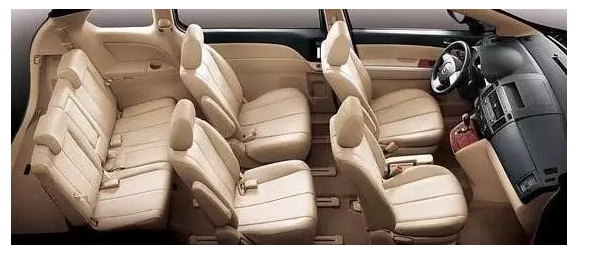
The BMWi3 and BMWi8 pure electric vehicles launched by BMW and SGL carbon fiber joint ventures have successfully adopted a large number of carbon fiber composite materials (CFRP and CFRT) to manufacture automotive interior and exterior key bearing components. Promoted the application of carbon fiber composites in automobiles.

2. Aerospace
FRTP is not only the lightweight material preferred by the automotive industry. In recent years, the aviation industry has also begun to pay close attention to the feasibility of developing CFRT applications. Prior to the advent of the A350XW, Airbus invested heavily in the development of CFRT and component manufacturing technologies, and more than 1,500 different aircraft components have been produced using CFRT, such as CF/PPS composite composite doors.

Airbus' leading product, the wing leading edge of the A380 super-large aircraft and the smaller A340, uses a PPS resin-based composite material, again ensuring high impact resistance. Gulfstream Aerospace’s G650 business jet has a thermoplastic composite rudder and landing gear, and its structure is made from TenCate Cetex carbon fiber reinforced PPS prepreg.
In aerospace, thermoplastic composites are also increasingly used. For example, with the development of communication remote sensing satellites, it is required to increase the optical aperture to improve the resolution of the remote sensor. Including the mirrors (spherical and aspherical) of the main optical system of various space cameras and the scanning mirrors of opto-mechanical scanning space remote sensors. Mirrors made of metallic materials all have problems that are too large to be achieved by design solutions, and thermoplastic composites can be effectively solved.
3, wind power
Reinforced thermoplastics also have a lot of room for development in renewable energy structures. For example, relatively short mold cycles and relatively simple repair and recycling capabilities of thermoplastic composites have attracted the attention of wind turbine blade manufacturers.

Ireland's Eire Composites Teo has partnered with Mitsubishi Heavy Industries, Astor Fiberglass and Cyclics Corporation. A 12.6 m (85 ft) long wind turbine blade was produced using cyclic butylene teraphthalate (CBT), a liquid molded glass-reinforced thermoplastic. This R&D project is part of the company's “Greenblade” project, which aims to develop large thermoplastic composite blades that are lighter and less expensive than the current dominant thermoset composite blades and that it The production speed is faster and can be recycled after the end of the service life.
4, other areas
At present, FRTP has also become the new favorite of the construction industry. GFRT building templates, GFRT covers for sinks, and CFRT building columns are widely used. Recently, Fiberlite used a continuous fiberglass woven fabric GFRT molded to manufacture colored manhole covers, which was generally welcomed.
In addition, the demand for FRTP in the oil and gas industry, machinery manufacturing, sporting goods, medical technology, and other consumer products is also increasing. The Dutch company Abbhorne Oil & Gas recently announced in its briefing the superiority of its thermoplastic composite pipelines. The thermoplastic composite downpipes and crossover pipes can reach oil and gas wells in the deepest water, and perform workover operations to improve oil and gas well performance without the need for High cost riser workover. Thermoplastic composite material transfer lines effectively solve the corrosion problem while reducing costs.
In addition, the U.S. Patent and Trademark Office (USPTO) patent for a NIKE thermoplastic polyurethane golf ball uses thermoplastic polyurethane material for both the inner cover and the outer cover.