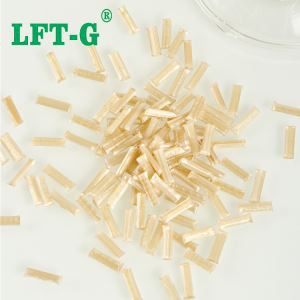

(1) The density of the thermoplastic material with low density and high strength is 1.1 to 1.6 g/cm3, which is only 1/5 to 1/7 of the steel material, and is 1/3 to 1/4 lighter than the thermosetting glass steel. It is able to achieve higher mechanical strength with a smaller unit mass. Generally speaking, whether it is general-purpose plastic or engineering plastics, after being reinforced with glass fiber, it will obtain a higher reinforcing effect and improve the strength application grade.
(2) Performance design freedom The physical properties, chemical properties and mechanical properties of the thermoplastic composites are designed by rational selection of raw material types, ratios, processing methods, fiber content and layup. Since thermoplastic composites have much more matrix materials than thermoset composites, the freedom of material selection is much greater.
(3) Thermal properties Generally, the plastic is used at a temperature of 50 to 100 ° C, and can be increased to 100 ° C or higher after being reinforced with glass fibers. The heat distortion temperature of nylon 6 is 65 ° C. After reinforced with 30% glass fiber, the heat form temperature can be increased to 190 ° C. The heat resistance of the polyetheretherketone resin reaches 220 ° C. After being reinforced with 30% glass fiber, the use temperature can be increased to 310 ° C. Such high heat resistance and thermosetting composite material are not attained. The linear expansion coefficient of the thermoplastic composite material is 1/4 to 1/2 lower than that of the unreinforced plastic, which can reduce the shrinkage rate during the molding process of the product and improve the dimensional accuracy of the product. Its thermal conductivity is 0.3 to 0.36 W (m2•K), similar to thermoset composites.
(4) The chemical resistance of chemical resistant composites is mainly determined by the properties of the matrix materials. There are many types of thermoplastic resins. Each resin has its own anti-corrosion characteristics. Therefore, it can be based on the environment and medium of the composite materials. Conditions, the base resin is preferred, and generally meets the requirements for use. Thermoplastic composites are superior in water resistance to thermoset composites.
(5) Electrical properties General thermoplastic composite materials have good dielectric properties, do not reflect radio waves, and have good microwave performance. Since the thermoplastic composite has a lower water absorption rate than the thermosetting glass reinforced plastic, its electrical properties are superior to the latter. The addition of a conductive material to a thermoplastic composite improves its electrical conductivity and prevents the generation of static electricity.
(6) Recycling of waste materials The thermoplastic composite materials can be repeatedly processed and formed, and waste materials and corner materials can be recycled and utilized without causing environmental pollution.
Because thermoplastic composites have many special properties superior to thermosetting FRP, the application fields are very extensive. From the analysis of foreign applications, thermoplastic composites are mainly used in the vehicle manufacturing industry, electromechanical industry, chemical anti-corrosion and construction engineering.