
As a structural composite, fiber reinforced composites are widely used in automotive, aerospace, marine, construction, chemical engineering and sports because of their light weight, high strength, corrosion resistance, heat insulation and sound absorption, design and molding freedom. field.
Since the 1960s, short fiber reinforced thermoplastic composites have dominated the thermoplastic composites injection molding market. However, when the fibers are mixed with the resin in the extruder, the fibers are very affected by the shearing action between the screw and the barrel. For a large degree of damage, the initial 6mm fiber has a length of only 0.2-1 mm (generally below 0.3 mm) in the pellet. Since the properties of the reinforced plastic are closely related to the fiber length, when the fiber is short, the reinforcing effect will be very limited, the excellent performance of the composite material cannot be fully exerted, and it is difficult to obtain the structural use, which is greatly limited by the fiber. The industrial application of reinforced composites.
In order to make up for this shortcoming, in the 1970s, developed countries developed long-fiber reinforced thermoplastic composite materials. The appearance of thermoplastic sheets with medium-length glass fiber mat reinforced polypropylene under the trade name “Azdel” unveiled long-fiber reinforced thermoplastics. The prelude of composite materials.
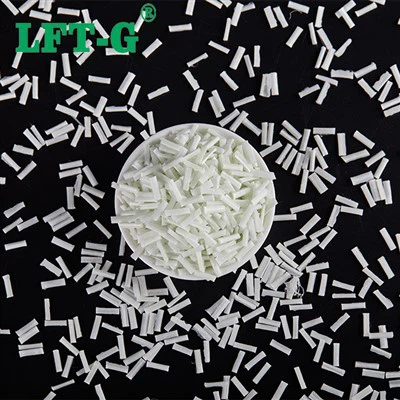
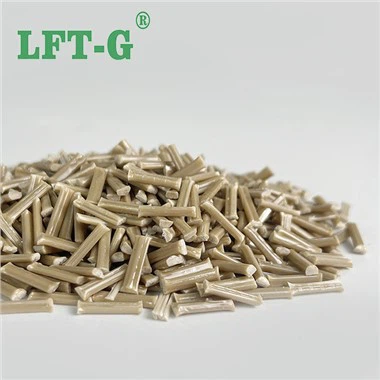
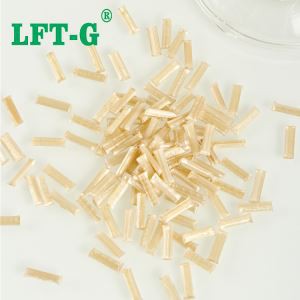
Since the late 1980s and early 1990s, the development of long fiber reinforced thermoplastic composites (LFT) has attracted people's attention due to improvements in production processes. LFT consists of a thermoplastic resin matrix and continuous reinforcing fibers and some additives. The continuous fibers and resin are compounded in the impregnation head. The resin is evenly distributed between the fibers to form a continuous phase to fix the spatial position of the fibers and inside the material. Pass the load. The fibers are continuous and parallel in the long fiber reinforced composite. The fibers and particles are of the same length and are well coated with plastic coatings to produce products with excellent mechanical properties. LFT can be widely used in the automotive industry, aerospace industry, petrochemical industry, electromechanical industry, electronic and electrical industry, etc., with broad market space and application prospects. However, LFT's core technology melt impregnation equipment has been jointly monopolized by large foreign companies.