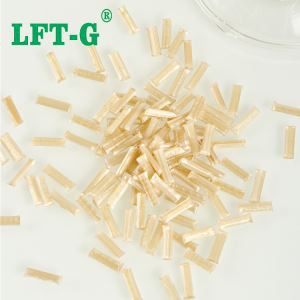

Polyether ether ketone (abbreviated as PEEK) is a special polymer material with both toughness and rigidity. Its performance in terms of self-lubrication, corrosion resistance, peelability, fatigue resistance, flame retardancy, etc. is far superior to similar materials. . In particular, when polyetheretherketone uses carbon fiber as a reinforcing material, its mechanical properties, self-lubricity, and fatigue resistance have all undergone a qualitative leap, resulting in the performance advantages that are difficult to obtain for general alloys or composites. Instruments and other fields are favored.
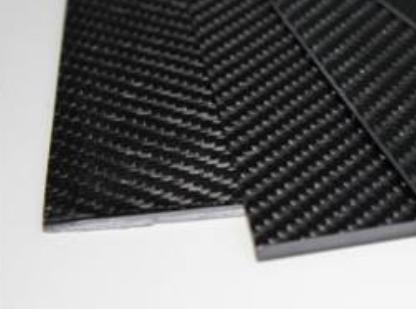
At present, China's carbon fiber reinforced polyether ether ketone composite manufacturing technology still remains in the short-cut carbon fiber or carbon fiber powder reinforced phase, the vast majority of long-cut carbon fiber reinforced polyether ether ketone composites still rely on foreign imports, Xiamen LFT Composite Plastic Based on the research and development of carbon fiber composite materials, Co., Ltd. mastered a considerable number of application technologies for carbon fiber reinforced composite materials and became a technology leader for long carbon fiber reinforced polyether ether ketone composite parts in China. Long carbon fiber reinforced polyether ether ketone composite board manufacturing experience, share and explore the manufacturing process on the long carbon fiber reinforced polyether ether ketone composite board performance of the specific impact:
Effect of Molding Temperature on Mechanical Properties of Carbon Fiber Reinforced PEEK Composite Plates
The mechanical properties of long-cut carbon fiber-reinforced polyetheretherketone composite plates increase first and then decrease with increasing molding temperature. In general, the mechanical properties reach the maximum at the molding temperature of 370°C. When the temperature is low, there will be problems of incomplete resin impregnation and non-uniform distribution in the prepreg. If the resin has poor fluidity, the fibers in the prepreg will not be uniformly dispersed, and the fibers will be locally dense and the resin will be enriched. When the material plate is stressed, it is easy to produce stress concentration, which affects the overall performance of the plate.
When the manufacturing temperature increases, the fluidity of the resin will be improved, polyetheretherketone can be better integrated into the carbon fiber material, the distribution in the material layer and the interlayer becomes more uniform, and the composite material plate is under stress. The stress can be better transferred from the resin to the carbon fiber through the interface, thereby avoiding stress concentration. Moreover, polyetheretherketone resin will produce cross-linking at high temperatures, lower levels of cross-linking will help improve the strength of the resin, but when the temperature is too high, this thermal cross-linking will reduce the performance of the resin because the reaction is too large. Excessively high temperatures will also increase the viscosity of the resin, making it less fluid and impeding the fibers from being well impregnated. Therefore, maintaining proper temperature is one of the key factors for achieving the best performance of the carbon fiber reinforced polyether ether ketone composite board.
Effect of carbon fiber content on properties of carbon fiber reinforced polyether ether ketone composite board:

According to the product performance test report provided by Xiamen LFT Composite Plastic Co., Ltd., the bending performance and interlaminar shear strength of the long-cut carbon fiber reinforced polyether ether ketone composite board will increase as the carbon fiber content increases. It shows that the reinforcing effect of carbon fiber material on polyetheretherketone is direct and obvious, but this does not mean that the higher the carbon fiber content, the better.
When the carbon fiber content is low, the resin can impregnate the fiber well and a better bonding effect can be formed between the two. When the composite material plate is impacted by an external force, the resin can effectively transmit the stress to the carbon fiber. The higher the content, the greater the load that the entire board can withstand. However, if the carbon fiber content is too large, the proportion of the resin will be reduced accordingly, too little resin will affect the effect of the impregnation, it will enrich the carbon fiber, which will also lead to stress concentration, thus affecting the mechanical properties of composite materials . At the same time, too few resins will expose some of the carbon fibers that have not been infiltrated. The resin that is not evenly distributed will also affect the bond strength between the two. Once the adhesive strength is reduced, the composite plate will tend to produce delamination. The inter-layer performance deteriorates. Therefore, the proper carbon fiber content also determines the performance of the long-cut carbon fiber reinforced polyether ether ketone composite board.
Effect of Cooling Rate on Properties of Carbon Fiber Reinforced PEEK Composite Plates

In the production process of the carbon fiber reinforced polyether ether ketone composite board, not only the temperature has a direct influence on the board, but also the cooling speed has a great influence on the performance of the carbon fiber reinforced polyether ether ketone composite board. When cooled naturally, polyetheretherketone crystallizes sufficiently, and large spherulites are easily formed. When cooling rapidly, the relaxation process of the macromolecular segment rearrangement will lag behind the speed of temperature change, resulting in uneven crystallization of the polymer. Internal stress is prone to occur in the product. At the same time, as the cooling rate increases, the crystallization time of the polymer becomes shorter, the crystallinity decreases, the brittleness of the composite material sheet decreases, the toughness increases, the bending performance and the interlayer shearing degree decrease, and the notch impact strength increases. This rule provides a reference for the production of carbon fiber reinforced polyether ether ketone composite board with different application requirements. It can be adjusted according to the actual needs of the board in the specific operation.