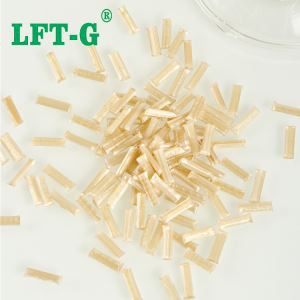

Polyamide, commonly known as nylon, or PA for short, is a strong polarity, easy-to-form hydrogen bonds between molecules and reactive crystalline polymer under specific conditions. It has excellent mechanical properties, wear resistance, oil resistance, self-lubrication, and good molding processing and corrosion resistance. However, due to the strong polarity of PA, its water absorption rate is large, which affects the electrical properties and dimensional stability of PA. In addition, the heat resistance and low-temperature impact strength of PA also need to be improved.
The reactivity of PA makes it easy to modify. It can be used to prepare composite materials or alloys by fiber reinforcement, inorganic filling and blending with other polymers or different kinds of polyamides.

1.Polyamide filling modification
PA filling modification is based on polyamide resin as the base material, by adding fiber, natural or synthetic filler to modify, usually can be divided into fiber reinforcement, natural mineral reinforcement and synthetic filler filling 3 aspects:
(1) Fiber reinforcement is the use of glass fiber, carbon fiber and asbestos fiber, etc.
(2) Natural mineral enhancement is the use of calcium sulfate, calcium carbonate, kaolin, talc, zeolite, etc.
(3) The synthetic filler is filled with molybdenum disulfide, graphite, silicone powder, polytetrafluoroethylene and so on.
A more balanced product with comprehensive properties can often be obtained by using both fiber and filler-reinforced nylon.
The reinforcing effect of nylon resin caused by the filler depends on the particle size, shape, length-diameter ratio, and surface treatment agent of the filler. Common types of filler such as inorganic natural minerals, industrial waste, plant fibers, etc., can not only reduce the cost and improve the physical and mechanical properties of the composite materials but also reduce the impact, tensile strength, surface gloss and processing fluidity of the composite materials.
Effect of filler properties on resin properties
(1) Particle shape
The fillers with large transverse and transverse surfaces, such as fibrous, columnar and wafer, make the machining properties worse but are beneficial to improve the mechanical properties of PA. Amorphous balls and powder can improve the machining properties, but reduce the mechanical properties.
(2) Particle size
The best particle size range of packing is 0.1~10 mm. Small particle size is conducive to the mechanical properties, dimensional stability, surface luster and feel of the product, but the particle size is too small, it will be difficult to disperse.
In the actual production, the particle size of the filler should be selected according to the type of plastic and the dispersion capacity of the processing equipment.
(3) particle surface area
Many of the functions of fillers are related to their surface area. Usually, the increase of the surface area of the filler is conducive to the adsorption of surfactants, dispersants, surface modifiers and polar polymers or the occurrence of chemical reactions on the surface of the filler.
(4) Wear of packing on equipment
The filler will accelerate the wear of the equipment, but also make the melt viscosity increase, so the dosage of lubricant and stabilizer should be appropriately increased in the formula.
Filling modification and application of PA66
Polyamide PA66 (polyadipyladipdiamine), commonly known as nylon66, is similar to PA6, which is a polymer containing amide groups in the repeating unit of the main chain of the macromolecule. Polyamide PA66 is one of the five engineering plastics with the largest output, the largest variety and the most widely used variety.
Polyamide PA66 material has excellent coloring ability and can meet various requirements of color matching. The shrinkage rate of PA66 is 1% ~ 2%, and the shrinkage rate can be reduced to 0.2% ~ 1% by adding glass fiber additives. Shrinkage varies greatly in the direction of flow and perpendicular to the direction of flow.
PA66 is soluble to many solvents, but weak to acids and some other chlorinated agents. The flame retardancy of PA66 is excellent, and different levels of flame retardancy can be achieved by adding different flame retardants.
The modified PA66 is widely used in machinery, instrumentation, automobile parts, electronics and electrical, railway, household appliances, communications, spinning machines, sports and leisure products, oil tubing, oil tank and some precision engineering products, mainly including automobiles, electronic appliances, consumer goods and industry 3 fields.
(1) The automotive field mainly includes cooling fans, doorknobs, oil tank covers, intake grilles, water tank covers, lamp holders, etc.
(2) The field of electronic and electrical appliances mainly includes connectors, reel spools, timers, cover breakers, switch housing, etc.
(3) Consumer goods and industrial fields mainly include bicycle frames, skate soles, textile shuttles, pedals, pulleys, bearings, fan blades, etc.
Filling modification and application of PA6
Polyamide PA6 (polycaprolactam) commonly known as nylon 6, the material is a translucent or opaque crystalline polymer, a density in 1.12 ~ 1.14kg/m3, with strong thermoplasticity, lightweight, good toughness, chemical resistance and durability, but also has following characteristics.
(1) High mechanical strength, good toughness, high tensile and compressive strength.
(2) Excellent fatigue resistance, the parts can maintain the original mechanical strength after repeated bending.
(3) Corrosion resistance, very resistant to alkali and most salts, also resistant to weak acid, oil, gasoline, aromatic compounds and general solvents.
(4) Smooth surface, small friction coefficient, wear-resistant. As a moving mechanical component, it has self-lubrication, low noise, and does not add lubricant when the friction effect is not too high.
(5) Self-extinguishing, non-toxic, odorless, good weather resistance, inert to biological erosion, has good antibacterial, anti-mildew ability.
(6) Excellent electrical performance. Good electrical insulation, nylon volume resistance is high, high breakdown voltage resistance, in dry environment, can be used as power frequency insulation material, even in high humidity environment still has good electrical insulation.
(7) Light weight, easy to dye, easy to form. Because of low melting viscosity, it can flow quickly.
The modified PA6 is widely used in automobile parts, mechanical parts, electronic and electrical products, engineering accessories and other products, mainly including automobile, electronic and electrical products, machinery industry 3 fields.
(1) The automotive field mainly includes radiator box, radiator blade, water tank guard, door handle, intake grille, etc.
(2) The field of electronic and electrical appliances mainly includes coil skeleton, electronic connectors, electrical components, low-voltage electrical shell, terminal, etc.
(3) The field of machinery industry mainly includes bearings, circular gears, all kinds of rollers, oil-resistant sealing gaskets, oil-resistant containers, bearing cages, etc.
2.Polyamide blending modification
By the mechanical method, other polymers are added to the generated polymer to change its properties, which is called blending modification. In the blending modification, it should be noted that the expected modification effect can be achieved only when an incompletely compatible polyphase system is formed and the two polymers are uniformly dispersed among each other.
PA is blended with general-purpose plastics
The blending of PA and PE can improve the barrier performance of PE to oxygen, hydrocarbon, and other solvents, but the compatibility of PA and PE is poor due to the difference in molecular structure.
The blending of PA and PP can improve the coloring property and air tightness. In blending modification, attention should be paid to the compatibility between different polymers. When two polymers are mixed with poor compatibility, it is usually necessary to add a third component that has good compatibility with both polymers, and the third component is called a compatibilizer.
Nylon-6 and polypropylene compatibility is very poor, only by mechanical force is impossible to mix evenly. At this time, if a small amount of polypropylene grafted maleic anhydride is added, due to the chemical reaction between maleic anhydride and the amide group of nylon -6, the compatibility of nylon -6 and polypropylene is greatly improved.
PA is blended with PPO
Polyphenyl ether (PPO) is an excellent thermoplastic engineering plastic with good thermodynamic properties. PPO can work continuously at -160 ~ 190°C. In addition, PPO also has excellent physical and mechanical properties and dimensional stability. Its disadvantages are high melt viscosity, poor liquidity, processing and forming difficulties, and high energy consumption, so it limits the practical application and promotion of PPO.
In order to improve the performance of PPO and expand its application, it is necessary to modify PPO. Blending modification is the most important modification measure of PPO at present.
For PPO/PS and PPO/HIPS alloys, although they have high tensile strength, bending strength, notched impact strength and other excellent properties, but their thermal deformation temperature is low, oil resistance and solvent resistance is poor (such as halide cymbals). Therefore, it is inevitable to develop PPO/PA (polyamide), PPO/PBT (poly butanediol terephthalate) and other incompatible systems, and the key is to improve the compatibility between polymers.
Polyphenyl ether has excellent heat resistance, mechanical properties, electrical properties, dimensional stability and water resistance, but oil resistance and solvent resistance is poor; PA has excellent mechanical properties, oil resistance, solvent resistance and wear resistance, but its dimensional stability, moisture absorption and thermal deformation resistance under high load are poor. Therefore, the alloy made by blending these two resins can make up for their respective deficiencies, but the compatibility between PA and PPO is poor. Therefore, it is necessary to use a compatible to improve the performance of the blending system.