
Very different materials
Composite materials differ from conventional materials in that composite parts contain two distinct components - fiber and matrix materials (most commonly polymer resins) - which remain separated when combined but interact to form a new material whose properties cannot be predicted by simply adding the properties of its components.
In fact, one of the main advantages of the fiber/resin combination is its complementarity. Thin glass fibers, for example, have relatively high tensile strength but are easily damaged. In contrast, most polymer resins have weak tensile strength but are very tough and malleable. When fiber and resin are combined, however, they can offset each other's weaknesses, creating a material that is far more useful than any individual component.
The structural properties of composites are mainly derived from fiber reinforcement. Commercial composites for large markets, such as automotive parts, ships, consumer goods, and corrosion-resistant industrial parts, are typically made from discontinuous, randomly oriented fiberglass or continuous but non-oriented fiber forms.
Originally developed for the military aerospace market, advanced composites, which perform better than traditional structural metals, are now found in communications satellites, aircraft, sporting goods, transportation, heavy industry, and the energy sector for oil and gas exploration and wind turbine construction.
High-performance composites derive their structural characteristics from continuous, oriented, high-strength fiber reinforcement materials -- most commonly carbon fiber, arylpolyamide fiber, or glass fiber -- in a matrix that improves machinability and enhances mechanical properties such as stiffness and chemical resistance.
Fiber orientation can be controlled, which is a factor that can improve performance in any application. For example, in composite golf club shafts, boron and carbon fibers are oriented at different angles within the composite shaft, able to take full advantage of their strength and stiffness characteristics and withstand torque loads and multiple bending, compression, and tensile forces.
Glass fiber
The vast majority of fibers used in the composite industry are glass. Fiberglass is the oldest and most common reinforcing material used in most end-market applications (with the aerospace industry being an important exception) to replace heavier metal components.
Fiberglass is heavier and less rigid than carbon fiber, the next most common reinforcement material, but it is more impact-resistant and has a greater elongation at break (that is, it stretches to a greater extent before breaking). A wide range of characteristics and performance levels can be obtained depending on the type of glass, filament diameter, coating chemistry (called "sizing"), and fiber form.
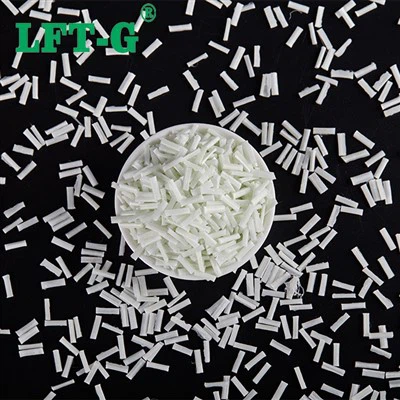
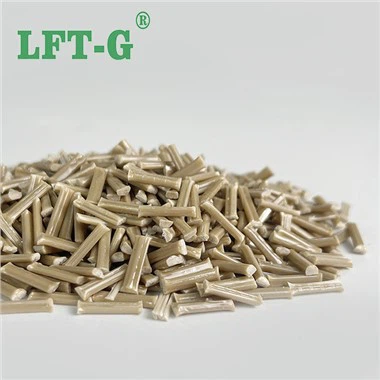
Glass filaments are supplied in the form of bundles called strands, which are collections of continuous glass filaments.
Roving is usually a bundle of untwisted strands wrapped like thread around a large spool. Single-ended roving consists of a continuous strand of multiple glass filaments that run the length of the strand. Multi-ended roving contains long but not completely continuous strands that are added or dropped in a staggered arrangement during winding. Yarn is a collection of strands twisted together.

High-performance fiber
Carbon fiber - by far the most widely used fiber in high-performance applications - is made from a variety of precursor systems, including polyacrylonitrile (PAN), rayon, and asphalt. Precursor fibers are chemically treated, heated and stretched, and then carbonized to produce high-strength fibers. The first high-performance carbon fiber on the market was made from rayon precursors.
Today, polyacrylonitrile and asphalt-based fibers have replaced artificial fibers in most applications. Pan-based carbon fiber is the most versatile. They offer an amazing range of properties, including excellent strength and high stiffness. Asphalt fibers are made from petroleum or coal tar bitumen and have high to extremely high stiffness and low to the negative axial coefficient of thermal expansion (CTE). Their CTE characteristics are particularly useful in spacecraft applications requiring thermal management, such as electronic instrument casings.
Although they are stronger than glass or aramid fibers, carbon fibers are not only less impact-resistant, but also undergo galvanic corrosion when they come into contact with metal. Manufacturers overcome the latter problem by using barrier materials or veil layers (usually fiberglass/epoxy) during the laminate process.
The basic fiber form of high-performance carbon fiber is a continuous fiber bundle called a filament bundle. A carbon fiber bundle consists of thousands of continuous, untwisted filaments, the number of filaments represented by a number followed by a "K", which means multiplied by 1,000 (for example, 12K means the number of filaments is 12,000). Bunches can be used directly in processes such as filament winding or pultrusion molding or can be converted into unidirectional ribbons, fabrics, and other reinforced forms.