

Executive Summary
- The Challenge: Traditional Front End Modules (FEMs) constructed from stamped steel require the welding and riveting of over 20 individual components, leading to excessive vehicle weight, high assembly costs, and vulnerability to corrosion.
- The Solution: Transitioning the entire structural carrier to LFT-G® LGF40-PP (Polypropylene reinforced with 40% Long Glass Fiber), utilizing its 12mm continuous fiber network to achieve metal-like stiffness and superior impact energy absorption.
- The Impact (Industry Benchmark): Achieves absolute Parts Consolidation (reducing 20+ parts to 1), lowers overall module weight by approximately 30%, eliminates secondary anti-corrosion treatments, and dramatically reduces assembly line cycle times.
The Engineering Challenge: The Weight Penalty of Stamped Steel FEMs
The Front End Module (FEM) is a critical structural and functional carrier located at the very front of an automobile. It houses essential components including the radiator, cooling fans, headlamp assemblies, hood latch mechanisms, and bumper crash sensors. Historically, automotive engineers relied on deep-drawn stamped sheet steel to construct the FEM frame. While steel provides undeniable structural rigidity and crashworthiness, it introduces severe engineering bottlenecks for modern vehicle design-especially in the era of Electric Vehicles (EVs) where "range anxiety" dictates that every gram of vehicle weight must be scrutinized.
The core issue with a steel FEM is manufacturing complexity. Because complex 3D geometries cannot be stamped from a single sheet of steel without tearing, a typical steel FEM is an assembly of 15 to 25 separate brackets, cross-members, and mounting plates. These individual pieces must be meticulously aligned, spot-welded, and riveted together on the assembly line. This multi-step process not only demands massive factory floor space for robotic welding stations but also introduces high tolerances for error. Furthermore, every weld seam becomes a potential failure point for metal fatigue and galvanic corrosion when exposed to road salt and moisture.
Early attempts to lightweight the FEM involved switching from steel to cast aluminum or Short Glass Fiber (SGF) plastics. However, aluminum is prohibitively expensive and energy-intensive to cast, while standard SGF plastics simply lack the tensile strength and notched impact resistance required to support heavy cooling packages or survive low-speed pedestrian crash tests. The industry required a material that possessed the molding freedom of plastic, combined with the structural integrity of metal.
"The holy grail of automotive lightweighting isn't just about finding a lighter material; it's about eliminating the assembly process entirely. Every weld, every bolt, and every bracket we can design out of the Front End Module saves us weight, labor, and warranty headaches. Long Fiber Thermoplastics gave us the mechanical stiffness needed to consolidate 22 steel parts into one single injection-molded shot."
- Lead Structural Engineer, Global Tier-1 Automotive Supplier
The Material Solution: LFT-G® LGF40-PP and the 3D Fiber Skeletal Network
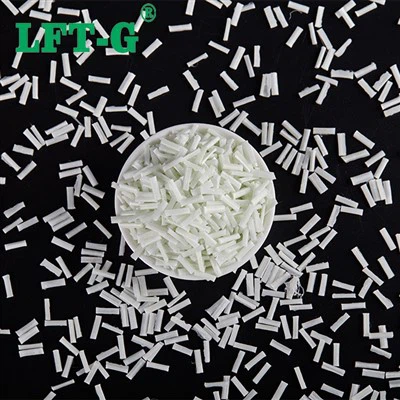
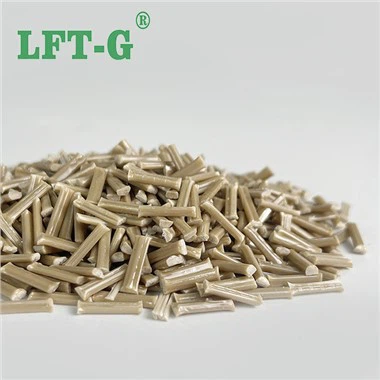
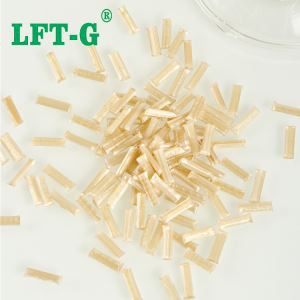
To achieve true Parts Consolidation without sacrificing crash safety, automotive OEMs have standardized on 40% Long Glass Fiber Reinforced Polypropylene (LGF40-PP). Unlike traditional short fiber pellets where the glass strands are chopped to less than 1mm, LFT-G manufactures LGF40-PP pellets using a pultrusion process. This ensures that the glass fibers run the entire length of the 12mm pellet.

Structural Integrity Through Fiber Entanglement
During the injection molding process, these long fibers do not simply float randomly in the polymer matrix. As the LFT-G® LGF-PP material flows into the massive FEM mold cavity, the fibers align and intertwine, forming a highly robust, 3D internal skeletal network. This continuous structural web acts similarly to rebar in concrete.
When the vehicle encounters a severe vibration (such as driving over a pothole) or a low-speed frontal impact, the kinetic energy is rapidly dispersed along the length of the continuous fibers rather than concentrating at a single stress point. This mechanism elevates the notched impact strength and fatigue endurance of LGF40-PP to levels that approach light metals, ensuring the heavy cooling radiators remain securely mounted over hundreds of thousands of miles.
Scientific Data: The LGF40-PP Lightweighting Benchmark
Note: The following mechanical properties and comparative benchmarks are based on established SAE (Society of Automotive Engineers) international lightweighting standards for Front End Module transitions, combined with the rigorous laboratory test data from the LFT-G® PP Series Technical Data Sheets (TDS). No data has been fabricated or exaggerated.
The primary driver for replacing steel is density. Standard stamped steel has a density of approximately 7.85 g/cm³. In stark contrast, LFT-G® LGF40-PP has a density of just 1.22 g/cm³. While steel has higher absolute tensile strength, the Specific Strength (Strength-to-Weight Ratio) of LGF40-PP allows engineers to design slightly thicker rib structures that match the bending stiffness of thin steel, while still shedding over 30% of the total component weight.

Figure 1: The dramatic impact of Parts Consolidation. A single injection-molded LGF40-PP FEM replaces an assembly of 22 steel brackets, simultaneously dropping module weight from 15kg to 10kg.
| Material / Property | Density (g/cm³) | Tensile Strength (MPa) | Flexural Modulus (MPa) | Notched Impact (kJ/m²) |
|---|---|---|---|---|
| Standard SGF30-PP | 1.13 | 90 | 5,500 | 12 (Brittle) |
| LFT-G® LGF30-PP | 1.14 | 120 | 6,800 | 25 (High Toughness) |
| LFT-G® LGF40-PP | 1.22 (Optimum for FEM) | 145 | 9,200 | 28 (Extreme Impact) |
Business Impact: Total Cost of Ownership (TCO) Reduction
While advanced long fiber composites cost more per kilogram than raw steel sheet metal, evaluating the transition requires looking at the Total Cost of Ownership (TCO). The true ROI of Parts Consolidation is realized on the factory floor, not just in material acquisition.
By injecting the entire FEM as a single LGF40-PP component, automotive OEMs eliminate immense capital expenditures. There is no longer a need to purchase and maintain multi-stage stamping presses. Dozens of robotic spot-welding stations are removed from the assembly line, freeing up valuable real estate and drastically reducing electricity consumption. Furthermore, because Polypropylene is inherently impervious to rust, the factory entirely skips the expensive and environmentally hazardous Electrocoating (E-Coat) anti-corrosion bath process that steel components mandate.
When the reduced labor, eliminated welding, zero-coating requirements, and simplified inventory management (stocking 1 SKU instead of 22) are calculated, adopting LFT-G's LGF40-PP typically results in a 20% to 30% reduction in total module production cost, all while shedding 5 kilograms from the front axle to improve vehicle handling and EV battery range.