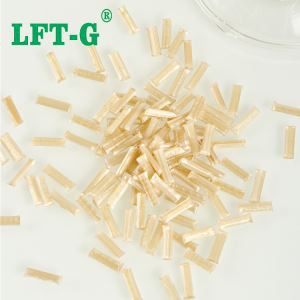

LGF TPU in Structural Material Evolution
In the fields of transportation, industrial equipment, and intelligent manufacturing, structural functional components are facing multiple challenges: increasingly stringent light weighting requirements, increasingly complex service environments, and continuously extended service life. Traditional engineering plastics or single-performance elastomer materials have been unable to strike a balance between strength, toughness, and durability.
Against this backdrop, long-fiber reinforced thermoplastic composites have gradually become an important direction for upgrading structural component materials. Among them, LGF TPU compound resin, as a representative of flexible reinforcing systems, has begun to enter the field of engineering applications.
As a mature thermoplastic elastomer, TPU has long been mainly used in non-load-bearing fields such as sealing, coating, buffering, and flexible connections. However, with the evolution of structural design concepts, the role of elastomer materials is changing.
In practical engineering, more and more components not only require a certain degree of rigidity to support the structure, but also need to absorb energy, reduce noise, or mitigate impact through the elastic characteristics of the material itself. This "semi-structured, semi-functional" component form provides new application space for enhanced TPU materials.
The Evolution of the Industry Driven by Enhanced Technologies
The early TPU reinforcement schemes mostly relied on short glass fibers or mineral fillers. Although they could enhance rigidity, they often came at the expense of toughness, fatigue life and surface integrity.
With the maturity of long fiber preparation and impregnation technologies, the LGF (Long Glass Fiber) reinforcement system has gradually been applied to TPU matrices, enabling the material to maintain its elastic characteristics while significantly improving its load-bearing capacity and structural stability. This technical approach reflects the industry's shift from "priority on rigidity" to "optimization of comprehensive structural performance".
The industrial application of LGF TPU

Typical demand scenario
From the perspective of industry applications, LGF TPU mainly serves the following types of structural component requirements:
Functional parts that need to withstand cyclic loads, requiring excellent fatigue resistance and rebound performance
Structural components with impact or vibration conditions, demanding the material to have energy absorption capability
Components oriented towards lightweight design, maintaining structural safety margin while reducing weight Complex shapes or integrated structural components are formed through one-time injection molding process.
Focus on changes in priorities
The current industry's evaluation criteria for materials are no longer limited to a single mechanical indicator. Instead, they pay more attention to:
The dimensional stability and structural integrity over a long period of use
The fatigue life performance under dynamic load conditions
The performance consistency in different temperature and humidity environments
The safety redundancy capability of structural components in real working conditions
The reason why LGF TPU has gained attention is fundamentally because its performance combination better meets the actual working conditions rather than just a single performance in the laboratory.


The challenges of the promoted industry
Although LGF TPU has obvious technical advantages, it still faces some common challenges during its industry promotion:
The design end lacks understanding of the structure of long-fiber reinforced elastomers.
The molds and process parameters need to be optimized for the long-fiber system.
The cost assessment is still based on the material unit price rather than the full life cycle cost.
Industry standards and mature cases are still being gradually established.
These issues are not limitations of the materials themselves, but rather a common stage that new composite materials typically go through during the early stages of industrialization.
Processing Poses Challenges to Industry Perception
Although LGF TPU demonstrates potential in terms of performance, its application in the industry still requires an improvement in the corresponding understanding. The long-fiber reinforced system has higher requirements for mold structure, gate design, and process parameters. At the same time, designers need to fully understand the anisotropic characteristics of the material at the structural level.
In some applications, the material performance fails to be fully utilized. This is often not due to the material itself, but rather the lack of synergy between the design and the process and the material's properties. This phenomenon is particularly common in the early stages of the promotion of new composite materials.
In the long term, the development of the LGF TPU industry will mainly manifest in the following aspects:
Deepening the integration with structural design to promote the collaborative optimization of materials and structures
Expanding into engineering applications with higher loads and more complex conditions
After standardization and accumulation of application experience, lowering the industry's usage threshold
Combining with the concept of sustainable manufacturing to explore more environmentally friendly solutions
These trends indicate that LGF TPU is not a short-term hot material, but rather has the potential to establish a stable application path in specific structural and functional fields.
Overall, the industry value of LGF TPU does not lie in completely replacing traditional materials, but in providing a material option that is more in line with actual working conditions for structural functional components. As the industry's understanding of material performance boundaries, design methods, and application scenarios continues to deepen, this material system will play its due role at the appropriate position, promoting the development of structural functional components towards higher reliability and comprehensive performance.