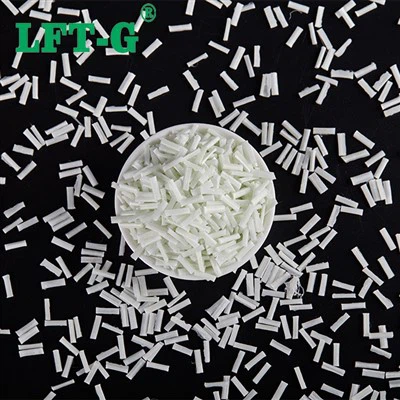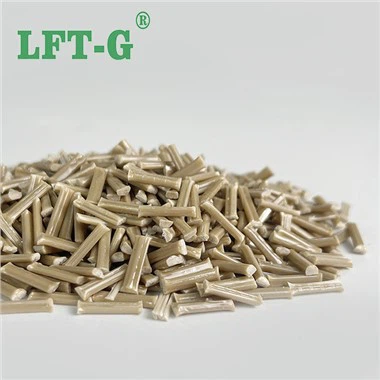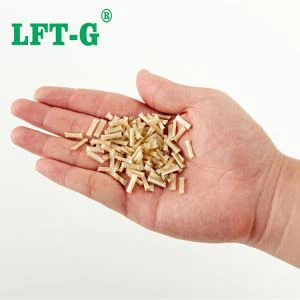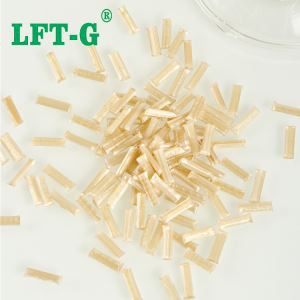

The fiber length of the LFT varies with the processing. The impact properties are particularly dependent on the fiber length, so the compression molding process is significantly better than injection molding in terms of mechanical properties. Typically, fibers having an average of about 5 to 20 mm in the part are considered to be long fibers.
In the initial LFT production, resin and LFT-G long fiber pellets were usually used to complete the final product by injection molding. Since the fiber length of LFT-G long fiber pellets is limited, the final LFT product performance Still limited, in recent years, LFT-D-ILC process technology has become a representative process for LFT products.
LFT-D-ILC is called the long-fiber reinforced thermoplastic material in-line molding process technology, and English is Long Fiber reinforced Thermoplastics-Direct processing-In Line Compounding. The process is shown in the figure. In this process, the in-line compounding system is integrated into the forming process, and the matrix particles and additives are delivered to a gravimetric dosing unit combination that ensures moderate mixing based on the mechanical properties of the part. Generally, colorants, antioxidants, heat stabilizers, and crosslinkers provide a suitable formulation. The molten compound passes directly through a die into the opening of the compounding extruder (twin screw). This is where the glass roving is added.
To reduce the roving interaction, the spool is placed on a specially designed creel. Each roving is guided by a special plastic tube to avoid friction and electrostatic repulsion. Each roving is monitored by a single sensor.
The rovings are fed through a tube into a preheating device that is spread over the heated irons. The temperature should not be higher to prevent damage to the fiberglass. Through a specially designed interface, the fibers form an aligned arrangement in the molten polymer as they enter the compounding extruder.
The compounder is a co-rotating, cross-over and self-cleaning device that draws at 26D (26 x diameter), vacuum assisted or atmospheric pressure. The additive can be added at the 14D site using a lateral feed device. The extrusion pressure is approximately 40 to 60 bar (4 to 6 MPa) depending on the melt flow index (MFI) of the polymer.
The compounding extruder continuously supplies the plasticized material, and at the molding temperature, the slit die extrudes the block molding material onto a fully automated conveyor belt. The conveyor belt is covered by a heating passage to prevent the surface temperature of the extruded block molding material from dropping. When the block molding material is grasped by the processing robot, the heating passage is opened.
The block molding material is conveyed to a press forming apparatus which performs the BMC or SMC process and, if further processing is required, proceeds to the next process.