
In the fuel cell engine system, in addition to the core component of the electrical stack, the role of ancillary components is also extremely important, such as humidifier, air compressor, hydrogen circulation pump, ejector, deionizer and water pump.
During the operation of fuel cell engine, the water content of the proton exchange membrane(PEM) plays an important role in the performance and life of the electric stack: if the water content of the proton exchange membrane is too low, the proton cannot be effectively conducted, the performance of the electric stack decreases, and the prolonged operation may even lead to the damage to the proton exchange membrane, and ultimately, the fuel cell engine can't work normally; if the water content of the proton exchange membrane is too high, it will lead to flooding, and the fuel cell engine can't work normally either.
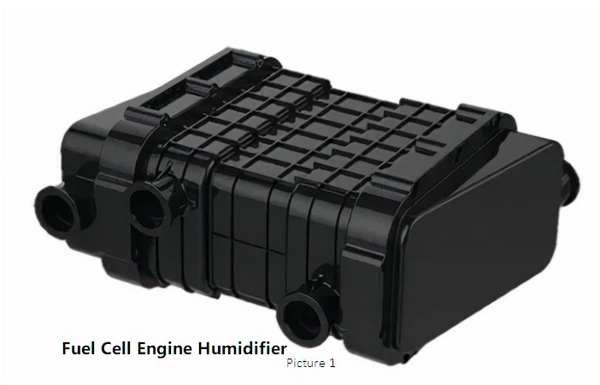
If the water content of the plasma exchange membrane is too high, it will lead to flooding and the fuel cell engine will not work normally. Therefore, the intake humidification control technology is of great significance to maintain the proper water content of the proton exchange membrane and improve the performance of the fuel cell engine. Humidifying the reaction gas entering the fuel cell engine through a humidifier (Picture 1) to keep the water content of the proton exchange membrane in an optimal state is an effective way to improve the performance of the fuel cell engine.
Humidifiers need to have a small flow resistance, high humidification performance, simple production and other advantages, but also should have a good water molecule transport and prevent the passage of other components in the air. However, humidifiers are often subject to water molecules or water impact, which requires humidifiers at low temperatures also have better impact resistance. General PA, MXD6, nylon materials can only meet the performance requirements of the impact of high temperature, if the low temperature, impact resistance will be reduced.
In recent years, LFT PPS composite has gained attention as a potential material for fuel cell engine humidifiers due to its unique properties.

What is lFT PPS?
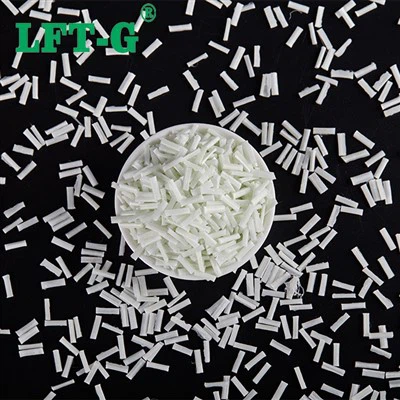
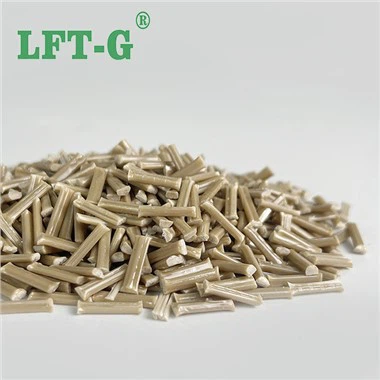
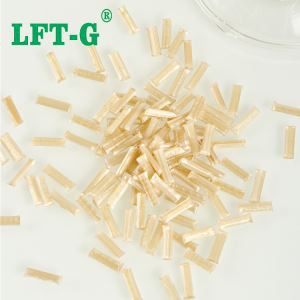
LFT PPS composite is a high-performance thermoplastic composite material that consists of long glass/carbon fibers embedded in a matrix of polyphenylene sulfide (PPS) resin. LFT PPS has excellent dimensional stability, which means that it does not deform or shrink impact under high and low temperature and pressure conditions.
LFT PPS can improve the efficiency and performance of the fuel cell engine by providing a high degree of humidity control. The high dimensional stability of LFT PPS composite allows for precise control of the humidity level, which is critical for the optimal functioning of the fuel cell engine. Secondly, it can increase the durability and longevity of the humidifier by resisting corrosion and wear over time. This results in a lower total cost of ownership for the fuel cell engine system.
Benefit of LFT Long Fiber PPS composites
------
LFT PPS, a high dimensional stability of long fiber reinforcement, the distribution of longer fibers in the humidifier components has the same direction consistency, which can absorb the pressure/stress from the outside, coupled with the stability of the PPS to the environment, which can greatly improve the performance of the plastic parts in high/low temperature such as impact strength.

In addition to its technical advantages, LFT PPS composite is also a sustainable and environmentally friendly material. Its production process generates less waste and consumes less energy than traditional metal processing methods. Furthermore, it can be recycled and reused at the end of its service life, reducing the environmental impact of the fuel cell engine system.
The use of LFT PPS composite for fuel cell engine humidifiers offers several advantages over traditional materials. It improves the performance and longevity of the humidifier while reducing the total cost of ownership of the fuel cell engine system. Additionally, LFT PPS composite is a sustainable and environmentally friendly material, making it an attractive option for future applications in fuel cell technology.