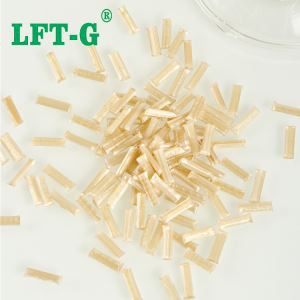

LCF PA66 Brings Revolutionary Innovation to Drone Components
In the drone industry, a "race" over performance is hitting a bottleneck. On one hand, the market demands longer flight duration, greater payload capacity, and more intelligent obstacle avoidance; on the other hand, the energy density of battery technology is approaching its limit. This contradiction forces designers to shift their focus from "energy (battery)" to "energy consumption (structure)".
In the past, designers had only two options: either lightweight but cumbersome aluminum alloy (CNC), or extremely lightweight but expensive and difficult to shape thermosetting carbon fiber. However, the emergence of LCF PA66 (long carbon fiber reinforced nylon 66) composite is not merely a "middle option", but rather introduced as a completely new "design language". It is redefining the design philosophy of drones - shifting from the traditional "component assembly" to the future "organic integration".
LCF PA66: Material Substitution
The first stage of drone application is "material substitution". Designers replace aluminum CNC parts or fiberglass components with LCF PA66 to achieve direct weight reduction benefits.
The greatest advantage of LCF PA66 is not merely its "lightness" or "strength", but rather its integration with the injection molding process (LFT-G), which gives it nearly unlimited geometric flexibility. This liberates engineers in the design process.
The "bird bone" design becomes possible: The traditional CNC aluminum tube arm is an equal-section solid or hollow tube. However, LCF PA66 can be designed using topology optimization software. Its final form is more like the skeleton of a bird - the materials are dense at the key stress-bearing points (such as the motor base and the connection points of the body), while the non-stress areas are delicately "cut out" and supplemented with extremely thin reinforcing ribs. This "variable cross-section, internal framework, and thin-walled" design is beyond the reach of aluminum alloy CNC. It achieves "maximum weight reduction while maintaining the same rigidity".
Exoskeleton-style fuselage: The exoskeleton combines "skin", "framework" and "protection" into one. LCF PA66 can also achieve this "exoskeleton" design. Designers can use the upper and lower shells of the drone as the main load-bearing structure at the same time. This "shell as frame" design eliminates the internal metal reinforcement plates, making each part a part of the load-bearing structure, achieving the maximum structural efficiency.

The System Revolution of LCF Nylon 66
The second revolutionary significance of LCF PA66 lies in its blurring the boundary between "structural components" and "functional components". The "black skeleton" of the drone is not just a skeleton; it is also becoming the carrier of the sensing system.
The drone is a nightmare of vibrations (high-frequency motors + propellers). LCF PA66 polymer is a "flexible yet strong" material: Long carbon fibers (LCF) provide extremely high rigidity to resist low-frequency torsion and bending (flight posture); while the PA66 matrix provides excellent damping properties, which can absorb a large amount of high-frequency micro-vibrations (Jello effect). The novelty lies in: Designers began to take advantage of this, making the "arms act as shock absorbers". Through LCF PA66 compound resin, the high-frequency pollution on the flight control (IMU) and gimbals is absorbed by the "bones" at the source, which enables the drone to reduce or even eliminate those heavy rubber damping balls used for shock absorption, achieving another round of system-level weight reduction and simplification.
LCF PA66: Driving Transformation

LCF PA66 composite is changing the "iteration speed" in the drone industry.
From "manual" to "digital" transformation: Traditional high-performance thermosetting carbon fiber relies on the experience of skilled workers, resulting in poor consistency and long cycles. However, LCF PA66's injection molding is purely "digital manufacturing" - the design is completed through simulation on a computer, then the data is input into the mold, and finally, the rapid replication in seconds is achieved through an injection molding machine (PID control).
Agile iteration: This predictable and highly efficient mass production capability enables drone companies to iterate products like "printing". When aerodynamic or structural defects are discovered, engineers can modify the mold or adjust the injection molding parameters within a week, and then launch the improved product to the market in the following month. This "agile development" model based on LCF PA66 plastic granules is beyond the imagination of traditional manufacturers using CNC cutting or thermosetting molding.
Long carbon fiber reinforced nylon 66 (LCF PA66) compound resin is by no means just a "lighter plastic" or a "cheaper carbon fiber". It is a "design medium" that gives drones the possibility of "biological structure", the efficiency of "system integration", and the speed of "agile iteration".
Looking to the future, when piezoelectric sensors are embedded in LCF PA66 material to enable its "skeleton" to sense stress in real time; when it is compounded with conductive polymers to make its "skeleton" part of the circuit - then those drones will no longer be cold machines, but a true "flying robot".