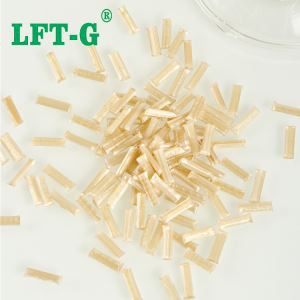

Is carbon fiber nylon stronger than aluminum?
The question of whether carbon fiber nylon is stronger than aluminum is nuanced and depends heavily on the specific grade of each material and how "strength" is defined. Aluminum alloys offer high absolute strength, but carbon fiber reinforced nylon, particularly advanced composites like LFT-G® PA LCF (Long Carbon Fiber Polyamide), presents a compelling case, especially when considering specific strength (strength-to-weight ratio). While some high-strength aluminum variants may exhibit higher ultimate tensile strength values, LFT-G® PA LCF can achieve strength levels comparable to many common aluminum alloys (such as 6061 or 7075 series under certain conditions) but at a significantly lower density – often around half that of aluminum. This translates into a superior specific strength, meaning LCF nylon parts can provide similar structural performance to aluminum parts but with a substantial weight reduction, a critical factor in industries like automotive, aerospace, and robotics.
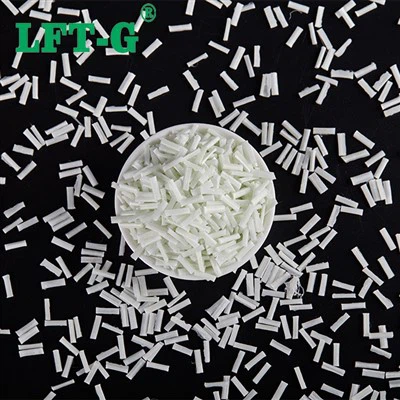
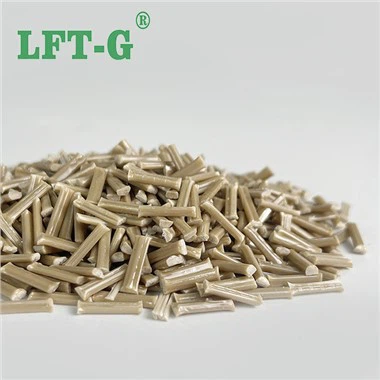
LFT-G® PA LCF is an engineering marvel, where a robust Polyamide (Nylon, typically PA6 or PA66) matrix – known for its toughness, thermal stability, and chemical resistance – is reinforced with a significant percentage of *Long Carbon Fibers* (LCF). Carbon fibers themselves are exceptionally strong and stiff, and possess a very low density. The "long" aspect is crucial: through Long Fiber Technology (LFT), these fibers, often several millimeters long, create an intricate, interlocked 3D skeletal network within the nylon matrix during processing. This LCF structure enables highly efficient stress transfer and energy dissipation, leading to dramatic improvements in tensile strength, flexural modulus (stiffness), impact resistance, fatigue endurance, and dimensional stability far exceeding those of unreinforced nylon or even short carbon fiber (SCF) reinforced nylon. This allows LFT-G® PA LCF to effectively replace metals, offering metal-like performance with the design flexibility and processing advantages of thermoplastics.
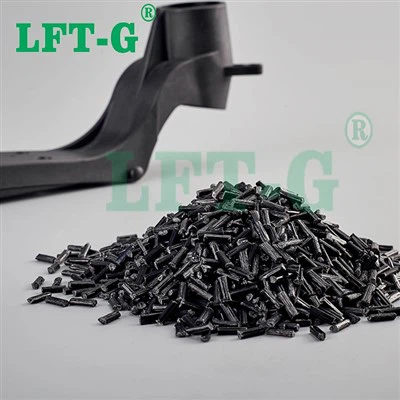
what are the benefits of long carbon fiber nylon?
- Exceptional Specific Strength (High Strength-to-Weight Ratio)
- Extreme Stiffness and Rigidity (High Modulus)
- Significant Lightweighting (Metal Replacement Capability)
- Excellent Fatigue and Creep Resistance
- Very Low Coefficient of Thermal Expansion (CTE)
- Superior Dimensional Stability and Precision
- Electrical Conductivity (for ESD/EMI Shielding)
- Enhanced Wear and Abrasion Resistance
- High Impact Strength (Optimized by LCF Structure)
Contact LFT-G® Material Expert
LFT-G® long carbon fiber Nylon for Metal Replacement Solutions

LFT-G® PA LCF (Long Carbon Fiber Polyamide) is at the forefront of material innovation, particularly in providing high-strength, lightweight solutions for direct metal replacement in demanding industries like automotive, aerospace, and industrial manufacturing. Engineers are increasingly specifying our PA LCF grades (e.g., LFT-G® PA6 LCF30 or PA66 LCF40) to achieve performance characteristics that rival or even exceed those of traditional metals like aluminum or steel, but at a fraction of the weight. The exceptional stiffness, tensile strength, and fatigue resistance imparted by the long carbon fiber network within the durable polyamide matrix make LFT-G® PA LCF ideal for applications such as automotive structural reinforcements, chassis components, drone frames, robotic arms, and high-performance sporting goods. These components benefit not only from significant mass reduction but also from excellent dimensional stability due to the very low coefficient of thermal expansion inherent to carbon fiber composites.
The advantages of employing LFT-G® PA LCF for metal replacement extend to enhanced design freedom and manufacturing efficiencies. Carbon fiber nylon composites can be injection molded into complex net-shape parts, integrating features that would require multiple machining or assembly steps with metals. This consolidation of parts reduces assembly time and overall system costs. Furthermore, LFT-G® PA LCF offers inherent corrosion resistance, eliminating the need for protective coatings often required for metals. Its electrically conductive nature (tunable by carbon fiber content) can also be leveraged for applications requiring EMI shielding or static dissipation. By choosing LFT-G® for PA LCF solutions, engineers gain a powerful tool to push design boundaries, improve product performance, and achieve substantial weight savings without compromising structural integrity.

Material Comparison for long carbon fiber nylon and short CF/metal material
|
Property Data |
LFT-G® PA66 LCF (e.g., 30% LCF) |
Steel (Mild /High Strength) |
Aluminum Alloy (e.g., 6061) |
PA SCF (Short Fiber e.g., 30%SCF) |
|---|---|---|---|---|
| Density (g/cm³) | ~1.20 - 1.25 | 7.85 | 2.70 | ~1.20 - 1.24 |
|
Tensile Strength (MPa) |
200 - 280+ | 400 - 700+ | ~290 - 310 | 150 - 200 |
|
Flexural Modulus (GPa) |
20 - 35+ | 200 - 210 | 69 - 73 | 15 - 25 |
| Impact Strength Notched Izod (kJ/m²) | 20 - 40 (Higher with toughening) | High (ductile metals) | Moderate (ductile metals) | 8 - 15 |
|
Thermal Expansion (CTE) (10⁻⁶/°C, Flow) |
10 - 25 | 11 - 13 | 23 - 24 | 20 - 35 |
| Specific Strength (Approx. Strength/Density) | Very High | Moderate | High | Moderate to High |
| Electrical Conductivity | Conductive (Tunable) | Highly Conductive | Highly Conductive | Conductive (Lower than LCF) |
| Key Advantages Summary | Highest Specific Strength & Stiffness, Lightweight, Low CTE, ESD/EMI | Highest Absolute Strength, Ductility, Low Cost | Good Strength-to-Weight, Corrosion Resistance, Formability | Good Strength & Stiffness uplift over neat PA, Lower Cost than LCF |
| Considerations | Higher Material Cost, Anisotropic, Moisture Sensitive (PA base) | Very High Density, Corrosion, Complex Processing | Higher Cost than Steel, Lower Absolute Strength | Lower Performance than LCF, Anisotropic, Moisture Sensitive |
Note: Data represents typical values (e.g., for ~30% carbon fiber in PA6 matrix where specified) and can vary significantly based on specific grades, fiber type/content, Polyamide type (PA6, PA66, etc.), and processing. Polyamide materials are hygroscopic; properties are affected by moisture. Data often refers to dry-as-molded (DAM) conditions. Always consult official LFT-G® datasheets.
Download PA66 LCF Data Sheet PDF