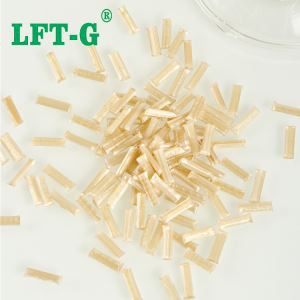

Industry Research on LGF Materials

Understanding Long Glass Fiber Materials
Against the backdrop of the rapid evolution of global manufacturing towards lightweight, high-performance, low-cost and sustainable development, polymer composites are gradually replacing traditional metal materials and becoming key structural materials in the fields of automobiles, home appliances, industrial equipment, etc. Among them, long glass fiber reinforced thermoplastics (LGF) as a key material system that connects "cost control" and "performance improvement" is playing an increasingly important role in the industrial chain.
From the perspective of the development path of materials, composite materials have gone through three stages:
Phase 1: Short Glass Fiber Reinforced Plastic (SGF)
Phase 2: Continuous Fiber Reinforced Thermoplastic Material (CFRT)
Phase 3: Long Glass Fiber Reinforced Thermoplastic Material (LGF)
Among them, LGF is at a very crucial "middle equilibrium point":
It is significantly cheaper than the carbon fiber system and significantly superior in performance to the short glass fiber system.
Therefore, long glass fibers are not merely a simple upgrade of materials, but rather an engineering-balancing solution tailored for industrial applications.
Definition of Material Structure
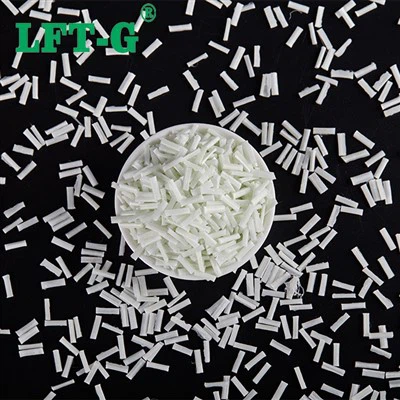
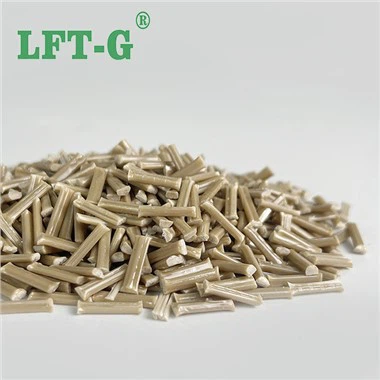
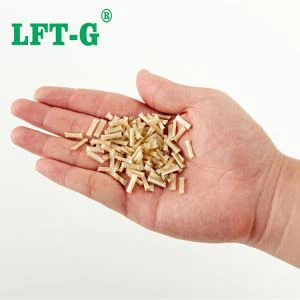
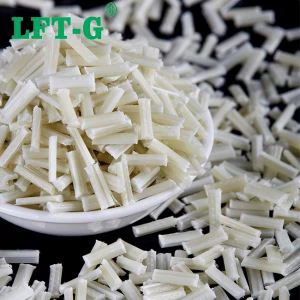
Long glass fibers usually refer to glass fibers with a length ranging from 6mm to 25mm or even longer in the reinforced thermoplastic composite materials. During the melting process, glass fibers are maintained with long lengths through special techniques, and during the molding process, a three-dimensional random distribution network structure is formed.
Why develop the "long fiber" system?
Lorem ipsum dolor sit, amet consectetur adipisicing elit.
Although short glass fibers have low costs, they have obvious performance limitations:
Short fiber length → Low stress transfer efficiency
However, although continuous carbon fiber has excellent performance, it has the following drawbacks:
excessive cost
Easy to break → Limited strength improvement
complicated molding process
Weak anisotropy → Insufficient rigidity of structural components
low production efficiency
Therefore, the industrial sector requires a compromise solution:
One that can significantly enhance mechanical properties while maintaining the processing efficiency and cost advantages of thermoplastic materials.
As a result, the long glass fiber system has been widely developed and industrialized.
LFT (Long Fiber Thermoplastic), as the mainstream industrial process, has the following key control points:
Uniformity of fiber impregnation
Fiber breakage control
Melt shear control
Molding temperature window
Performance Advantage Analysis
The mechanical properties have been significantly improved.
Compared to short glass fiber materials, long glass fibers can achieve:
Increased tensile strength
Increased bending modulus
Improved impact resistance
Excellent fatigue and creep resistance properties
Under long-term loading conditions (such as in automotive structural components and industrial supports), LGF demonstrates:
Lower creep deformation rate
More stable fatigue life
Higher structural retention capability
This makes it suitable for long-term load-bearing components.
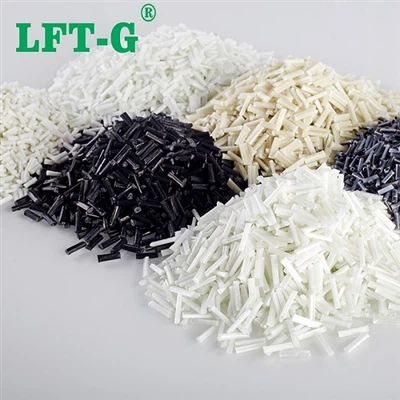
Homogeneity is superior
Short glass fiber materials usually have significant differences in flow directions. In contrast, long glass fibers exhibit:
Longer fiber length
More obvious three-dimensional network structure
Therefore, they show mechanical behavior that is closer to "quasi-isotropic" behavior.
Cost and Processing Advantages
Compared with metals or carbon fibers, LGF has significant industrial advantages:
It can be molded by injection (high efficiency)
It can be recycled (environmental advantage)
The cost is much lower than that of carbon fiber composites
It can be compatible with existing plastic production lines
The Industry Application Structure

-
Automobile industry
Front and rear bumper frames
Door modules
Dashboard frames
Battery housing (for electric vehicles) -
Home Appliance
Washing machine structural framework
Air conditioner bracket
Vacuum cleaner casing -
Industry and mechanical equipment
Industrial brackets
Pump body and housing
Mechanical shell structural components -
The electronics and electrical industry
Connector housing
Electrical insulation component
High-strength support component
The Reason for Choosing the LGF Material
Engineering economic advantages In the logic of material selection, enterprises usually follow:
Performance meets requirements + Cost is the lowest + Mass production is feasible
LGF is at the optimal balance point.
The Trend of Replacing Metals Under the trend of automotive lightweighting:
Steel → Aluminum → Composite Materials
LGF is an important intermediate material for replacing metals.
Enhancement of Process Maturity As the LFT technology becomes more mature:
The fiber distribution control becomes more stable
The molding cycle becomes shorter
The product consistency becomes higher
Complete Supply Chain System At present, the main material systems worldwide have been established:
The resin supply system is mature
The fiber system is standardized
The modification plant system is complete

Industry Nature Positioning
From the perspective of the overall industrial structure, the essence of long glass fiber materials is not "a substitute material", but rather an industrial equilibrium point that connects high-cost and high-performance materials with low-cost and low-performance materials.
Its industry positioning can be summarized as:
Metal substitution transitional core materials
Cost-supplementing materials for carbon fiber systems
Mainstream engineering materials for industrial structural components
The development of long glass fiber materials is essentially the result of the manufacturing industry constantly seeking the optimal solution among "performance, cost, and scale". In the process of future industrial upgrading, LGF will not be replaced by a single material, but will continue to expand its application boundaries as the automotive, electrification, lightweighting and green manufacturing industries develop.
Its true value lies not in "maximum performance", but in achieving the optimal overall performance under the constraints of industrial reality.