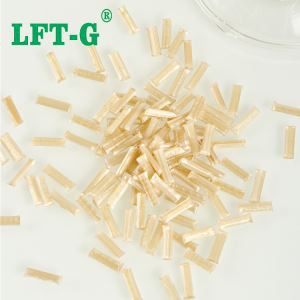

In-depth Study of LGF PP Composite
Why did LGF PP Material Come Into Existence?

In the context of the continuous upgrading of the global industrial material system, composite materials have gradually evolved from "auxiliary materials" to the core structural materials in modern manufacturing. Especially in the fields of automobiles, new energy, intelligent equipment, industrial automation, and large-scale consumer manufacturing, materials no longer merely meet the usage requirements; instead, they begin to directly affect product performance, energy efficiency, manufacturing costs, and industrial competitiveness.
Over the past few decades, steel and aluminum alloys have long dominated the industrial structure system. However, as the global manufacturing industry has entered an era of lightweighting, high integration and low carbonization, traditional metal materials have begun to show increasingly obvious limitations.
For example:
The higher weight leads to a decrease in energy efficiency.
The metal processing technology is complex and consumes a large amount of energy.
The multi-component welding increases the manufacturing cost.
The design freedom of the complex structure is limited.
There are challenges in long-term corrosion prevention and chemical stability.
Although traditional plastics have the advantages of lightweight and low cost, they have long been confined to non-structural components. Therefore, the global materials industry began to seek a new solution: one that can maintain the lightweight and efficient processing characteristics of plastic materials, while also approaching or even partially replacing the structural performance of metals.
LGF PP (Long Glass Fiber Reinforced Polypropylene) emerged rapidly under such an industrial context.
Industrial Development Drives Material Upgrades
The emergence of any material on a large scale is essentially a result of changes in industrial demand.
The appearance of LGF PP is not merely a technological innovation in the material industry; rather, it is an inevitable outcome of the upgrading of the global industrial manufacturing system.
In the traditional industrial era, metal materials such as steel and aluminum long dominated structural manufacturing. This was because metals had a mature mechanical performance system and could bear complex structural loads.
However, as the global manufacturing industry entered the stage of high efficiency and low carbonization, the traditional metal system began to gradually expose its problems. Especially in the automotive industry, lightweighting has shifted from being "a means to enhance performance" to being an "essential requirement for the industry".
The future industrial system is more inclined towards integrated injection molding, structural integration, automated production, and modular manufacturing.
Thus, LGF PP began to enter the global industrial system. Its emergence essentially represents a shift in the logic of industrial materials from a "single performance-oriented" approach to a "comprehensive industrial efficiency-oriented" approach.
The Limitations of Short Glass Fiber Materials
Before LGF PP, GF PP (short glass fiber reinforced PP) had already been widely available.
Although short glass fiber materials can enhance the rigidity of PP, the industry soon discovered that there is a significant limit to the performance improvement achieved by them.
The main issues include:
-
Insufficient impact resistance
-
Insufficient fiber length
-
Limited structural load-bearing capacity
-
Insufficient long-term stability

Why are Long Glass Fibers Stronger Than Short Ones?
Although short glass fibers can also enhance rigidity, there are obvious limitations to their reinforcing efficiency.
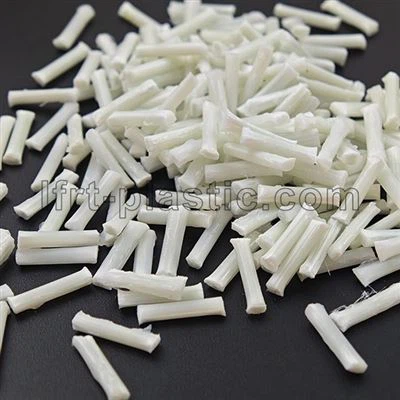
Due to the limited length of short fibers, it is difficult for them to form a continuous mechanical transmission path when subjected to force. Meanwhile, during the injection molding process, short fibers are more prone to further breakage.
And long glass fibers can:
-
Maintain a more complete fiber length
-
Establish a longer load transfer path
-
Form a more stable reinforcing structure
-
Improve the efficiency of impact energy absorption
From the perspective of material structure:
Long glass fibers are closer to a "continuous reinforcement system".
Therefore, its comprehensive structural performance is significantly higher than that of the short glass fiber system.
This is also the reason why the automotive industry is increasingly inclined towards LGF PP rather than ordinary GF PP material.
Why are New Energy Vehicles More Dependent on LGF PP?
The development of new energy vehicles is not merely about changes in the power system. In fact, it is redefining the entire automotive material system.
In the era of traditional fuel vehicles:
The engine and transmission account for a significant portion of the vehicle's weight.
And for new energy vehicles, the following components have been added:
Battery system
Electric drive system
Thermal management system
These new modules have significantly increased the overall weight of the vehicle.
Therefore, new energy vehicles place greater emphasis on lightweighting compared to traditional fuel vehicles.
The industry has even witnessed a trend:
"Every reduction of 1kg in weight means an improvement in energy efficiency." Therefore, major car manufacturers began to extensively search for new composite materials that can replace metals. LGF PP has been growing rapidly under this trend.


The development of LGF PP is essentially the outcome of the continuous upgrading of the industrial manufacturing system. Its emergence is not merely a simple material modification, but rather a result driven by the collective demands of the entire industry for lightweighting, high efficiency, structural integration, and sustainable development.
From the perspective of industry status, LGF PP is no longer just an ordinary engineering plastic, but has gradually become an important component of the modern industrial structural materials system. It is favored by many industries not because of any single outstanding performance, but because it achieves an excellent balance among lightweight, structural performance, processing efficiency, cost control and industrialization capabilities.