
How Recycled Materials Cause Defects in Injection-Molded Parts?
What Is Recycled Plastic Material?
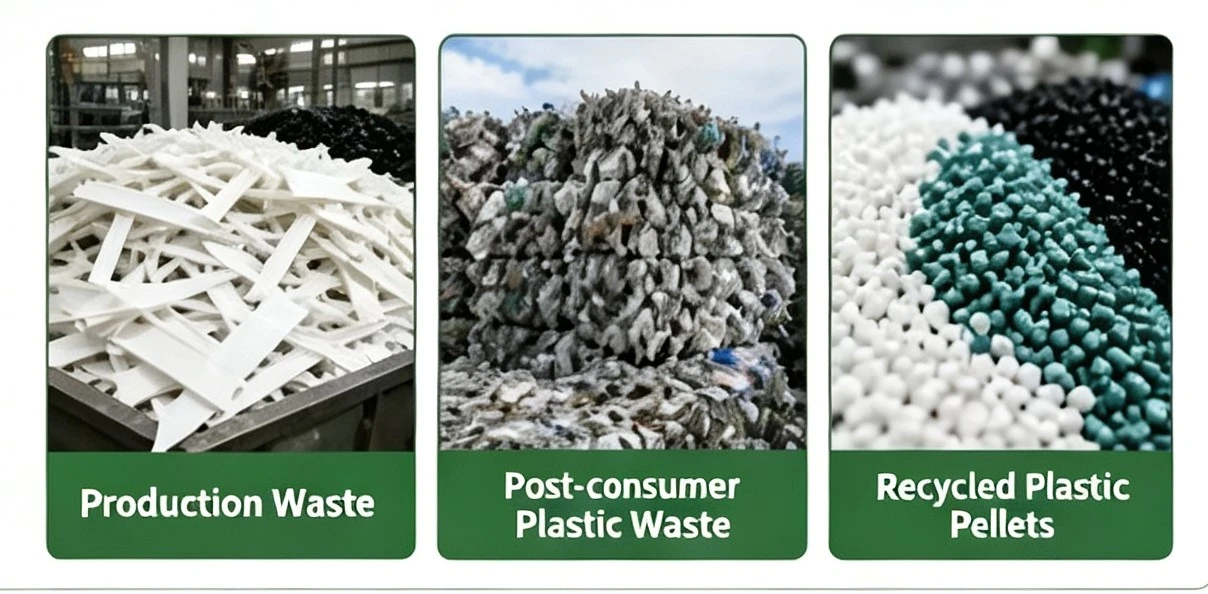
Recycled plastic material generally refers to plastic materials generated from waste or scrap during the production of plastic products, used or discarded plastic products, and other plastic waste collected for reuse. Through processes such as recovery, sorting, cleaning, shredding, and remelting, these materials are reprocessed into recycled plastics that can partially replace virgin resin and be used again in plastic manufacturing.
Recycled materials may include regrind, reclaimed materials, and recycled resin. Common sources of production scrap include injection-molding flash, runners, and extrusion waste.
Why Use Recycled Materials?
In injection molding workshops, recycled materials such as sprues, runners, and regrind are widely used. Their purpose is not simply to reduce costs, but to address a combination of cost efficiency, production utilization, environmental sustainability, and process requirements.
The Primary Benefit: Reducing Raw Material Costs
① Reuse Production Scrap and Minimize Material Waste
Injection molding inevitably generates sprues, runners, excess material, flash, trial-run scrap, and defective parts. These materials are often made from the same polymer as the finished product and can therefore be recycled and reused.
Instead of treating these materials as waste, manufacturers can grind and reintroduce them into production at an appropriate ratio, maximizing material utilization and reducing raw material losses, especially in high-volume production.

② Lower Material Costs
Purchased recycled resin or regrind is generally less expensive than virgin resin. For high-volume structural components and non-cosmetic parts, incorporating recycled material at a controlled ratio can reduce the overall material cost and improve production economics.
Why Does Recycled Material Have Lower Heat Resistance?
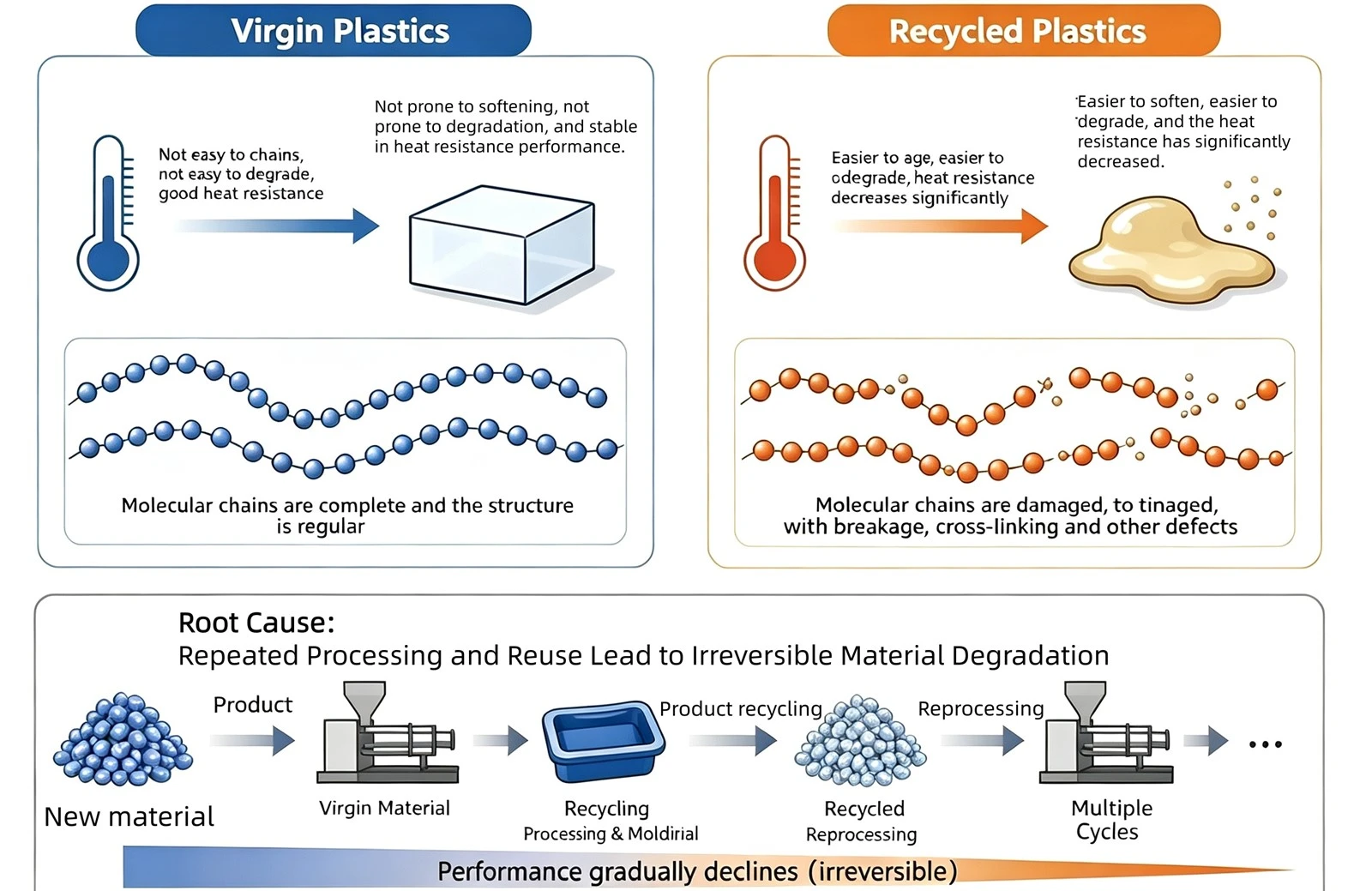
Compared with virgin resin, recycled plastic material is more susceptible to softening and thermal degradation during heating, processing, or subsequent use, resulting in a noticeable reduction in heat resistance.
Core Cause: Repeated Processing and Use Lead to Irreversible Material Degradation
1. Five Major Causes
- Polymer Chain Degradation
- Thermo-Oxidative Aging
- Residual Impurities & Contaminants
- Additive Depletion or Failure
- Mixing of Inconsistent Materials and Material Systems
2. Negative Effects of Reduced Heat Resistance
- Lower Heat Deflection Temperature, making products more prone to deformation and warping when exposed to heat
- Increased susceptibility to thermal degradation, resulting in discoloration, foaming, and deterioration of overall mechanical properties
- Release of volatile substances when heated, causing unpleasant odors and the release of harmful substances
- Narrower processing window, making the material more prone to carbonization and machine blockage, resulting in significant fluctuations in product quality
- Significantly shortened service life under long-term thermal aging conditions
3. Targeted Improvement Recommendations
- Strict Sorting & Cleaning: Reduce residual impurities and contaminants, minimizing potential causes of material degradation at the source.
- Optimize Processing Conditions: Lower the processing temperature and screw shear intensity to avoid excessive thermal history and further degradation.
- Proper Additive Replenishment: Add antioxidants, heat stabilizers, and other additives as needed to rebuild the material's thermal protection system.
- Strict Control of Material Ratios: Prevent random mixing of materials. Before mixing, evaluate material compatibility and ensure proper matching of heat resistance performance.
- Blend with Virgin Material as Needed: Blend recycled material with virgin resin for processing to improve the overall thermal stability.
Why Does Recycled Material Burn Locally at High Temperatures?
During processing, recycled material (recycled resin) may experience localized carbonization, discoloration, and a burnt odor due to thermal decomposition, material residence, excessive shear forces, and other issues, ultimately affecting the appearance and performance of the finished products.
Causes of Localized Burning:
Thermal Decomposition of the Material
Excessively Long Residence Time
Excessive Shear Heat Generation
Poor Quality of Recycled Material
Insufficient Venting
This is precisely why LFT-G® has always insisted on using new materials to produce long-fiber materials. Although recycled materials can save costs, the quality of the materials cannot be guaranteed, and the performance cannot be fully optimized.