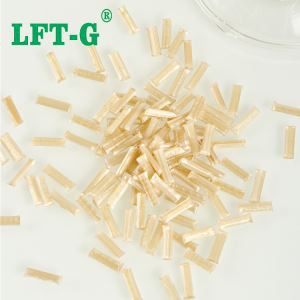

PEEK can be processed by injection, extrusion, pressing, blow molding, electrostatic spraying, etc. according to the thermoplastic method, but the processing conditions are harsh. PEEK has a melting point of up to 334 ° C, but has melt flow and high melt thermal stability after exceeding the melting point. At a shear rate of l000/s, the melt viscosity at 360 ° C was measured to be 480 Pa. s, 380 ° C is 400Pa. s, 400 ° C is 350Pa. s, it can be seen that the melt viscosity decreases significantly with the increase of temperature, and the thermal stability of the melt is also very good. It does not affect the fluidity at 400 ° C for 1 h, which is the melt processing of PEEK with higher viscosity. Possibility is provided, however, the melting temperature of PEEK is more than 100 °C higher than that of ordinary plastics, and the melt viscosity is also relatively large. Therefore, the requirements for equipment during injection are high, and the heating system of the injection machine is generally required to reach 400 ° C, injection pressure. It can reach 150MPa and the mold temperature can reach 160 °C.
PEEK can produce films, tubes, monofilaments, wire coatings, etc. by extrusion molding. PEEK unstretched films have low crystallinity and are not ideal for strength and heat resistance, and are generally improved by stretching and heat treatment. After stretching and heat treatment, the PEEK film has a melting point higher than that of the PET film by 80 ° C, and the strength is similar to that of the homo-benzene type PI film, and the moisture resistance and chemical resistance are better than the homo-phenyl type PI film.