
Do You Know About the Defects of Injection Molding?
If certain details are not paid attention to during injection molding, common product defects are likely to occur, such as warping deformation, shrinkage and depression, brittle fracture of the product, and obvious fusion marks.
Let's address these common issues related to injection molding. Why do they occur? So, how should we solve this problem?
Deformation, warping
Warping deformation in injection molded products refers to the distortion that occurs after the part is removed from the mold. It is mainly caused by uneven internal stress, inconsistent cooling shrinkage, or differences in shrinkage behavior within the material during molding. The deformation may appear as bending, twisting, or surface distortion, which can affect the product's appearance, dimensional accuracy, assembly performance, and overall reliability.

Solutions and Preventive Measures
Optimize product design: Ensure uniform wall thickness, avoid excessive thick or thin areas. Add reinforcing ribs and layout them reasonably.
Optimize mold design: Set the gate position appropriately, optimize the cooling system, and improve the exhaust design.
Optimize process parameters: Control the temperature reasonably, appropriately increase the holding pressure and time, and extend the cooling time.
Select suitable materials: Choose materials with low shrinkage, improve material fluidity, and control the proportion of additives.
Post-processing improvement: Perform annealing/heat treatment to eliminate internal stress, adjust the storage environment, and perform mechanical leveling (if necessary).
Shrinkage & Sink Marks
Sink marks are commonly caused by uneven cooling and shrinkage in thick sections of injection molded parts. During the cooling process, internal material contraction can pull the surface inward, creating visible depressions or uneven areas. This defect may affect the appearance, dimensional accuracy, and mechanical performance of the final part.

Improvement Suggestions
Optimize the wall thickness design
Avoid large areas of thick walls and maintain uniform wall thickness
01
Enhance cooling
Increase cooling time or optimize the cooling system
02
Adjust the process parameters
Slightly reduce the holding pressure and the holding time
03
Select appropriate materials
Choose materials with low shrinkage rate or add modifiers
04
Product Brittleness and Cracking
Injection-molded products are prone to cracking or breaking under force, manifesting as immediate fracture upon bending without obvious plastic deformation, and the fracture surface shows brittle characteristics.

Reason Analysis
Material Factors
Poor inherent toughness of the raw material (e.g., excessive use of recycled material).
Moisture absorption or material degradation.
Excessive additives or fillers.
Poor compatibility between mixed materials.
01
Processing & Equipment Factors
Low barrel temperature causes poor plasticization.
Insufficient injection pressure or speed.
Low mold temperature leads to rapid cooling.
Insufficient holding pressure or time.
Poor gate/runner design causes weld lines.
02
Mold Design Factors
Poor mold venting causing voids or air traps.
Uneven cooling within the mold causing inconsistent shrinkage.
Sharp corners, notches, or other stress concentration areas in the design.
03
Design Factors
Thin or uneven wall thickness.
Improper structure causing stress concentration.
Incorrect rib design affecting strength.
04
Environmental Factors
Low temperatures reduce material toughness.
Long-term UV exposure causes aging.
Chemical exposure leads to degradation or cracking.
05
Taking the causes of the problems as the basis to implement corresponding improvement measures can effectively reduce the occurrence of such issues.
Injection molding defects are rarely caused by a single factor. Most issues result from the combined effects of material properties, product design, mold design, and processing conditions. Identifying the root cause is the first step toward improving part quality and production efficiency.
By selecting the right material, optimizing part and mold design, and maintaining stable molding parameters, manufacturers can significantly reduce common defects such as warpage, sink marks, brittleness, and cracking. A systematic approach not only improves product quality but also helps lower scrap rates, reduce production costs, and ensure consistent long-term performance.

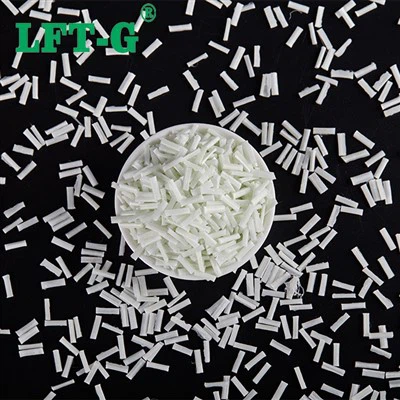
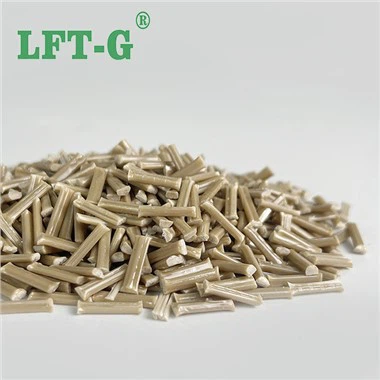
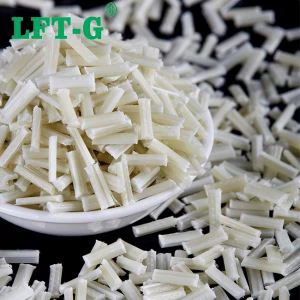
While mold design and processing parameters play an important role, material selection is equally critical. Long fiber reinforced thermoplastics provide higher stiffness, improved dimensional stability, and better impact resistance than conventional short fiber materials, helping reduce common injection molding defects while improving the overall performance of molded parts.