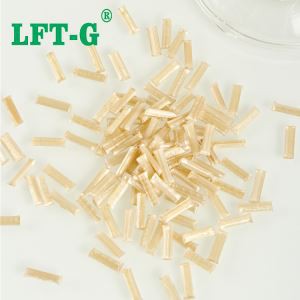

Carbon fiber / thermoplastic composite
The matrix resins used in carbon fiber reinforced resin composites are mainly divided into two categories, one being a thermosetting resin and the other being a thermoplastic resin. The thermosetting resin is composed of a reactive low molecular weight prepolymer or a high molecular weight polymer having a reactive group; during the molding process, crosslinking or polycondensation is carried out under the action of a curing agent or heat to form a crosslinked body structure which is infusible and insoluble. Epoxy resins, bismaleimide resins, polyimide resins, and phenolic resins are commonly used in composite materials.
The thermoplastic resin is composed of a linear high molecular weight polymer and dissolves and melts under certain conditions, and only physical changes occur. Commonly used are polyethylene, nylon, polytetrafluoroethylene and polyetheretherketone. In the carbon fiber reinforced resin-based composite material, the carbon fiber acts as a reinforcement, and the resin matrix shapes the composite material to carry the external force and transfers the load to the carbon fiber through the interface, so that it has technical properties, a molding process, and a carbon fiber composite material. Product prices, etc. have a direct impact, and the composite form of carbon fiber will also have an impact on the performance of the composite.
Carbon fiber reinforced nylon 6 composite
Chopped carbon fiber reinforced thermoplastic resin composites (SCFRTP) are an important component of engineering materials. Such composite materials generally have good mechanical properties, good economics, and can be manufactured into various shapes by hot press forming, extrusion molding, or injection molding. Nylon 6 is a thermoplastic resin material with a wide range of applications, and filler reinforcement modification is a commonly used and effective modification method for improving the performance of nylon 6 composites.
The research on carbon fiber reinforced nylon 6 composite (PA6/CF) has received a lot of attention in recent years. The performance of PA6/CF composites is affected by many factors: processing methods and processes, carbon fiber content and length in composites, carbon fiber dispersion and orientation, carbon fiber and PA6 interface structure, and properties of nylon 6 and carbon fiber itself.
However, the mechanical properties of thermoplastic composites mainly depend on the microstructure of the polymer matrix and the interfacial properties of the fiber and matrix. Therefore, it is particularly important to compare and analyze the microstructure and macroscopic properties of the composite.
In addition, PA6 is a semi-crystalline polymer composite. The mechanical properties of PA6/CF depend on the crystal structure and morphology of the PA6 matrix. The crystal structure and morphology depend on the processing technology of the composite. The microstructure of the PA6/CF composite. Studies on the relationship between appearance and structure and macroscopic performance systems have rarely been reported.