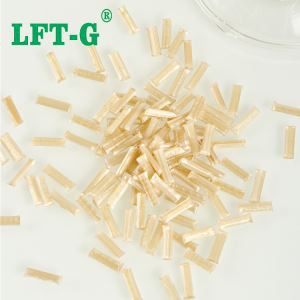

Carbon fiber reinforced composites basics
Carbon Fibre-reinforced Polymer (CFRP) is a composite material formed by using carbon fiber or carbon fiber fabric as a reinforcement and resin, ceramic, metal, cement, carbon or rubber as the matrix. .
It is a high performance fiber that is used the most in building construction. The organic fibers in the protective atmosphere are carbonized by heat treatment under tension applied to become carbon fibers having a carbon content of 90% or more.

CFRP materials were originally used in the aerospace industry, and this technology has matured in the 1970s. In the 1960s, the United States began to apply CFRP materials in the field of civil engineering. However, the experimental results were not satisfactory at the time, and the cost of the test was very high. Therefore, the research and application of FRP materials in the civil engineering field did not make much progress in the next two decades. It was not until the 1980s that countries such as Europe, the United States, Japan, and Australia began to pay attention to related applied research.
一. Type and structure of CFRP
How is CFRP made? First of all, carbon fiber is just a kind of fiber, and it is impossible to make parts by using it alone. Therefore, the carbon fiber is used as a composite material together with the resin. Depending on the type of resin used, and the variety and state of the carbon fiber, which can be made into various forms such as woven fabrics and short fibers, the properties of CFRP produced are also very different. There are four main intermediate substrates (molding materials). The main molding methods corresponding to these intermediate substrates and molding materials are also different.

二. Thermosetting and thermoplasticity
There are two types of resins used in CFRP, one is a thermosetting resin such as an epoxy resin or an unsaturated polyester resin, and the other is a thermoplastic resin such as polypropylene (PP) or polyamide (PA). The properties of these two resins vary.
The thermosetting resin is a low-viscosity monomer in the carbon fiber impregnation stage, and then polymerizes with heating at the time of molding to become a polymer (resin). Since the polymerization reaction takes a certain time, the molding cycle is usually long. The heating time is 2 to 4 hours using the autoclave method used in the manufacture of aircraft structural parts.

When a thermoplastic resin is used, the molding is basically the same as that of the usual resin molding, and the injection molding of the small-sized member can be completed in 10 seconds, and even a very large large-sized member can be formed by 1 minute to several minutes. Completed inside. Due to the high processing efficiency, it is easy to achieve cost reduction. However, thermoplastic resins have higher melt viscosities than thermosetting resins, so large presses must be used when processing large-sized parts.