
Structural Material Selection: LFT Thermoplastics vs SMC Thermosets vs Die‑Cast Metals
Selecting the right material for a structural component is one of the earliest and most consequential decisions an engineering team makes. That choice locks in the manufacturing process, tooling investment, assembly sequence, and end‑of‑life pathway - often years before the first production part is made. Yet comprehensive comparisons among the three most common routes for mid‑volume structural parts - long-fiber thermoplastics (LFT), sheet molding compound (SMC) thermosets, and die‑cast metals - are surprisingly hard to find. This article fills that gap by evaluating each material. A decision framework at the end helps you narrow the field based on your project's requirements.
Material profiles at a glance
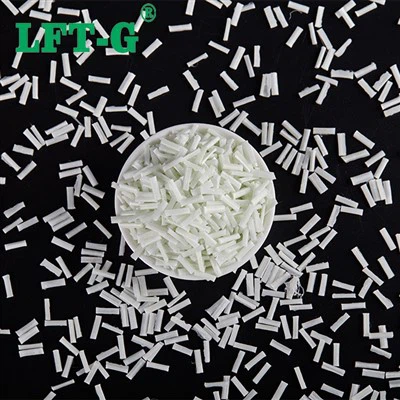
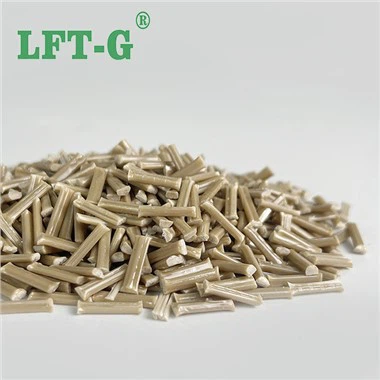
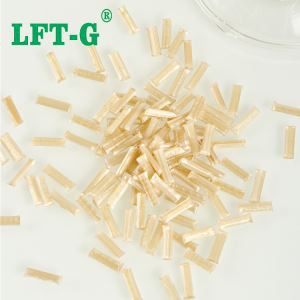
LFT thermoplastics consist of long glass fibers (typically 6–25 mm) dispersed in a polypropylene or polyamide matrix. The material is supplied as pellets and processed by injection molding. During molding, the long fibers create a three‑dimensional skeleton inside the part, providing high impact resistance and creep stability. Because the matrix is thermoplastic, LFT parts can be remelted and mechanically recycled.
SMC thermosets are sheet materials made of chopped glass fibers impregnated with a polyester or vinyl ester resin. Parts are formed by compression molding under heat and pressure, during which the resin crosslinks irreversibly. Once cured, SMC cannot be remelted. It is widely used for large panels and enclosures where dimensional stability and surface finish are critical.
Die‑cast metals - typically aluminum, magnesium, or zinc alloys - are injected into a steel mold under high pressure. The process yields parts with excellent stiffness and thin‑wall capability, but the castings usually require secondary machining, deburring, and surface treatment before they are ready for assembly.

Four engineering dimensions compared
-
Specific stiffness and strength - the lightweighting scorecard
Absolute modulus and strength numbers tell only half the story. For weight‑sensitive applications, the relevant metrics are specific stiffness (elastic modulus divided by density) and specific strength (tensile strength divided by density). The table below provides typical values for a first‑tier comparison.
| Material | Density (g/cm³) | Tensile modulus (GPa) | Specific stiffness (GPa/(g/cm³)) | Specific strength (MPa/(g/cm³)) |
|---|---|---|---|---|
| Steel (structural) | 7.8 | 210 | ≈27 | ≈50–60 |
| Aluminum (die‑cast) | 2.7 | 70 | ≈26 | ≈70–90 |
| SMC (30% glass) | 1.8–2.0 | 10–15 | ≈5.5–8 | ≈30–50 |
| LFT‑PP (40% glass) | 1.2 | 8–10 | ≈6.7–8.3 |
≈60–85 |
Note: Values are typical ranges at room temperature. Specific LFT grades can exceed these ranges depending on fiber content and matrix formulation.
The numbers show that LFT and SMC both deliver specific stiffness values that rival aluminum, while their specific strengths can outperform some aluminum alloys. The key difference is that LFT and SMC achieve these properties at a fraction of the weight. However, their absolute modulus is lower, which means the part geometry must compensate through ribbing and contour design. Metal, by contrast, can hit high stiffness in a simpler shape but carries a weight penalty.

-
End‑of‑life recyclability - preparing for regulatory mandates
European regulations, including the End‑of‑Life Vehicles (ELV) Directive and the new Battery Regulation, are pushing manufacturers to design for recyclability from the start. Here is how the three materials perform:
- LFT thermoplastics can be mechanically shredded and reprocessed. The recovered material, although containing shorter fibers after recycling, retains value as a short‑fiber compound for less demanding applications. High‑purity virgin LFT grades, free from unknown additives, provide a clean feedstock for this recycling stream.
- SMC thermosets cannot be remelted. The most common disposal routes are incineration with energy recovery or grinding into filler. Chemical recycling methods are under development but not yet industrially scaled. Landfilling SMC waste is increasingly costly in Europe.
- Die‑cast metals have a mature recycling infrastructure. Secondary aluminum production consumes only about 5% of the energy required for primary aluminum. However, the initial carbon footprint of primary aluminum (12–16 kg CO₂ per kg) is substantially higher than that of thermoplastic compounds. Recycled content also degrades over multiple cycles due to alloy contamination.
For manufacturers facing regulatory pressure to demonstrate design‑for‑recycling, LFT offers a clear advantage over SMC, and a competitive alternative to metal when the lifecycle carbon footprint is considered.

-
Cycle time and production efficiency
From raw material to finished part, the total production time determines throughput and manufacturing cost.
LFT injection molding benefits from fast cycling and the ability to integrate multiple features in one shot - ribs, bosses, snap‑fits - eliminating many downstream steps. SMC molding is slower due to the curing reaction, and manual or semi‑automatic material handling adds labor. Die‑casting offers rapid forming, but the extensive secondary processing often extends the total manufacturing lead time.

Where each material fits - by component type
The table below maps common structural applications to their best‑fit material. Where LFT‑G® is recommended, the specific series is noted.
| Component | Current best fit | Recommended LFT‑G® series | Key reason |
|---|---|---|---|
| Front‑end module carrier | LFT (mainstream) | LFT‑G® PP | Part consolidation in one shot |
| Battery pack enclosure | LFT (growing) | LFT‑G® PP (flame‑retardant) | Thermal barrier, UL94 V‑0, lightweight |
| Drone / eVTOL structural arm | LFT (preferred) | LFT‑G® PA6 / PA66 | High stiffness, vibration damping |
| Industrial robot arm | LFT (growing) | LFT‑G® PA6 / PPS | Creep resistance, low weight |
| Power tool housing | LFT (growing) | LFT‑G® PP / ABS | Impact strength, surface finish |
| Sports equipment frame | LFT (growing) | LFT‑G® TPU / HDPE | Toughness, cold‑temperature impact |
| High‑temp under‑hood part | LFT (replacing metal) | LFT‑G® PPS / PBT | 240°C+ continuous use, chemical resistance |
| Marine deck hardware | LFT (natural choice) | LFT‑G® PP / HDPE | Saltwater corrosion‑proof, zero maintenance |
| Large body panel (hood, roof) | SMC (still leads) | - | Class‑A surface, LFT used as inner reinforcement |
| Ultra‑thin electronic chassis | Die‑cast Mg/Al | - |
Sub‑1mm wall, EMI shielding needed
|
LFT‑G® materials are already applied in front‑end modules, battery enclosures, drones, and robotics - with PP and PA as the workhorse series. For high‑temperature environments, PPS and PBT step in. For toughness and cold‑impact needs, TPU and HDPE fill the gap. Where surface finish or extreme thin‑wall requirements still favor SMC or metal, LFT often serves as internal reinforcement. As material data on creep, fatigue, and flame retardancy continues to grow, the LFT‑G® footprint in structural components expands year by year.

Bringing the comparison into your project
No single material wins every category. LFT shines in mid‑volume structural applications where weight reduction, recyclability, and functional integration are priorities.
At Xiamen LFT, our LFT‑G® portfolio covers PP, PA, and high‑temperature PPS grades. We provide detailed creep data, fiber orientation guidance, and application engineering support to help you make the right material decision early - when the cost of change is still low.
Talk to Our Application Engineers About Your Structural Part Project