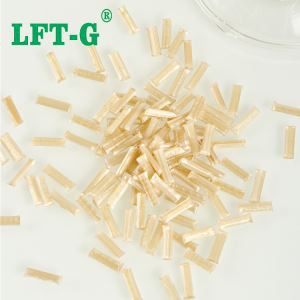

Case Study: LFT-G® PA12 LCF30 - Redefining High-Performance Bicycle Brake Levers
A brake lever is the rider's primary interface with the machine. It must transmit precise force, feel responsive under load, and survive thousands of actuations over years of harsh outdoor exposure. For premium bicycle brands and component makers, the choice of material is not a cost decision - it's a performance and safety decision.
This case study examines how LFT-G® PA12 LCF30 - a 30% long-carbon-fiber-reinforced polyamide 12 compound - addresses the limitations of aluminum and short-fiber nylon in this demanding application, based on actual TDS data and industry feedback.
Video: LFT-G® PA12 LCF30 brake lever - performance test and material comparison.
The Design Challenge
A bicycle brake lever must satisfy four core requirements:
- Lightweight: Every gram counts in competitive cycling, but weight reduction must not compromise strength
- High strength & stiffness: The lever must transmit braking force without flexing or fracturing - especially critical for disc brakes, which require higher clamping forces
- Fatigue resistance: A brake lever is actuated tens of thousands of times over its lifetime; failure is not an option
- Environmental durability: UV exposure, rain, sweat, road salts, and cleaning solvents are a daily reality
Traditional solutions have trade-offs. Aluminum levers are strong and stiff but heavy (density ~2.7 g/cm³) and require additional surface treatments for corrosion protection. Short-fiber nylon compounds are lighter but lack the stiffness and fatigue life needed for high-performance applications. LFT-G® PA12 LCF30 eliminates these compromises.
The Solution: LFT-G® PA12 LCF30
The Long Carbon Fiber Advantage
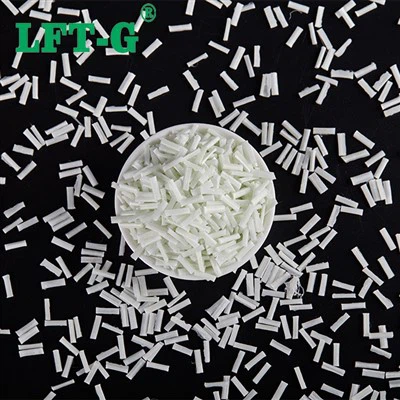
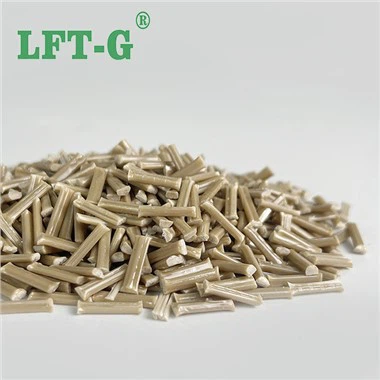
What makes this material truly exceptional is its long carbon fiber architecture. Unlike short-fiber compounds where fibers are chopped to 0.2–0.4 mm, LFT-G® PA12 LCF30 starts with continuous carbon fibers that are impregnated and pelletized. In the final molded part, these fibers remain significantly longer - forming a three-dimensional reinforcing network that delivers superior load transfer, enhanced fatigue resistance, and higher impact tolerance than short-fiber composites.
| Property | LFT-G® PA12 LCF30 Value | Why It Matters |
|---|---|---|
| Density | 1.17 g/cm³ | ~57% lighter than aluminum |
| Tensile Strength | 218.9 MPa | Exceeds aluminum's tensile strength |
| Flexural Strength | 319.3 MPa | Resists bending under braking force |
| Flexural Modulus | 15,172 MPa | Stiff enough to rival aluminum in feel |
| Notched Izod Impact | 267 J/m | Absorbs impact from drops or crashes |
| Heat Deflection Temp | 179°C | Maintains stiffness in hot environments |

Brake Lever Redesign: From Concept to Production
When a leading European bicycle component manufacturer redesigned their flagship brake lever using LFT-G® PA12 LCF30, the results were measurable and immediate:
Weight reduction vs. aluminum (38g → 18g)
Actuation cycles with no visible cracks
Corrosion after 1,000 hrs salt spray test
The redesign not only met all performance targets - it exceeded them. The PA12 LCF30 lever delivered stiffness comparable to aluminum (3.1mm deflection vs. 2.9mm under 200N load) while cutting weight by over half. The fatigue life surpassed industry standards, and the corrosion resistance eliminated the need for costly surface treatments.
Client feedback: LFT-G® PA12 LCF30 allowed us to create a brake lever that is lighter, stronger, and more durable than our aluminum version - with no compromise on feel or safety. This is the future of bicycle component design.

Design Freedom: Lever Geometry Reimagined
Beyond the numbers, the move from aluminum to injection-molded LFT-G® PA12 LCF30 unlocks new design possibilities:
-
Ergonomic optimization: Complex curved geometries are possible without secondary machining, allowing for anatomically optimized lever shapes
-
Consolidation of components: Features like pivot bosses, cable guides, and spring retainers can be molded in - eliminating assembly steps and reducing inventory
-
Customization: Low-cost tooling modifications enable customization for different rider hand sizes - currently a differentiator in the premium segment
- Branding integration: Textures, logos, and colored variants are achieved during molding, not through secondary painting or decals
The future of high-performance bicycle components is not metal - it's LFT-G.
LFT team: ready to solve your lightweighting challenges
Xiamen LFT Composite Plastic Co., Ltd. is a global supplier of long-fiber-reinforced thermoplastics with 20+ years of innovation. We specialize in LFT‑PP, LFT‑PA, LFT‑PPS, and LFT‑Elastomers – offering high‑strength, lightweight alternatives to metal for automotive, aerospace, industrial, and sporting goods applications. Our engineering team provides material selection, mold design review, and on-site technical support for customers worldwide - from concept to production. Reach out for a free consultation.