
Unlocking Automotive Tailgates Design: Why LFT-G® PP LGF30 Ultimate Solution
 In today's fiercely competitive automotive landscape, the pressure to innovate is relentless. You're tasked with designing vehicles that are not only aesthetically pleasing and packed with technology but are also lighter, more fuel-efficient, and sustainable. The tailgate, once a simple component, has become a complex module integrating lights, sensors, and brand identity. The traditional choice, steel, presents significant challenges in weight, design complexity, and corrosion. This is where the paradigm shift towards advanced composites begins. You need a material that can break through these barriers. You need LFT-G® PP LGF30.
The Compelling Case for Plastic Tailgates
Before we delve into the specifics of our groundbreaking material, let's establish why you should be considering a transition away from metal for your tailgate applications. The move to long-fiber reinforced polypropylene isn't just a trend; it's a strategic engineering decision driven by tangible benefits that directly address modern manufacturing challenges.
Shedding Pounds, Gaining Performance
The most significant advantage is substantial weight reduction. A plastic tailgate can be 25-30% lighter than its steel counterpart. For you, this translates directly into improved fuel economy for internal combustion engine (ICE) vehicles and, crucially, extended range for electric vehicles (EVs)-a key differentiator in the current market. Every kilogram saved enhances vehicle dynamics and reduces its carbon footprint.
Unleashing Design Freedom
Steel stamping has its limits. Complex curvatures, sharp lines, and the seamless integration of components like spoilers, lighting systems, and sensor housings are challenging and costly to achieve. LFT-G® PP LGF30, with its superior flow characteristics in injection molding, offers you unparalleled design freedom. You can consolidate multiple parts into a single, complex inner and outer structure, reducing assembly time, minimizing tolerance stack-up issues, and creating the bold, futuristic designs that consumers demand.
Introducing LFT-G® PP LGF30: Strength Meets Lightweight Innovation
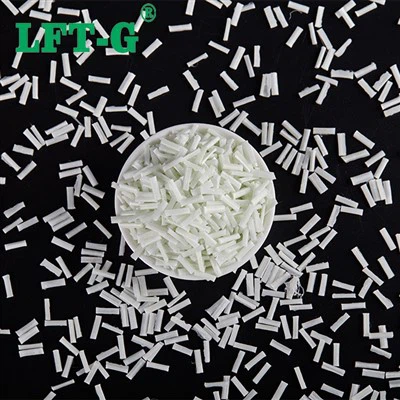
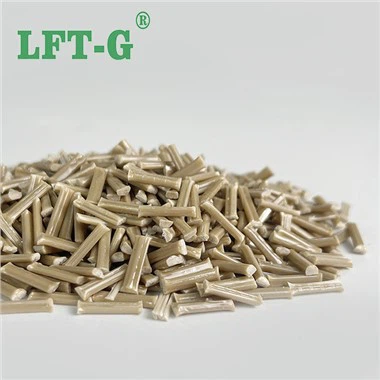
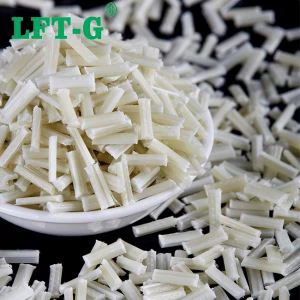
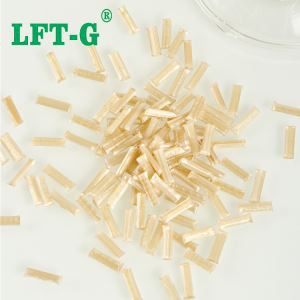
 Now, let's focus on the solution. LFT-G® PP LGF30 is not just another plastic. It's a high-performance Long-Fiber Reinforced Thermoplastic (LFT) polypropylene composite containing 30% long glass fibers. The "long fiber" aspect is critical. Unlike short-fiber materials, the long, interlocking fibers within the polymer matrix create an internal skeletal structure. This gives our material an exceptional combination of stiffness, strength, and impact resistance, rivaling that of metals, but at a fraction of the weight.
Data-Driven Superiority
You don't have to take our word for it. The data speaks for itself. We've benchmarked LFT-G® PP LGF30 against leading international competitors. As you can see, our material consistently delivers top-tier performance where it matters most for a demanding application like a tailgate.
|
Property |
Test Method Typically |
LFT-G® PP LGF30 |
Competitor PP GF30 |
|---|---|---|---|
|
Density (g/cm³) |
ISO 1183 |
1.12 |
1.03 |
|
Tensile Modulus (MPa) |
ISO 527 |
8,500 |
6584 |
|
Tensile Strength (MPa) |
ISO 527 |
122 |
98 |
| Flexural Modulus(MPa) | ISO 527 | 5493 | 3586 |
|
Notched Izod Impact (kJ/m²) |
ISO 180/A |
38 |
15 |
|
Heat Deflection Temp (°C at 1.8 MPa) |
ISO 75 |
160 |
158 |
Disclaimer: The data presented is for informational purposes only. It is based on controlled laboratory testing by leading international manufacturers. You should always conduct your own testing to determine suitability for your specific application.
Expert Commentary: The Industry Dialogue
To give you a clearer picture, we facilitated a discussion between two leading figures in the industry: Dr. Alistair Finch, a veteran materials' scientist, and Isabella Rossi, a forward-thinking automotive designer.
A Conversation with the Experts
How we started

One:
Interviewer:
Isabella, from a design perspective, what's the most exciting aspect of using a material like LFT-G® PP LGF30?
One:
Isabella Rossi:
"For me, it's the liberation from the constraints of metal. We can now design a tailgate that is a true extension of the vehicle's body language. We can create deep, flowing lines and integrate complex features like aerodynamic spoilers and full-width LED light bars directly into the outer panel. This part of consolidation is huge. You reduce weight, but you also drastically simplify manufacturing and assembly. You're essentially creating a smarter, more integrated component."

One
Interviewer:
Dr. Finch, what about the engineering reality? Can these materials truly handle the rigors of daily use?
TWO
Dr. Alistair Finch:
"Absolutely. That's the beauty of the long-fiber structure in LFT-G®. Think of it as microscopic rebar in concrete. This network provides exceptional resistance to impact and creep, even at elevated temperatures. A key concern for any exterior panel is dimensional stability-you can't have a tailgate warping under the summer sun in Arizona. LFT-G® PP LGF30's low coefficient of linear thermal expansion (CLTE) ensures it holds its shape and maintains tight gap tolerances with adjacent body panels, which is critical for a premium look and feel."
TWO
Interviewer:
What challenges should engineers anticipate when adopting this technology?

TWO
Dr. Alistair Finch:
"The main hurdle has always been achieving a Class-A paint finish, the same high-gloss look you get on steel. Polypropylene has a low surface energy, which can make paint adhesion difficult. However, this is a solved problem. By working with a knowledgeable supplier like LFT-G®, you can leverage advanced solutions like in-mold coatings, specialized primers, or surface activation techniques like plasma treatment. It simply requires a more holistic approach to material and process selection from the start."
From Concept to Reality: Overcoming Manufacturing Hurdles
As Dr. Finch mentioned, success with LFT-G® PP LGF30 lies in understanding and optimizing the manufacturing process. We provide you not just with pellets, but with a complete solution.

Solving the Paintability Puzzle
Achieving a flawless, durable, Class-A finish is non-negotiable for an exterior component. Due to the non-polar nature of polypropylene, achieving robust paint adhesion requires a specialized approach. We guide you through the best industry practices:
- Adhesion Promoters: Applying a chlorinated polyolefin (CPO) based primer is a proven method to create a strong chemical bond between the substrate and the topcoat.
- Atmospheric Plasma Treatment: For the ultimate in clean, high-performance surface activation, plasma treatment modifies the surface chemistry of the plastic, dramatically increasing its surface energy and ensuring a powerful, permanent paint adhesion without the use of solvents.
Driving the Future: LFT-G® in the Era of EVs and Sustainability
Your design choices today must align with the megatrends shaping the future of mobility. LFT-G® PP LGF30 is perfectly positioned to help you lead the charge.
Powering the Electric Revolution
For EVs, range is everything. The ~30% weight saving from an LFT-G® tailgate is not trivial. It contributes to a lower overall vehicle mass, which directly translates to less energy consumption and more miles per charge. It's a simple equation: lightweighting with LFT-G® helps you deliver a more competitive and appealing electric vehicle.
A Commitment to a Circular Economy
Sustainability is no longer a buzzword; it's a core business imperative. Polypropylene is a thermoplastic, meaning it can be melted and re-molded, making it inherently recyclable. We are actively working on incorporating post-consumer recycled (PCR) and post-industrial recycled (PIR) content into our LFT-G® product lines. By choosing LFT-G® PP LGF30, you are not only choosing a high-performance material but also making a responsible choice for the environment, helping you meet your corporate sustainability goals and appeal to eco-conscious consumers.
Conclusion: Your Strategic Partner for Next-Generation Tailgates
The challenge to create lighter, more efficient, and creatively designed vehicles is immense, but the solution is within your grasp. You can no longer rely on the heavy, restrictive materials of the past. The future demands an advanced approach.
LFT-G® PP LGF30 provides you with the complete package: the lightweighting essential for EVs, the strength and durability to replace metal, and the design freedom to build the cars of tomorrow. By addressing critical manufacturing hurdles like paintability and championing sustainability, LFT-G® is more than a material-it's your strategic advantage. It's time to stop compromising and start innovating.