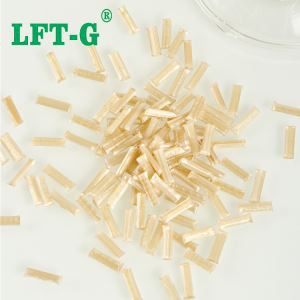

Advantages and disadvantages of thermoplastic resins
First: Excellent impact resistance. Thermoplastics with excellent performance can sometimes be up to 10 times more resistant than thermoset plastics.
Second: strong plasticity. For example, unprocessed thermoplastic at room temperature is in a solid state. In the case of heating or pressurization, the thermoplastic plastic changes physically and the fiber is strengthened. The thermosetting plastic needs to be chemically reacted to achieve this change.
Among the daily necessities, there may be more of a world of thermoplastics. The reversibility of its physical changes determines the remodelability of this material. For example, a pultrusion thermoplastic straight rod can be reshaped into a curved rod by heating. For thermoset plastics, it is impossible to achieve. The advantage of thermoplastics allows their waste products to be recycled.
Under natural conditions, thermoplastics are solid and it is difficult to produce reinforced fibers. If the thermoplastic resin is to produce a reinforcing fiber, it must be heated to a melting point under a certain pressure condition and cooled below the pressure. This process is extremely complicated and far less convenient than the conventional thermosetting resin. The fiber reinforcement of thermoplastics requires special tools, expensive technology and equipment to achieve, so the economic benefits are poor.
Thermosetting resin properties and advantages and disadvantages
Currently, the most widely used thermosetting resins are polyester resins, followed by vinyl esters and epoxy resins.
First, a resin that is liquid at room temperature is easy to process. In the production process, it is easy to drain the air in the thermosetting resin by using a laminating machine. At the same time, the thermosetting resin allows rapid processing using a vacuum pump or a positive pressure pump, thereby improving production efficiency.
In addition to the advantages of easy processing, thermosetting resins are widely used in the manufacture of various closed molds because of their low raw material cost and excellent performance.
In addition, thermosetting resins can be used to produce reinforcing fibers, as well as matrix components (ie, resin-based composites) as composite materials. Many thermosetting plastic products use fiber reinforcements such as glass fiber, carbon fiber, basalt fiber or aramid to improve their curing properties. These products have the advantages of light weight and high strength. They have taken the lead in achieving breakthroughs in the three major composite materials circles, and have gradually developed their applications in the fields of aviation, automobile and marine industry.
In recent years, there have also been some examples in which thermoplastic resins and continuous fibers are used to form innovative structural composite products. Thermoplastics have some obvious advantages over thermosetting plastics, but many defects cannot be ignored.
However, once the thermosetting resin is crosslinked and cured, it cannot be reversible and cannot be molded again. Therefore, the thermosetting resin is a disposable material and is difficult to recycle and reuse. However, several new companies have indicated that they have successfully achieved degradation of waste resin materials through high-temperature pyrolysis reactions and completed the recovery of reinforced fibers.
At present, the production technology of thermosetting plastics and thermoplastics is progressing. In production and life, both materials have their own place and perform their duties. I believe that in the future of materials, both are indispensable.