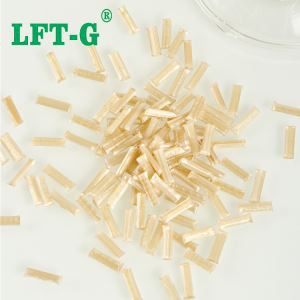

Covestro began commercial production of novel lightweight, high strength and aesthetically pleasing materials. The continuous fiber reinforced thermoplastic composite can be efficiently produced and is of interest to many customers and industries.
In order to take full advantage of this market potential, Covestro expanded its production capacity and developed Marktby Bart in Frank Town as a location for high-tech materials. It is located near the famous university and conducts in-depth research on the further development of composite materials. Covestro now has 50 employees at Markt Bibart and plans to expand further. Overall, the company has invested a sum of two and a few million euros.

Growing demand for composite materials The demand for strong and lightweight materials continues to grow globally. Composite materials made of fiber reinforced thermoplastics play an important role. They promote climate protection and resource conservation by reducing energy consumption and providing strong opportunities for sustainable development.
“Covestro develops material solutions and technologies for major human challenges such as climate protection, population growth, urbanization and increasing liquidity, and composites are playing an increasingly important role in this regard.” CEO Patrick Thomas The reporter said.
Sustainability is the driving force
Patrick Thomas added: "The driving force behind all these developments is sustainability: we want to benefit society, improve people's quality of life while minimizing environmental impact. We have also developed a polyurethane resin with reinforced fiberglass. And special manufacturing processes that make the production of wind turbine rotor blades more cost-effective, thus promoting the further development of renewable energy."
“Our polycarbonate has been proven in many applications that require strength, light weight and aesthetics, and has replaced traditional materials such as metals and glass,” said Michelle Jou, head of global polycarbonate operations at Covestro in Shanghai. "They can be used in applications such as laptop cases, automotive interiors, headlights and panoramic roofs, and medical equipment, to name just a few, and demand is increasing.
“However, the electronics industry and other industries need stronger and lighter materials that can be used to produce thinner parts and integrated features,” explains Michelle Jou. “In addition, I want to increase productivity. With our new high-tech materials, we This gap is being narrowed."
Future composites are based on continuous carbon or glass fibers impregnated with polycarbonate, thermoplastic polyurethane (TPU) or other thermoplastic resins. As a result, Covestro produces unidirectional reinforcing tapes and sheets for further processing by customers. These products can be adjusted to an unlimited combination to provide designers with new creative opportunities. Another feature of CFRTP is that they feel and sound like metal, but offer the freedom of design of the plastic.