

LFT-G® PP LGF30: High-Flow 30% Long Glass Fiber Reinforced Polypropylene
The engineering sweet spot combining excellent melt flow for complex molds, superior surface aesthetics, and high mechanical toughness for metal replacement components.
What is PP LGF30 (30% Long Glass Fiber Polypropylene)?
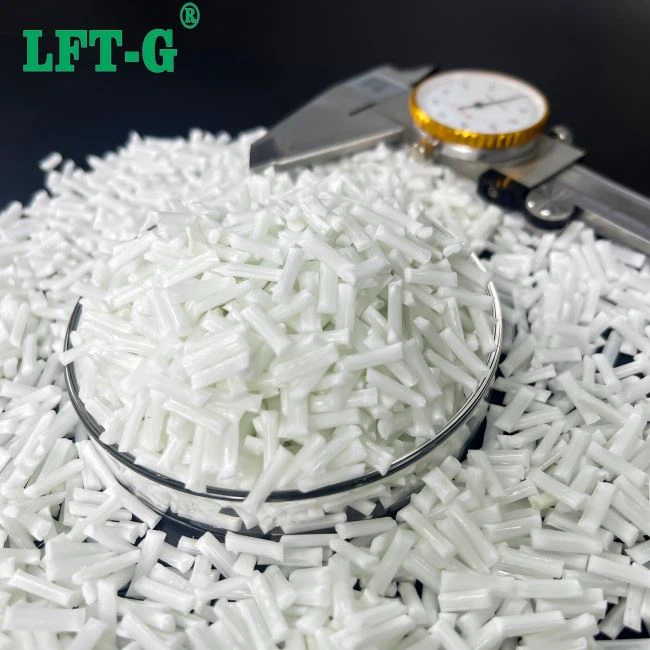
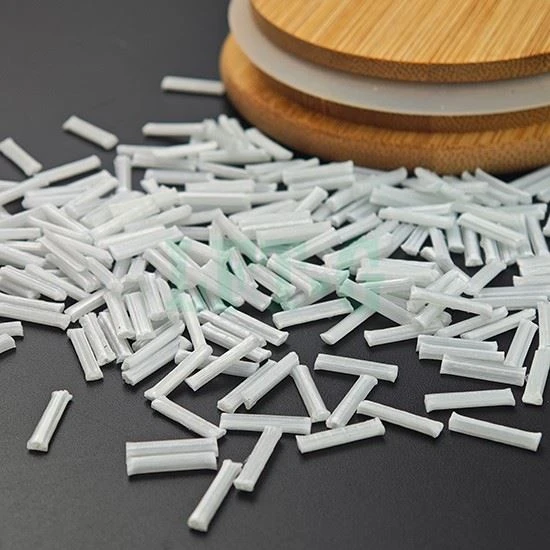
PP LGF30 (30% Long Glass Fiber Reinforced Polypropylene) is an advanced injection-moldable composite engineered to bridge the performance gap between weak short-fiber plastics and high-viscosity structural compounds. Containing 30% continuous glass fibers embedded in a high-crystalline polypropylene matrix, LFT-G® PP LGF30 utilizes a specialized coupling agent formulation to maximize interface adhesion.
The defining advantage of PP LGF30 lies in its **exceptional melt flow properties**. While higher fiber loadings (like 40% or 50%) offer ultimate rigidity, they restrict polymer flow and can cause surface cosmetic flaws. PP LGF30 provides the optimal compromise: it retains a highly robust internal 3D fiber skeleton for high-impact resistance while maintaining excellent processability for complex structural components with **thin walls and intricate reinforcement ribs**.
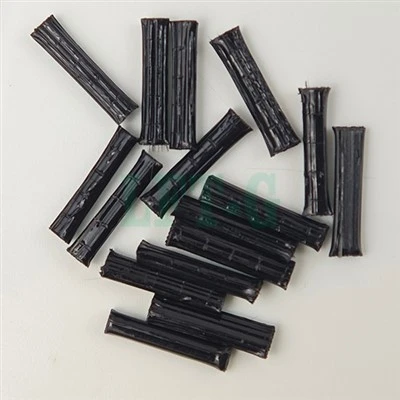
Figure 1: LFT-G® PP LGF30 structural pellets delivering low fiber exposure and high resin wet-out.
The Engineering "Sweet Spot" Analysis
For mechanical designers, choosing the correct fiber loading involves balancing material strength against ease of manufacturing. While PP LGF50 provides maximum load capacity, its high viscosity makes it difficult to mold thin-wall casings without triggering defect rates. **PP LGF30 represents the optimal sweet spot**, offering a 400% increase in impact energy absorption over pure polypropylene while retaining a high melt index to fill deep-draw injection channels easily.
Tensile Strength vs. Melt Flow Index (MFI)
Identifying the balanced processing sweet spot of LFT-G® PP LGF30
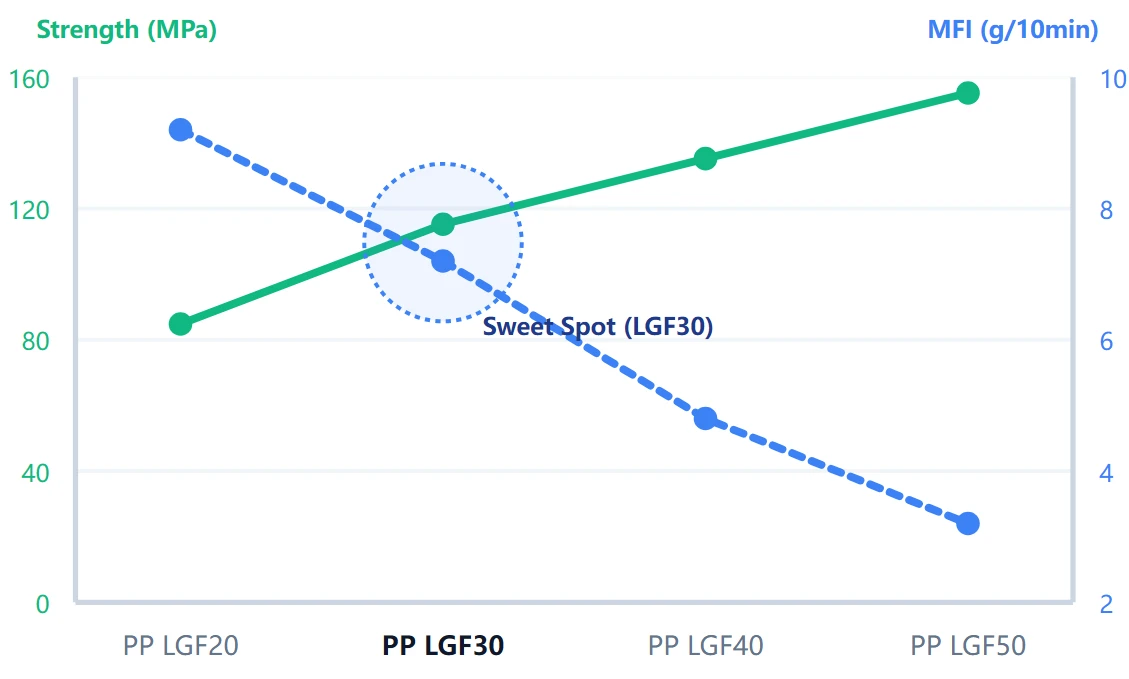
Figure 2: Optimal crossover chart showing PP LGF30 achieving excellent tensile load carrying while preserving essential process melt flow.
Typical Properties Datasheet of LFT-G® PP LGF30
The mechanical characteristics below highlight the high-performance spectrum of LFT-G® PP LGF30, tested under international standard ISO/ASTM test methods.
| Mechanical Properties | Testing Standard | Metric Value | Imperial Value |
|---|---|---|---|
| Density | ISO 1183 / ASTM D792 | 1.11 - 1.12 g/cm³ | 1.11 - 1.12 g/cm³ |
| Tensile Strength | ISO 527 / ASTM D638 | 115 - 125 MPa | 15,950 - 18,125 psi |
| Flexural Strength | ISO 178 / ASTM D790 | 175 - 195 MPa | 25,375 - 28,275 psi |
| Flexural Modulus | ISO 178 / ASTM D790 | 5,800 - 7,600 MPa | 976,000 - 1,102,000 psi |
| Charpy Notched Impact (23°C) | ISO 179 / ASTM D256 | 32 - 36 kJ/m² | 14.5 - 20.8 ft-lb/in² |
| Heat Deflection Temp (HDT @1.82 MPa) | ISO 75 / ASTM D648 | 155 - 159 °C | 311 - 318 °F |
| Mold Shrinkage Rate | ISO 294-4 | 0.15 - 0.30 % | 0.15 - 0.30 % |
How Does PP LGF30 Solve Design Trade-offs?
Engineers choose PP LGF30 when they need a structural material that doesn't compromise on mold fillability or finished component cosmetics. Here is how it outperforms standard design alternatives:
PP LGF30 vs. PP SGF30 (Short Fiber)
- 4x Better Notched Impact: Long fiber skeleton prevents catastrophical failure, absorbing high impact loads.
- Superior Thermal Creep: Substantially lower deformation under constant stress at high temperatures.
- Lower Sink Marks: Balanced shrinkage properties prevent ugly depressions opposite thick ribs.
PP LGF30 vs. PP LGF40 (For Large Parts)
- Improved Melt Flow: Fills long, thin flow channels with 25% lower injection pressure.
- Sleek Surface Aesthetics: Fewer exposed fibers on the molded surface, reducing painting/texturing prep.
- Lower Mold Wear: Reduced glass concentration translates to a longer machine screw and tool lifecycle.
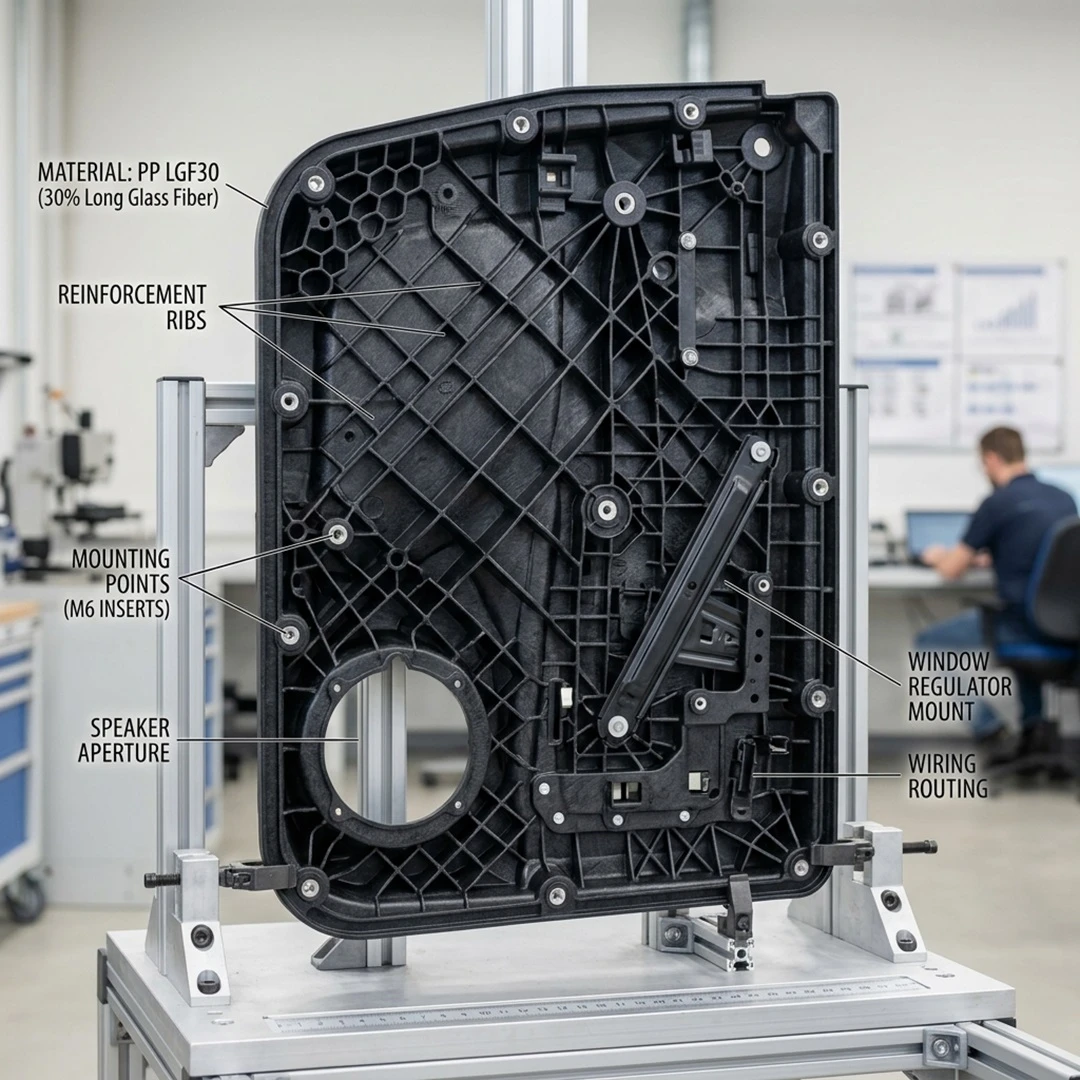
Figure 3: Complex automotive door module panel with reinforcement ribs molded from PP LGF30.
Target Applications for LFT-G® PP LGF30
By offering high mechanical performance alongside ease of processing, PP LGF30 is perfect for large-area and intricate functional housings:
1. Automotive Inner Door carriers & Shrouds
Ideal for integrated door modules, radiator support frames, cooling fan blades, engine undertrays, and glovebox carriers where structural strength must match high surface appearance requirements.
2. Water Pump Systems & Impellers
Offers excellent hydrolytic stability, minimal dimension swelling, and superior dynamic balance retention for industrial pump impeller blades and hot water system brackets.
3. Power Tool Housings & Sports Gear
Provides strong vibration mitigation and severe drop impact toughness for electric drill brackets, outdoor gear linkages, and lawnmower structural frames.
Frequently Asked Questions (FAQ) about PP LGF30
Q1: Why is PP LGF30 preferred over PP LGF40 for large structural automotive parts?
Large structural components (like door carriers or instrument brackets) have thin walls and long flow lengths in the mold. PP LGF30 has a higher Melt Flow Index (MFI) than PP LGF40, meaning it flows easier under lower injection pressures. This ensures complete mold filling, reduces knit-line defects, and yields better surface appearance with fewer exposed glass fibers.
Q2: What is the continuous working temperature limit of LFT-G® PP LGF30?
Under light loading, PP LGF30 can withstand temperatures up to 140°C. For continuous structural load-bearing applications, its Heat Deflection Temperature (HDT) is 146°C to 152°C under 1.82 MPa stress, making it suitable for under-the-hood automotive structural brackets and hot water contact applications.
Q3: How does the shrinkage of PP LGF30 compare to short glass fiber polypropylenes?
PP LGF30 exhibits isotropic shrinkage of 0.15% to 0.25%, which is highly uniform across both flow and cross-flow directions. Short glass fiber PP (PP SGF30) shrinks unevenly, causing differential stresses that trigger warp, twisting, and dimensional variation. PP LGF30 molded parts stay flat and dimensional-stable.
Q4: Is PP LGF30 compatible with standard injection molding machines?
Yes. It can be processed on conventional injection molding screws. However, to prevent premature fiber breakage during feeding, LFT-G® engineers recommend using a low compression screw, generous gate design (preferably obstruction-free gates), and minimal backpressure during processing.
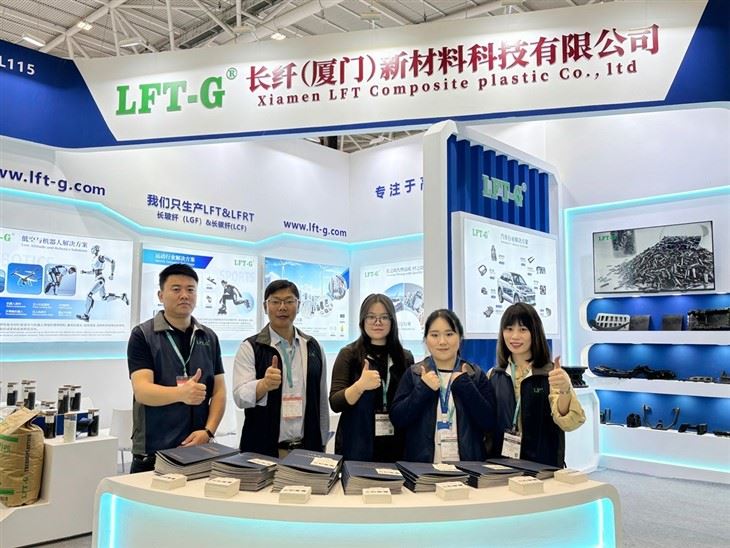
LFT-G®: A Trustworthy Global Partner
As a dedicated manufacturer specializing in long fiber thermoplastics (LFT), LFT-G® works closely with engineers globally-from leading automotive tier-1 suppliers in Europe to industrial plastic custom compounders in the Middle East.
- Full Quality Certifications: Fully certified under ISO 9001 and tested against RoHS, REACH, and SGS parameters to guarantee safety and ecological compliance.
- Custom Color & Compounding: Specialized formulation engineering including UV-stabilizers, heat-aging resistance, custom fiber loading (20% to 70%), and flame retardants (UL94 V-0).
- Worldwide Logistics & Service: Fast delivery to major industrial ports across the Middle East, Europe, and North America.We offer comprehensive design analysis, mold flow simulation support, and quick delivery to European and Middle Eastern ports.

Figure 4: Advanced compounding Test equipment and R&D quality test center at LFT-G® factory.
Meet the LFT-G® Technical Team
 Are you looking to replace metal, improve structural strength, or test PP LGF30 for a new project? Fill out the inquiry form, and our engineering team will reply within 12 hours with customized options, technical advice, and details on obtaining free test samples
Our specialized team of structural engineers, materials scientists, and logistics specialists has supported automotive and industrial manufacturing partners worldwide for over 10 years. Contact the LFT-G® engineering team for material selection and NVH dampening insights.
→WhatsApp Quick Chat With US: +86 13950095707
Hot Tags: pp lgf30: high-flow 30% long glass fiber reinforced polypropylene for complex structural engineering, China, manufacturers, suppliers, factory, buy, customized


