

What is PP GF60?
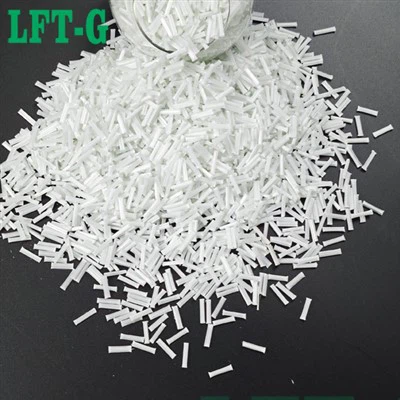
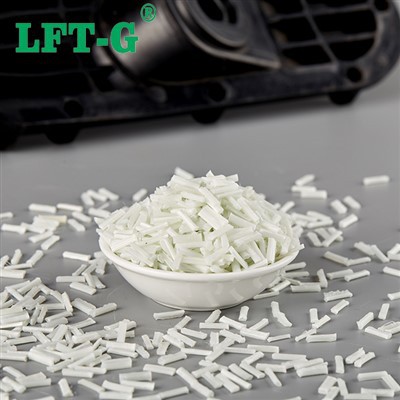
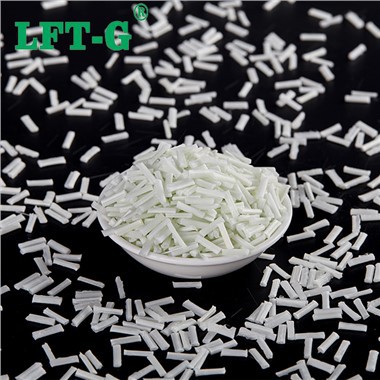
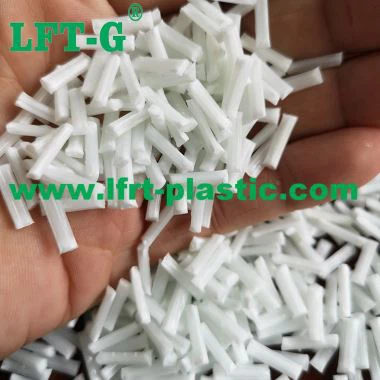
LFT-G® NG06 PP GF60 is an ultra-high-stiffness polypropylene (PP) composite, technically defined as a Long Glass Fiber Thermoplastic (LFT) reinforced with a 60% glass fiber content (LGF60). This material represents the pinnacle of performance within our polypropylene LFT portfolio, created for the most challenging applications where deflection under load is not an option. Through a specialized pultrusion process, we ensure that long, continuous glass fibers are perfectly aligned and bonded within the PP matrix. While commonly searched for as "PP GF60," it is the "LGF" (Long Glass Fiber) technology that enables this material to truly compete with and replace traditional metals.
LFT-G® NG06 PP GF60 is an ultra-high-performance 60%Long Glass Fiber (LGF) reinforced polypropylene, engineered specifically for applications demanding metal-like rigidity. It provides:
- Maximum Stiffness & Strength: Our highest modulus polypropylene composite, designed to replace die-cast aluminum and steel in structural components.
- Exceptional Creep Resistance: Maintains dimensional integrity and load-bearing capability under constant, long-term stress, even at elevated temperatures.
- Significant Lightweighting Potential: Delivers the performance of metal at a fraction of the weight, enabling greater efficiency and easier handling.
 The dense, three-dimensional skeletal network formed by the 60% long glass fiber content during injection molding provides extraordinary rigidity and resistance to long-term creep. This structural integrity is maintained even under significant mechanical stress and thermal loads. The NG06 grade is the definitive choice for engineers seeking to push the boundaries of plastic composites, offering a lightweighting solution that does not compromise on strength or dimensional stability, making it the ultimate tool for cost-effective metal replacement in demanding industries like automotive and industrial machinery.
Technical Specifications & Performance Data
For critical structural applications, precise and reliable data is non-negotiable. The specifications below are typical, industry-referenced values for our LFT-G® PP LGF60 (NG06) grade. This data confirms its status as a premier material for metal replacement. All tests are conducted on injection-molded specimens according to ISO standards.
Material Properties (Model: LFT-G® NG06 PP GF60)
| Property | Value | Unit | Test Method |
|---|---|---|---|
| Density | 1.49 | g/cm³ | ISO 1183 |
| Tensile Strength | 155 | MPa | ISO 527 |
| Flexural Strength | 225 | MPa | ISO 178 |
| Flexural Modulus | 12,187 | MPa | ISO 178 |
| Notched Izod Impact Strength | 47 | kJ/m² | ISO 180 |
| Heat Deflection Temperature (1.8 MPa) | 162 | °C | ISO 75 |
| Coef. of Linear Thermal Expansion (Flow) | 2.2 x 10⁻⁵ | /°C | ISO 11359 |
Download Complete NG06 PP GF60 Data Sheet PDF
Performance Comparison: LFT-PP vs. Metals
| Material | Density (g/cm³) | Flexural Modulus (GPa) | Specific Stiffness (Modulus/Density) |
|---|---|---|---|
| LFT-G® PP LGF60 | 1.42 | 14.5 | ~10.2 |
| Die-Cast Aluminum (A380) | 2.70 | 71 | ~26.3 |
| Stamped Steel (CR) | 7.85 | 200 | ~25.5 |
Note: While metals offer higher absolute stiffness, the specific stiffness (stiffness per unit weight) of LFT-PP LGF60 becomes highly competitive, offering engineers a powerful lightweighting tool without significant performance trade-offs in many applications.

Image 2: Large structural parts, like this automotive tailgate inner panel, can be converted from metal to LFT-G® PP LGF60 to save weight and consolidate parts.
Proven Applications & Case Studies
LFT-G® PP LGF60 is not a standard plastic; it is an engineering composite designed for the most demanding structural challenges. It is the material of choice when replacing metal to reduce weight and cost is the primary objective, finding use in automotive body structures, industrial machine frames, and other applications where high stiffness is critical.
 Case Study: Automotive Sunroof Frame Module
 Case Study: Industrial Conveyor System Support Frame
Frequently Asked Questions (FAQ)
Q: What are the main processing challenges with a 60% glass-filled material?
A: The primary challenge with a high-fiber-content material like LFT-PP LGF60 is its higher viscosity. It requires a molding machine with sufficient injection pressure and clamp tonnage. Tooling must be robust, with larger runners and gates to facilitate melt flow and minimize shear on the fibers. Careful consideration of gate location through CAE mold-flow analysis is highly recommended to prevent weld lines in high-stress areas and to control fiber orientation for optimal performance.
Q: How does the warpage of LGF60 compare to lower-filled grades?
A: Due to its extremely high fiber content, LFT-PP LGF60 can exhibit more anisotropic behavior, meaning properties can differ between the flow and cross-flow directions. This can lead to a higher potential for warpage if not managed correctly. However, because the fibers also significantly lower the overall shrinkage, warpage can be effectively controlled through proper part design (e.g., uniform wall thickness, adding ribs for stability) and optimized processing conditions (e.g., balanced packing pressure, controlled cooling).
Q: Is this material suitable for parts that require threaded metal inserts?
A: Yes, it is an excellent candidate for applications using threaded inserts. Its high modulus and creep resistance provide a very stable and rigid substrate for both insert molding and post-mold heat-staking or ultrasonic installation. The material's strength ensures high pull-out force and torque resistance, creating a robust and reliable connection point for assembling other components.
Challenge Metal. Embrace a Lighter, Stronger Future.
When maximum stiffness and strength are non-negotiable, LFT-G® PP LGF60 is the answer. Contact our engineering team to discuss your metal replacement project and discover how our advanced composites can provide a competitive edge.
Hot Tags: pp gf60 (lgf 60%) composite, China, manufacturers, suppliers, factory, buy, customized