
Cost‑Effective Long Glass Reinforced Polypropylene Composite

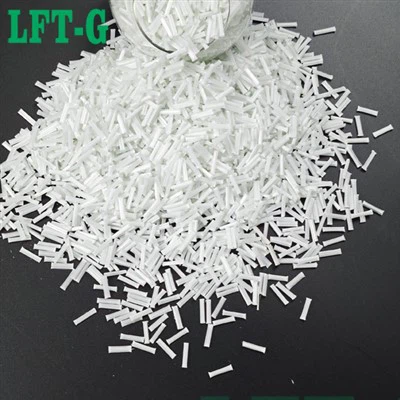
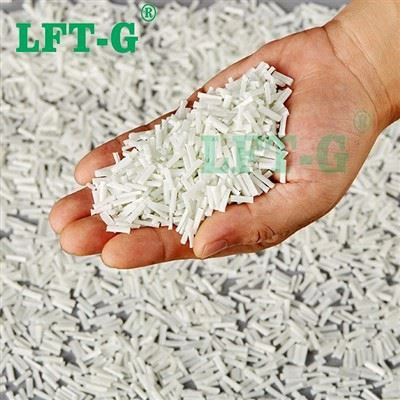
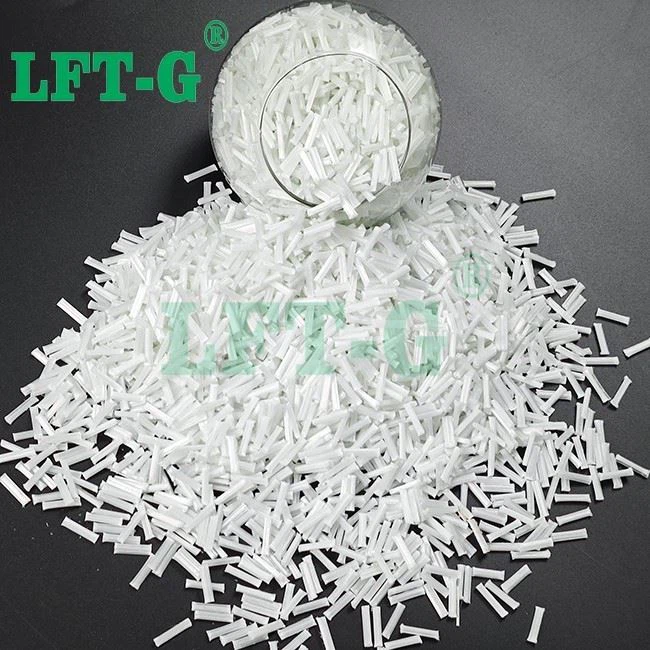
LFT‑G® PP LGF60 is a 60% long glass fiber reinforced polypropylene compound that delivers an outstanding stiffness-to-weight ratio and excellent chemical resistance. The high fiber content ensures exceptional creep resistance and dimensional stability under sustained loads, while the PP matrix provides inherent resistance to acids, alkalis, and aqueous environments.
This grade is engineered for industrial structural components, chemical processing equipment, water treatment systems, and automotive semi‑structural parts. It withstands prolonged contact with aggressive chemicals, offers stable performance in high‑humidity environments, and provides substantial weight savings over metal alternatives. The 60% long glass fiber network delivers superior load transfer and fatigue resistance, making it a reliable, cost‑effective solution for demanding engineering applications.
Why Choose PP LGF60?
PP LGF60 VS PP GF60 Material Comparison

- Superior Chemical & Corrosion Resistance – Withstands strong acids, alkalis, salts, and aqueous environments where engineering plastics would degrade.
- Exceptional Stiffness‑to‑Weight Ratio – 60% long glass fiber delivers metal‑like rigidity at approximately 40% the density of aluminum.
- Excellent Flowability – Optimized PP matrix ensures easy filling of complex, thin‑walled geometries despite high fiber loading.
- Outstanding Water & Moisture Resistance – Near‑zero water absorption eliminates swelling and maintains tight tolerances in wet environments.
- Cost‑Effective Engineering Solution – Combines high performance with favorable economics, reducing material and processing costs versus specialty nylons.
Technical Data Sheet
Case Study: Industrial Pallet Stiffness Upgrade

Challenge
A logistics equipment manufacturer required industrial pallets and trays with significantly higher bending stiffness and load‑bearing capacity than existing short‑glass PP grades. Traditional metal pallets added excessive weight and handling costs, while short‑fiber PP trays experienced sagging and creep deformation under heavy loads, leading to product damage and short service life. The customer sought a lightweight, cost‑effective material solution that could maintain structural rigidity under continuous loading without increasing part thickness or cycle time.
Solution
LFT‑G recommended PP LGF60, a 60% long glass fiber reinforced polypropylene compound. The continuous fiber network delivers flexural modulus exceeding 10 GPa, providing structural stiffness comparable to glass‑filled nylons at lower cost and density. The material was injection molded using existing tooling with minor process adjustments. The 60% fiber loading was selected to maximize rigidity while retaining sufficient flow for complex ribbed tray geometries.
Results
- Stiffness improvement: Flexural modulus increased by over 150% compared to 30% short‑glass PP, eliminating sagging under rated loads.
- Weight reduction: Pallet weight reduced by 65% versus steel alternatives, improving handling efficiency and reducing shipping costs.
- Dimensional stability: Near‑zero moisture absorption ensured consistent part geometry in warehouse and outdoor storage conditions.
- Cost savings: Material cost approximately 40% lower than comparable PA6‑based compounds, with no sacrifice in load‑bearing performance.
Injection Molding – Quick Reference

This processing guide is specifically developed for LFT long fiber reinforced thermoplastics. All parameters are optimized for low‑shear processing to maintain fiber length and maximize mechanical performance.
A metering screw with 18:1‑22:1 L/D ratio, combined with a large open nozzle and free‑flow check valve, minimizes fiber breakage during injection. Proper equipment selection preserves fiber length distribution and ensures consistent part strength.
PP LGF60 exhibits good melt stability with a recommended processing window. Adequate mold temperature promotes surface quality and minimizes residual stress. Purge with unfilled PP before shutdown to prevent material degradation and nozzle blockage.
- Pre‑drying: 2‑4 hrs @ 85‑100°C (desiccant dryer recommended)
- Melt Temperature: 230‑270°C
- Mold Temperature: 40‑80°C
- Injection Pressure: 50‑120 MPa
- Screw L/D: 18:1‑22:1, metering type
Note: Use a large open nozzle and a free‑flow check valve to preserve fiber length. Purge with unfilled PP before shutdown. Avoid excessive residence time above 280°C.
FAQ
Q: How does PP LGF60 compare to short glass fiber reinforced PP?
A: PP LGF60 delivers significantly higher stiffness, creep resistance, and impact strength compared to short‑fiber PP compounds. The continuous long glass fiber network provides superior load transfer and maintains mechanical properties under sustained stress. It effectively bridges the performance gap between standard PP and engineering plastics.
Q: Is PP LGF60 suitable for food or water contact applications?
A: Yes. The PP base resin offers excellent food‑contact compliance and potable water suitability. LFT‑G can provide grade‑specific certifications upon request for applications requiring NSF, FDA, or WRAS compliance. Low extractable levels ensure safe long‑term contact.
Q: What is the maximum continuous service temperature for PP LGF60?
A: PP LGF60 offers continuous service up to approximately 120°C with heat deflection temperature of 155°C at 1.8 MPa. Short‑term excursions up to 140°C are acceptable for intermittent loading. For applications requiring higher temperature resistance, LFT‑G offers alternative compounds based on PA or PPA.

Contact: Emily
Email: sale04@lfrtplastic.com
WhatsApp / Mobile: +86 188 5034 4811
Hot Tags: manufacturers replace metal with pp lgf60, China, manufacturers, suppliers, factory, buy, customized