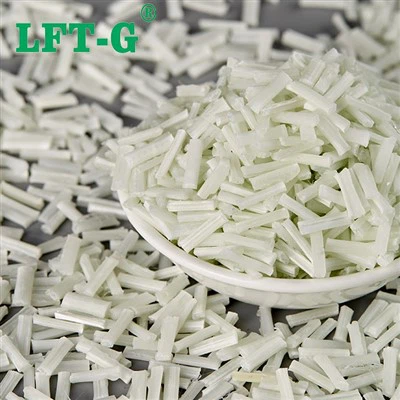


LFT-G® PP GF50 (LGF50) – High Modulus Homopolymer
 LFT-G® PP GF50 (Model: LFT-PP-GF50-NG05) is an ultra-stiff structural composite engineered for heavy-duty metal replacement. It features a highly crystalline Homopolymer Polypropylene matrix densely reinforced with 50% long glass fiber (LGF).
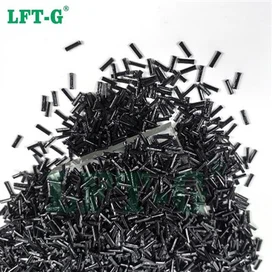
Standard short glass fiber pp often suffers from brittleness and fatigue failure. By utilizing advanced pultrusion, we preserve continuous 10-12mm fibers that form an unbreakable 3D internal skeleton. This delivers a massive flexural modulus exceeding 11,000 MPa, mimicking the rigidity of light metals while offering superior fatigue endurance.
Core Material Advantages:
- ● Extreme Flexural Rigidity: 10,800 - 11,500 MPa Modulus.
- ● Metal Replacement Grade: Replaces die-cast aluminum and zinc.
- ● Zero Moisture Absorption: Outperforms Nylon (PA66) in wet environments.
- ● Ultra-Low Creep: Dimensionally stable under heavy continuous loads.
Material Substitution ROI: Maximize Your Margins
For purchasing managers and design engineers, switching to LFT-G® Homopolymer LGF50 is a strategic cost-saving decision. We deliver measurable Return on Investment (ROI) by eliminating systemic manufacturing inefficiencies.
- ● Vs. Die-Cast Aluminum: Achieve up to a 40% weight reduction. Completely eliminate secondary CNC machining, manual trimming, and anti-corrosion coatings, drastically lowering the total cost per part.
- ● Vs. PA6-GF50 (Nylon): Nylon requires costly pre-drying and absorbs moisture, which weakens the part and causes dimensional warpage. Our Homopolymer PP processes easily and absorbs zero moisture.
- ● Vs. Short Fiber PP GF50: Eradicate warranty claims related to fatigue failure. The continuous fiberglass skeleton ensures parts survive severe operational vibrations and long-term mechanical stress.
Technical Data Sheet: LFT-PP-GF50-NG05
| Property | Test Standard | Unit | Typical Value |
|---|---|---|---|
| Base Resin | - | - | Homopolymer PP |
| Fiber Content | ISO 1172 | % | 50% Long Glass Fiber |
| Density | ISO 1183 | g/cm³ | 1.31 - 1.32 |
| Tensile Strength | ISO 527 | MPa | 138 - 147 |
| Flexural Modulus | ISO 178 | MPa | 10,800 - 11,800 |
| Notched Impact Strength | ISO 179 | kJ/m² | 36 - 48 |
| HDT (1.80 MPa) | ISO 75 | °C | 160 |
Industry Applications: Metal Replacement

Home Appliances & White Goods
Highly optimized for washing machine plastic part manufacturing, such as bearing spiders and inner tubs. The Homopolymer LGF50 matrix effortlessly supports heavy wet laundry loads. Its chemical immunity to detergents and unparalleled fatigue resistance during intense 1400 RPM spin cycles make it vastly superior to heavy die-cast metal brackets.

Automotive Structural Frames
A prime candidate for vehicle lightweighting. Used in front-end modules, seat carriers, and instrument panels. Replacing steel or aluminum with our 11 GPa high-modulus material allows automakers to achieve significant weight reduction, lowering fuel consumption while strictly passing crash-test safety protocols.

Industrial Pumps & Valve Housings
Perfect for heavy-duty fluid handling systems. It completely eliminates the rust and corrosion problems associated with metal housings. Furthermore, the immense stiffness prevents the part from bowing or leaking under continuous high-pressure liquid surges.
Frequently Asked Questions (FAQ)
Q: Why use Homopolymer instead of Copolymer for PP GF50?
A: The main goal of a 50% glass-filled compound is absolute rigidity. Homopolymer PP has a highly crystalline structure, yielding a much higher flexural modulus (~11-12 GPa) than Copolymer. When replacing structural metals where dimensional stability under load is critical, Homopolymer LGF50 is the superior choice.
Q: How does PP GF50 compare to PA66 GF50 in metal replacement?
A: The critical difference is moisture absorption. Nylon (PA66) absorbs water, severely lowering its strength and altering dimensions over time. Our high modulus glass fiber pp absorbs zero moisture, ensuring consistent structural rigidity in wet environments. It is also lighter and more cost-effective.
Q: Is LGF50 difficult to injection mold compared to short GF50?
A: Standard molding machines can process LGF50, but adjustments are needed to protect fiber length. We recommend using larger gate sizes, low back-pressure, and low-compression screws. This preserves the long glass fiber skeleton, which is entirely responsible for the extreme stiffness of the final part.
 Looking to Replace Heavy Metal Components?
Cut weight and reduce costs. Contact the LFT-G® engineering team for material selection and ROI analysis.
Request High Modulus LGF50 Quote
Hot Tags: lft-g®pp gf50 (lgf50) – high impact polyprolylene, China, manufacturers, suppliers, factory, buy, customized