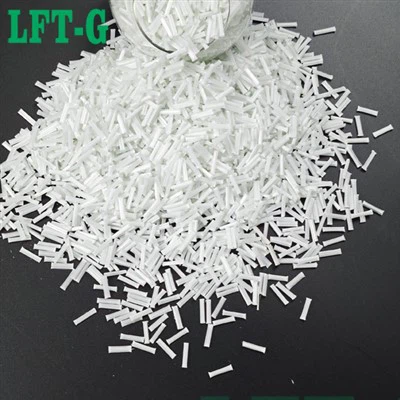


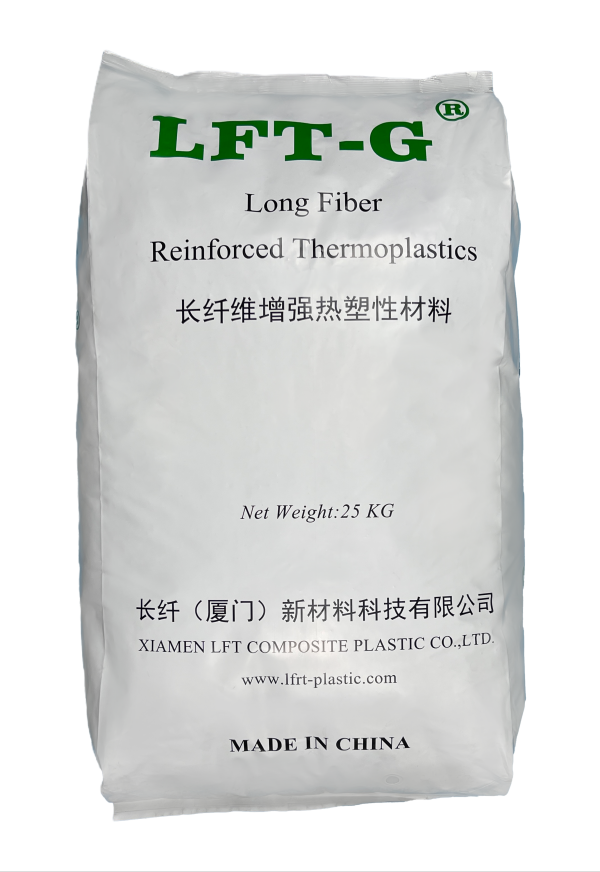
For engineers facing the dilemma of choosing between stiffness and toughness, LFT-G® PP GF40 (Model: HPP-NG04) offers the ultimate compromise-free solution. This advanced composite combines a rigid Homopolymer Polypropylene (Homo-PP) matrix with 40% Long Glass Fiber reinforcement. It is engineered specifically for semi-structural components that must endure high static loads and sudden dynamic impacts.
The market is flooded with standard "PP GF40" (Short Fiber). While these materials offer decent stiffness, they suffer from low impact resistance, often failing catastrophically under stress. LFT-G® utilizes Long Fiber Thermoplastic (LFT) technology to retain fiber lengths of 10-12mm within the pellet. This creates a skeletal network that boosts the Notched Impact Strength to an impressive 39 kJ/m²-a value rarely seen in Homopolymer grades-while maintaining the superior heat deflection and rigidity that Homo-PP is famous for.
Scenario: The Crash-Safety Challenge
In automotive door modules or industrial protective gear, materials must withstand high-velocity impacts without shattering. Standard Homo-PP GF40 is often too brittle, while Copo-PP lacks the necessary stiffness to hold tolerance. LFT-G® HPP-NG04 solves this by using Long Glass Fibers to mechanically bridge stress points within the rigid Homopolymer matrix (Feature). This allows the material to absorb and dissipate massive amounts of energy during a collision or drop event (Advantage). The benefit is a safety-critical component that passes crash tests and drop standards, offering the rigidity of metal with the lightweight advantages of plastic.

Figure 1: High impact resistance LFT-G PP NG04 in automotive door structure parts.
Quality: 39 kJ/m² - Redefining Toughness
Achieving 39 kJ/m² impact strength in a 40% glass-filled Homopolymer is a technological breakthrough. Typically, high glass loading reduces the polymer's ability to stretch, leading to brittleness. LFT-G® employs a proprietary pultrusion and impregnation process that ensures every long fiber is fully wetted with resin (Feature). This prevents the fibers from debonding prematurely during stress, effectively arresting crack propagation (Advantage). This gives you a material that behaves like a "super-tough" nylon but at the cost and density of polypropylene (Benefit).
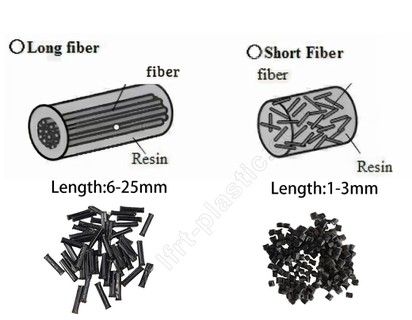
Figure 2: Long fibers arresting crack propagation.
Technical Data Sheet (Model: LFT-G® HPP-NG04)
| Property | Test Standard | Unit | Typical Value |
|---|---|---|---|
| Base Resin | - | - | Homo-Polypropylene |
| Fiber Content | ISO 1172 | % | 40% Long Glass Fiber |
| Density | ISO 1183 | g/cm³ | 1.21 |
| Tensile Strength | ISO 527 | MPa | 135 - 138 |
| Tensile Modulus | ISO 527 | GPa | 9.2 - 10.5 |
| Flexural Strength | ISO 178 | MPa | 190 - 200 |
| Notched Impact Strength | ISO 179 | kJ/m² | 39-45 |
| HDT (1.80 MPa) | ISO 75 | °C | 158 |
Case Study: Power Tool Housing (Drop Protection)
The Challenge
A professional power tool manufacturer needed to replace Nylon (PA6-GF30) for a heavy-duty impact drill housing. The Nylon housing was absorbing moisture in humid job sites, losing stiffness, and eventually cracking when dropped from ladders (high impact event). They needed a material that was stiff, waterproof, and tough.
The LFT-G® Solution
LFT-G® HPP-NG04 (40% LGF Homo-PP) was chosen. The Homo-PP matrix provided the necessary rigidity (10 GPa modulus) to hold the motor and gears in precise alignment. The 40% long fiber network provided a notched impact strength of 39 kJ/m², allowing the tool to survive repeated 2-meter drops onto concrete. The switch also reduced material costs by 25%.

Applications: High Stiffness & High Impact
People Also Ask
Q: Why choose Homo-PP over Copo-PP for GF40?
A: Typically, you choose Homo-PP for stiffness and Copo-PP for impact. However, LFT-G® HPP-NG04 gives you the best of both worlds. It uses a Homo-PP base for maximum stiffness (10 GPa) but uses Long Fibers to achieve high impact (39 kJ/m²), effectively outperforming standard Copo-PP compounds.
Q: Does PP GF40 become brittle in cold weather?
A: Short fiber PP GF40 becomes very brittle. However, Long Glass Fiber PP maintains its toughness much better at sub-zero temperatures because the fiber network physically bridges potential cracks, making it suitable for winter sports equipment and automotive exteriors.
Q: How does this material compare to PA6 GF30?
A: HPP-NG04 is lighter and moisture-proof. While dry PA6 GF30 is stiff, it loses properties when wet. LFT-G® PP GF40 has a lower density (1.22 vs 1.35), costs less, and maintains consistent performance regardless of humidity, making it a superior choice for outdoor applications.

Upgrade Your Material Performance
Need high stiffness AND high impact? Contact LFT-G® for a free sample.
Hot Tags: lft-g® pp gf40 (hpp-ng04) glass filled, China, manufacturers, suppliers, factory, buy, customized