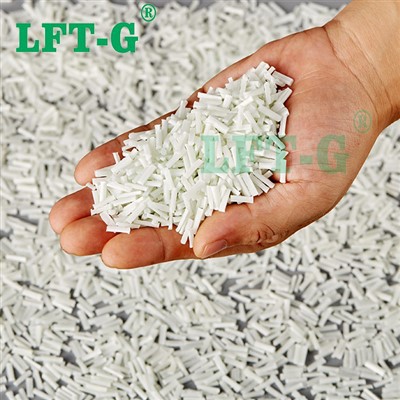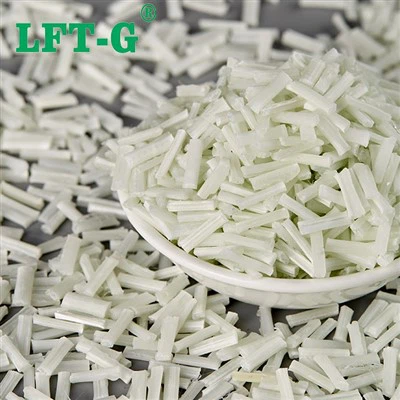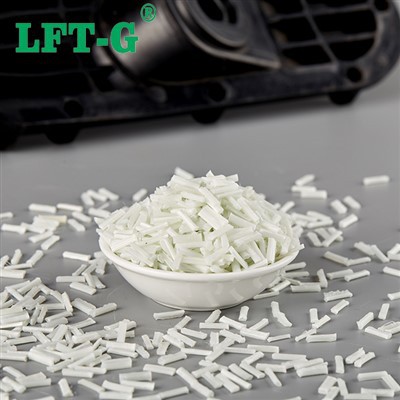

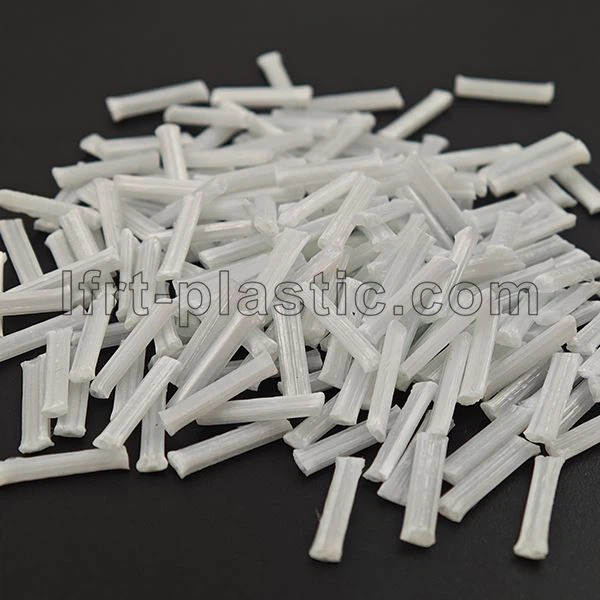


For industrial applications demanding the absolute ceiling of thermoplastic structural performance, LFT-G® PP GF50 (Model: HPP-NG05) is the engineered choice. This composite integrates a Homopolymer Polypropylene (Homo-PP) matrix with a massive 50% Long Glass Fiber reinforcement. It is specifically designed to bridge the performance gap between engineering plastics and structural metals.
Engineers searching for PP GF50 often encounter a critical failure mode: conventional "Short Fiber" compounds at 50% loading are incredibly brittle and prone to warping. LFT-G® overcomes this by utilizing Long Fiber Thermoplastic (LFT) technology. The 10-12mm long fibers create an entangled skeletal network that locks the polymer chains in place. This results in a material that delivers extreme stiffness (Modulus >12 GPa) and superior creep resistance at elevated temperatures, without the catastrophic brittleness of short fiber alternatives.
Scenario: The Cost & Moisture Trap of PA6
In heavy-duty industrial sectors like desalination or automotive cooling, engineers traditionally default to Polyamide (PA6/PA66) GF50. However, Nylon has a fatal flaw: it absorbs moisture (hygroscopic). In humid Middle Eastern climates or water-contact applications, PA6 swells and loses up to 45% of its structural stiffness. LFT-G® HPP-NG05 utilizes a Homopolymer PP matrix that is naturally hydrophobic (Feature). It maintains 100% of its mechanical strength regardless of humidity or water exposure (Advantage). This provides you with a "set-and-forget" solution that eliminates moisture-related failures while reducing raw material costs by approx. 30% compared to Nylon (Benefit).

Figure 1: PP LGF50's Boat Paddle retains properties in wet environments.
Quality: The Homopolymer Advantage
Not all Polypropylenes are equal. Model HPP-NG05 uses a high-crystallinity Homopolymer (Homo-PP) base resin, distinct from softer Copolymers. When reinforced with 50% Long Glass Fiber, this creates our stiffest grade available (Feature). The Homo-PP matrix provides a higher Heat Deflection Temperature (HDT) and superior tensile yield strength compared to standard PP (Advantage). For you, this means the ability to replace die-cast aluminum parts in high-heat environments (under-hood or desert operations) with a lightweight plastic that will not creep or deform under constant load (Benefit).

Figure 2: Homo-PP matrix delivers maximum rigidity.
Technical Data Sheet (Model: LFT-G® HPP-NG05)
| Property | Test Standard | Unit | Typical Value |
|---|---|---|---|
| Base Resin | - | - | Homo-Polypropylene |
| Fiber Content | ISO 1172 | % | 50% Long Glass Fiber |
| Density | ISO 1183 | g/cm³ | 1.32 |
| Tensile Strength | ISO 527 | MPa | 145 - 155 |
| Tensile Modulus | ISO 527 | GPa | 11.0 - 12.0 |
| Flexural Strength | ISO 178 | MPa | 208 - 214 |
| Notched Impact Strength | ISO 179 | kJ/m² | 43 - 54 |
| HDT (1.80 MPa) | ISO 75 | °C | 160 |
Download Complete LFT-G PP GF50 Data Sheet PDF
Case Study: Desalination High-Pressure Pump
The Challenge
A Middle East water treatment facility needed to replace bronze components in their high-pressure pumps. The bronze parts were heavy, expensive, and suffered from galvanic corrosion in high-salinity environments. PA66 GF50 was tested but failed due to water absorption leading to dimensional instability.
The LFT-G® Solution
LFT-G® HPP-NG05 was selected. The 50% long fiber content provided the necessary burst pressure resistance (replacing metal). The Homo-PP matrix offered complete immunity to saltwater corrosion and zero hydrolysis. The result was a 60% weight reduction and a 40% cost saving per unit, with extended service life in harsh saline conditions.

Applications: Replacing Metal & Nylon
People Also Ask
Q: What is the difference between Homo-PP and Copo-PP in LFT?
A: Stiffness vs. Impact. Homo-PP (NG05) is stiffer and has higher heat resistance, making it ideal for high-load static structural parts. Copo-PP (NG02) has better impact toughness but slightly lower stiffness.
Q: Can LFT-G® PP GF50 replace metal parts?
A: Yes. With a flexural modulus over 12 GPa, HPP-NG05 can replace die-cast aluminum and zinc in many non-engine block applications, offering a 40-50% weight reduction and corrosion immunity.
Q: Is 50% glass fiber PP hard to process?
A: While viscosity is higher than standard PP, LFT-G pellets are designed with excellent flow properties. We recommend using larger gates and slightly higher mold temperatures (60°C+) to ensure a smooth, resin-rich surface finish.

Engineer Your Success with LFT-G®
From harsh deserts to high-pressure pumps, our materials endure. Contact us today.
Hot Tags: lft-g® pp gf50 (hpp-ng05) glass filled, China, manufacturers, suppliers, factory, buy, customized