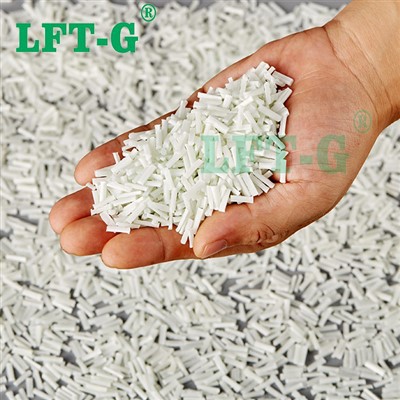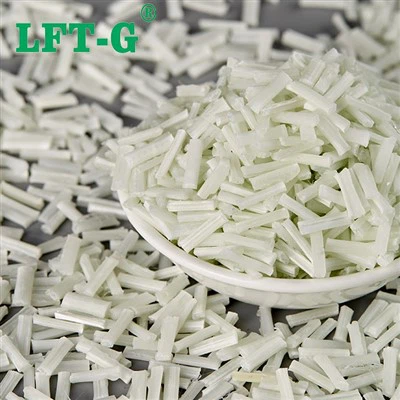


LFT-G® PP GF40 (CPP-NG04): Extreme Modulus & Toughness with 40% Long Glass Fiber
- Metal Replacement Champion: Flexural modulus approaches 9 GPa, effectively replacing die-cast magnesium/aluminum parts.
- Overcoming Brittleness: Long fiber technology retains high impact strength even at 40%, unlike brittle short fiber PP GF40.
- Low Temperature Toughness: Maintains ductile failure mode even at -30°C, crucial for automotive exterior safety.
- Chemical Resistance: Immune to battery acids, coolants, and moisture, offering durability where Polyamide (Nylon) fails.
Scenario: The "Brittleness" Trap of High Loading
Feature-Advantage-Benefit: Many manufacturers try to increase stiffness by simply adding more glass fiber (up to 40%) to standard PP. The result is usually a "Short Fiber" PP GF40 that is stiff but extremely brittle-snapping like chalk under sudden impact. LFT-G® CPP-NG04 solves this by using 40% Long Glass Fibers that form an interlocked skeletal network within the part (Feature). This network distributes impact energy effectively, preventing catastrophic shattering while delivering metal-like rigidity (Advantage). The benefit to you is the ability to produce high-load structural parts-like seat frames or battery supports-that pass crash safety tests without the weight and cost of metal.

Figure 1: Long fibers network provide ductility even at high glass loading.
Quality: Zero-Creep Structural Stability
Feature-Advantage-Benefit: At 40% fiber volume, LFT-G® NG04 creates a composite where the fiber network dominates the mechanical properties, reducing the influence of the polypropylene matrix. This results in exceptional creep resistance and fatigue endurance (Feature). Parts molded from this material resist deformation under heavy static loads for thousands of hours, even at elevated temperatures up to 100°C (Advantage). This allows engineers to design complex, integrated housings that replace multiple metal components, significantly reducing assembly time and total part weight (Benefit).

Figure 2: Superior creep resistance vs standard PP.
Technical Data Sheet (Model: LFT-G® CPP-NG04)
| Property | Test Standard | Unit | Typical Value |
|---|---|---|---|
| Base Resin | - | - | Polypropylene (PP) |
| Fiber Content | ISO 1172 | % | 40% Long Glass Fiber |
| Density | ISO 1183 | g/cm³ | 1.21 |
| Tensile Strength | ISO 527 | MPa | 138 - 145 |
| Tensile Modulus | ISO 527 | GPa | 9.2 |
| Flexural Strength | ISO 178 | MPa | 187-195 |
| Notched Impact Strength | ISO 179 | kJ/m² | 42 - 49 |
| HDT (1.80 MPa) | ISO 75 | °C | 160 |
Case Study: EV Battery Brackets
The Challenge
A new energy vehicle (NEV) project required brackets for the battery thermal management system. The material needed to be resistant to coolant leakage, lightweight, and rigid enough to support pumps and valves during vehicle vibration. Aluminum was too heavy and expensive; PA66 absorbed moisture and lost stiffness.
The LFT-G® Solution
LFT-G® CPP-40%LGF (NG04) provided the perfect balance. With a density of 1.21 g/cm³, it was 55% lighter than aluminum. The 40% long glass fiber content provided a modulus of ~9 GPa, ensuring the brackets did not vibrate or flex. Unlike Nylon, PP is chemically inert to coolants, ensuring long-term reliability.

Applications: High Stiffness & Chemical Resistance
People Also Ask
Q: Is PP GF40 cheaper than PA6 GF30?
A: Yes. Polypropylene resin is significantly cheaper (lower density) than Nylon (PA6). By using LFT-G® PP GF40, you often get similar stiffness to Nylon GF30 but at 20-30% lower part cost and weight, with the added benefit of moisture resistance.
Q: How does 40% glass affect surface finish?
A: High glass content can lead to "floating fibers" on the surface. However, LFT-G® pellets are fully impregnated. By using higher mold temperatures (>60°C) and fast injection speeds, a resin-rich, smooth surface suitable for structural (non-A-surface) parts can be achieved.
Q: Does PP GF40 absorb water?
A: Negligible absorption. Unlike Nylon (PA6/PA66) which absorbs moisture and loses stiffness, Polypropylene (PP) is hydrophobic. LFT-G® PP GF40 retains its mechanical properties regardless of humidity, making it ideal for water pumps and exterior parts.

Replace Metal with LFT-G®
High stiffness, low cost, no corrosion. Get the Data Sheet today.
Hot Tags: lft-g® pp gf40 (cpp-ng04)material, China, manufacturers, suppliers, factory, buy, customized