

GF30 PA66 Engineering Plastic
Product Overview
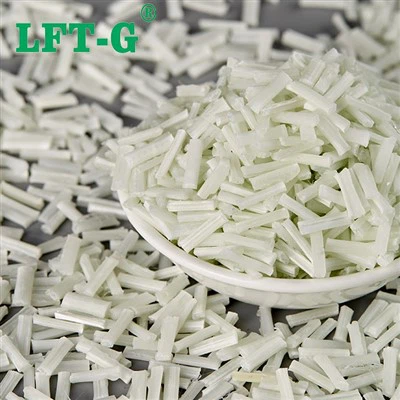
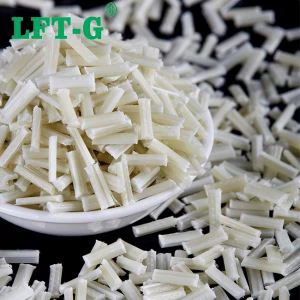
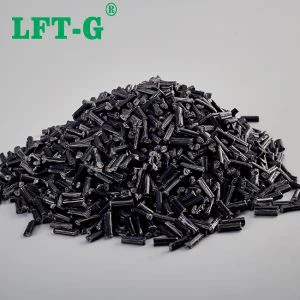
LGF30 PA66 is a long glass fiber reinforced thermoplastic engineering plastic. It is a modified material composed of 30% (by weight) long glass fibers and a PA66 matrix. The material is manufactured using advanced fiber impregnation and melt blending methods. The interface between the long glass fibers and the matrix resin has excellent bonding properties, achieving high-performance mechanical strength and thermal stability. This material is specifically designed for injection molding and is suitable for manufacturing high-strength, lightweight, and highly durable structural parts.
industry applications

Consumer goods and high-end equipment
Sports equipment with high functional intensity requirements
Precise mechanical structural components
Electrical and electronic products
Connector housing
Insulation structural component
Other functional components

Automobile and transportation industry
Engine compartment structural components (such as brackets, conduits, and covers)
Transmission system components
Air intake and cooling system components
Interior structural components

Industrial and mechanical equipment
Heavy-duty mechanical structural components
Highly wear-resistant components
Mechanical protective cover and supporting components
How was LGF30 PA66 constructed?
Base resin The base material is high-crystallinity polyamide 66 (PA66). This polymer itself possesses high strength, heat resistance, and chemical resistance properties, providing the basic performance framework for the composite material.
Strengthening fibers The strengthening phase is high-strength long glass fibers, accounting for 30% of the total weight of the material. Compared with traditional short glass fiber materials, long fiber composite materials perform better in terms of fracture toughness, impact strength and modulus. The fiber surface has undergone silane coupling treatment to enhance the interfacial bonding performance with the PA66 matrix, thereby achieving higher mechanical energy transfer efficiency.
Key performance indicators and material properties
The following data represent the main performance indicators.

Physical Typical Characteristic Testing Standard
|
Specific Gravity
|
1.10~1.50 |
g/cm³
|
ASTM D-792
|
|
Molding Shrinkage
|
0.2~0.4 |
%
|
ASTM D-955
|
|
Tensile Strength
|
180~200 | MPA |
ASTM D-638
|
|
Tensile Modulus
|
11000~12000 | MPA |
ASTM D-638
|
|
Flexural Strength
|
280~300 | MPA |
ASTM D-790
|
|
Flexural Modulus
|
8100~8200 | MPA |
ASTM D-790
|
|
Deflection Temperature
(1.8MPa)
|
250~260 |
°C
|
ISO 75-2
|
|
Mould temperature
|
70~90 |
°C
|
Core advantage
Excellent mechanical strength
LGF30-PA66 possesses extremely high tensile strength and modulus among similar materials, and this is particularly evident in high-load structural components. This makes it have a significant competitive advantage in metal substitution applications.
Excellent thermal stability
The material's heat deformation temperature exceeds 200°C, which is much higher than that of ordinary general-purpose engineering plastics. It is suitable for operating environments with high temperatures.
High impact toughness
Compared with conventional short fiber reinforced materials, the long glass fiber composite structure enhances the notch impact value and overall toughness, and performs stably in low-temperature and rapid loading environments.
Dimensional stability and lightweighting
Due to the uniform distribution of fibers and the low shrinkage rate of the matrix, the product has excellent dimensional retention properties and
is suitable for the molding of high-precision structural components. The composite material offers lower weight than equivalent metal parts while
achieving matching mechanical performance, thus providing the possibility for lightweighting of the final product.
Design Considerations
When designing components that use LGF30-PA66 plastic pellet, the following factors should be taken into consideration:
Fiber orientation: The direction of injection molding flow affects the local rigidity and strength of the part. Therefore, the stress direction of the product should be analyzed first.
Wall thickness uniformity: Uniform wall thickness helps reduce warping and improves overall performance.
Strengthening rib design: Determine the appropriate size of the strengthening ribs based on the load conditions to prevent stress concentration and fiber fracture.
LGF30 PA66: Comparison
| Contrasting attributes | LGF30 PA66 | SGF30 PA66 | PA66 Material |
| Tensile strength | High | Medium | Low |
| Deflection Temperature | High | Medium | Medium |
| Impact resistance | Excellent | Good | Good |
| Lightweight | High | Medium | Medium |
LGF30 PA66 compound resin, with its outstanding mechanical properties, thermal stability and processing controllability, has become the preferred material for high-load, precision structural components and lightweight design. The long-fiber structure of the material ensures tensile modulus, impact toughness and dimensional stability, while also possessing excellent injection molding processing performance and customizability. Whether for new product design or upgrading existing products, the LGF30-PA66 material from LFT-G® can provide significant performance improvement and long-term value, providing a reliable guarantee for engineering design.
FAQ
Q: What is the shrinkage rate of the formed parts?
A: The shrinkage rate of long glass fiber composite parts is low and uniform. Generally, it is slightly smaller along the fiber direction than in the transverse direction, but the influence of fiber orientation on local stiffness and size still needs to be considered during design.
Q: What is the thermal stability of LGF30 PA66?
A: The heat distortion temperature is approximately 235°C, which is higher than that of ordinary short-fiber PA66. It is suitable for structural components that are subjected to high-temperature conditions and long-term thermal loading.
Q: Can it be used in outdoor or humid environments?
A: PA66 is inherently sensitive to moisture and prolonged exposure to humid conditions may affect its performance. The weather resistance can be enhanced through surface coating or post-treatment; meanwhile, strict drying before molding remains the key to ensuring performance.
Hot Tags: gf30 pa66 engineering plastic, China, manufacturers, suppliers, factory, buy, customized