

Why LGF PA6 Has Become the Preferred Choice for Manufacturers?
In the fields of automotive light weighting, industrial equipment upgrading, and the development of high-end sports equipment, the choice of materials often determines the success or failure of the products. Design engineers face an eternal dilemma: how to reduce weight without sacrificing strength?
For a long time, metals (steel, aluminum) have been synonymous with strength, but their weight and processing costs have limited the design flexibility; while ordinary engineering plastics are lightweight, they perform poorly under extreme impacts or long-term loads. Against this backdrop, long-fiber reinforced thermoplastic composites (LFT) emerged, and among them, the most widely used and cost-effective representative is LGF PA6 plastic pellet.
Unveiling LGF PA6
What is LGF PA6?
LGF PA6, also known as Long Glass Fiber Reinforced Polyamide 6, differs from traditional short glass fiber materials (SGF). LGF PA6 is prepared through a special pultrusion process.
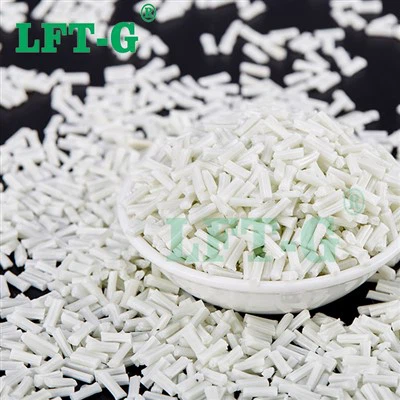
During this process, continuous glass fiber bundles are fully impregnated and encapsulated by the PA6 resin. The particle lengths after granulation typically range from 10 mm to 12 mm (ranging from 5 mm to 25 mm). This is not just an increase in length; it represents a qualitative change in the material's microstructure.
Skeletal Effect
When LGF PA6 is injection-molded, the long fibers do not completely break but instead interweave and bend within the molded part, forming a three-dimensional framework structure resembling a "bird's nest".
Short glass fibers (SGF): The fibers are like scattered toothpicks, providing only limited rigidity. They are prone to crack rapidly upon impact.
Long glass fiber (LGF): The network formed by the fibers can effectively prevent the extension of cracks and quickly disperse the external impact energy throughout the entire component.
Core Performance Breakthrough
In response to the pain points in the automotive, industrial and sports equipment sectors, LGF PA6 composite has provided specific solutions.

Re-defining "High Impact Resistance"
For the enclosures of power tools or the support frames of car bumpers, drops, and collisions are common occurrences. The notch impact strength of LGF PA6 is typically several times that of proportionally short glass fiber materials, and even 4–5 times that of ordinary nylon. More importantly, it can still maintain this toughness in low-temperature environments, which is crucial for outdoor sports equipment (such as ski bindings).
Overcoming "Creep Resistance" Fear
When plastic components are subjected to constant loads over a long period of time, they often undergo permanent deformation, known as "creep". Thanks to the interlocking effect of the long fibers, LGF PA6 exhibits excellent creep resistance and fatigue resistance. This means it can be used as structural components that are subjected to long-term forces, such as pump body housings, industrial gears, or car pedal assemblies, without worrying about dimensional deviation after long-term use.


Dimensional Stability and Low Warpage
After absorbing moisture, nylon materials tend to deform, and the addition of glass fibers can easily lead to anisotropy (different shrinkage rates in the longitudinal and transverse directions), resulting in warpage. The long-fiber network of LGF PA6 significantly reduces anisotropy, enabling the material to maintain extremely low warpage when injection molding large thin-walled parts (such as automotive front modules, engine hood covers), ensuring the tolerance requirements for precise assembly.
Where is LGF PA6 Applied?
Automotive Industry: The Pioneer of Light Weighting
In the context of "carbon neutrality", the substitution of plastics for metals (Metal Replacement) has become an essential part of the automotive industry. LGF PA6 compound resin has successfully replaced numerous metal components with its high specific strength (the ratio of strength to weight):
Front end modules
Dashboard skeletons
Battery brackets
The rearview mirror base: Compared to metal, it not only reduces weight but also achieves an integrated design of the components through injection molding, thereby lowering the assembly cost.
Industry and Consumer Goods: Quality Over All
Electric tools: To withstand frequent vibrations and accidental drops, LGF PA6 material gives the casing a texture and safety similar to that of metal.
Mechanical and electrical components: In the pump impeller and valve body, the heat resistance and aging resistance as well as the chemical corrosion resistance of LGF PA6 polymer enable it to have a much longer service life than ordinary plastics.
Processing Guide
Although LGF PA6 compound resin has outstanding performance, the correct processing technique is the key to unlocking its full potential. As a professional composite material manufacturer, we suggest:
Screw selection: Use a screw with a low compression ratio and deep grooves to minimize shear force and retain the fiber length. The shorter the fiber breaks, the greater the performance loss.
Flow channel design: Adopt a full circular flow channel and a larger gate size to ensure smooth melt filling and reduce fiber damage.
Drying treatment: The PA6 matrix has strong hygroscopic. Before processing, it is essential to carry out thorough drying to prevent the appearance of silver fibers or bubbles in the product.
FAQ
Q: How does LGF PA6 solve the problem of warping compared to ordinary nylon?
A: The interlacing of long fibers effectively counteracted the anisotropic shrinkage of PA6. Compared to SGF, the shrinkage rate of LGF PA6 was more uniform and the warping deformation was extremely low.
Q: Will there be obvious "floating fibers" on the surface of the product?
A: LGF focuses on structural performance, and its surface gloss is slightly inferior to that of non-reinforced materials. However, by increasing the mold temperature and using our unique resin melt infiltration process, the surface quality can be significantly improved to meet industrial appearance standards.
Q: Will the material become brittle in a low-temperature environment (such as -30 °C)?
A: No. Thanks to the energy absorption mechanism of the long fibers, LGF PA6 maintains excellent toughness and impact resistance even at low temperatures, making it an ideal choice for skiing equipment and automotive chassis components.
LGF PA6 plastic granules is not a panacea, but it achieves a perfect balance among rigidity, toughness, and cost.
If you are seeking the ultimate light weighting and ultra-high modulus, our Long Carbon Fiber (LCF) series might be a more premium option. We focus on the research and production of high-performance long-fiber reinforced thermoplastic composites (LFT-G®). We will provide you with more detailed explanations at any time. Click below,
Hot Tags: why lgf pa6 has become the preferred choice for manufacturers, China, manufacturers, suppliers, factory, buy, customized