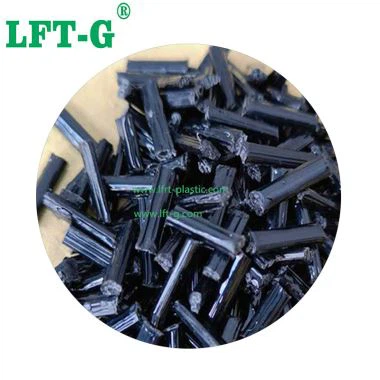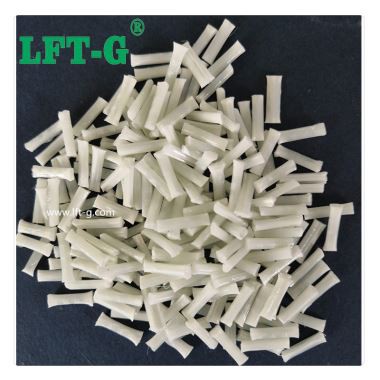


LFT-G® PA6 LGF30 | High-Temp & Strength Upgrade for PA6 GF30
LFT PA6 LGF30: The Engineering Upgrade for PA6 GF30 Applications
Engineers often specify "PA6 GF30" (Nylon 6) for its good high-temperature performance and strength. But for components under constant vibration and thermal stress, a superior solution is required. LFT-G® PA6-NG03 is that solution. It is a premium long-fiber composite that enhances the properties of PA6 GF30 by reinforcing a tough Polyamide 6 matrix with a 30% long glass fiber network.
The long-fiber skeleton provides exceptional resistance to creep and fatigue failure, making it the definitive choice for demanding under-the-hood automotive parts like intake manifolds and engine covers. It maintains its structural integrity at high temperatures and offers a superior strength-to-weight ratio for metal replacement.
 High-Temp Stability
 Fatigue Resistance
 Strength-to-Weight
Long Fiber vs. Short Fiber: A Clear Performance Jump
The long-fiber network in LFT-G® PA6 LGF30 provides a significant, measurable improvement in the key mechanical properties that matter most in structural components.
Tensile Strength
+25%vs. PA6 GF30 (SFT)
Impact Strength
+150%vs. PA6 GF30 (SFT)
Creep Resistance @120°C
+200%vs. PA6 GF30 (SFT)
Fatigue Life (Cycles)
+300%vs. PA6 GF30 (SFT)
Technical Data Sheet: LFT-G® PA6-NG03
Typical values for our LFT Polyamide 6 grade. Data presented is for Dry-As-Molded (DAM) condition. Properties will change with moisture absorption.
| Property | Test Method | Units | Typical Value (DAM) |
|---|---|---|---|
| Long Glass Fiber Content | ASTM D5630 | % by weight | 30 |
| Density | ASTM D792 | g/cm³ | 1.34 |
| Tensile Strength | ASTM D638 | MPa | 174 |
| Flexural Modulus | ASTM D790 | GPa | 8.7 |
| Notched Izod Impact Strength (@23°C) | ASTM D256 | kJ/m² | 32 |
| Heat Deflection Temperature (@1.82 MPa) | ASTM D648 | °C | 208 |
Case Study: Automotive Engine Cover
The Old Solution: PA66 GF30 (SFT)
An automaker was using a standard short-fiber PA66 GF30 for their engine covers. While it met initial heat requirements, it suffered from two key problems:
• Vibration Failure: Constant engine vibration led to micro-cracks forming at mounting points, causing fatigue failure and rattling noises over time.
• Cost: PA66 resin prices were high and volatile, impacting the component's budget.
The LFT-G® Upgrade: PA6 LGF30
LFT-G® PA6 LGF30 was introduced as a direct replacement.
• Fatigue Solved: The long-fiber network dissipated vibrational energy, increasing the fatigue life of the mounting points by over 300%.
• Cost Reduced: Switching to a PA6-based LFT composite provided comparable thermal performance at a significantly lower material cost, while also improving impact strength for better handling during vehicle assembly and maintenance.
Business Outcome
Achieved a 20% cost reduction per part while eliminating warranty claims for cracked engine covers, improving both profitability and brand reputation for quality.
High-Performance Applications for Nylon LFT
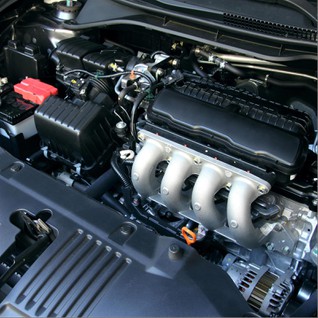
Air Intake Manifolds
A classic metal replacement application. The LFT PA6 provides the high-temperature resistance and creep strength to withstand under-hood conditions and intake pressure pulses, with significant weight savings.

Snowboard & Ski Bindings
Requires a material that is stiff for precise control, yet tough enough to handle extreme impacts and low temperatures. LFT PA6 provides the perfect balance of these properties for high-performance winter sports gear.

Industrial Cooling Fans
The blades of large cooling fans are under constant centrifugal stress. LFT PA6 has the high fatigue life and creep resistance to maintain blade shape at high rotational speeds and elevated temperatures.
Key Questions Answered
1. How is PA6 GF30 different from PP GF30?
A: The main difference is the base polymer. PA6 (Nylon 6) has a significantly higher service temperature, strength, and stiffness compared to PP (Polypropylene). This makes PA6 GF30 suitable for under-the-hood and high-load structural applications where PP GF30 would fail. However, PP GF30 has the advantage of lower cost and near-zero moisture absorption.
2. What is the difference between PA6 LGF30 and PA66 LGF30?
A: Both are high-performance nylons. PA66 generally has a slightly higher short-term heat resistance and stiffness. However, LFT-G® PA6 offers better long-term thermal stability (aging resistance), superior surface aesthetics, and is often a more cost-effective solution. For many demanding applications, our advanced PA6 LGF30 can meet or exceed the performance of standard PA66 grades.
3. How does moisture affect the properties of LFT PA6 LGF30?
A: Like all polyamides, PA6 absorbs moisture from the atmosphere. This process acts as a plasticizer. When conditioned (exposed to ~50% RH), the material becomes more ductile and its impact strength increases significantly, while its stiffness and tensile strength decrease moderately. Our TDS values are for dry-as-molded parts; it's critical to account for the effects of moisture in your final design calculations.
Ready to Engineer the Next Breakthrough?
Elevate your product's performance with the proven strength and thermal stability of LFT-G® PA6 LGF30. Contact our material specialists today to discuss your project or request a material sample.
Hot Tags: pa6 lgf30 high strength upgrade for pa6 gf30, China, manufacturers, suppliers, factory, buy, customized