LFT-G® PA6 LGF30-NG03 | The High-Fatigue Upgrade for PA6 GF30
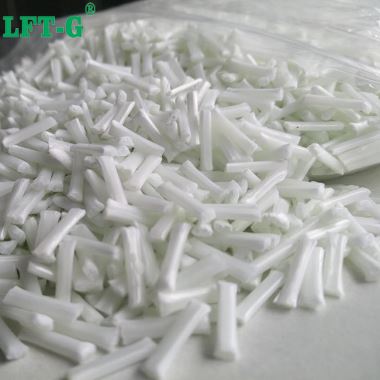
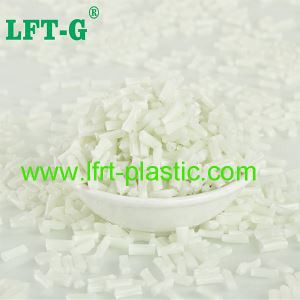
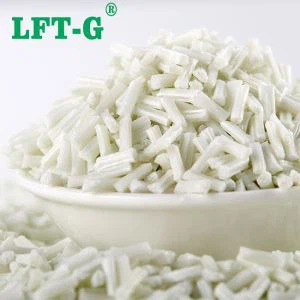
LFT-G® 30% Long glass fiber nylon6 (PA6)
For engineers, PA6 GF30 (Short Fiber Nylon 6) is the go-to material for parts requiring heat resistance and stiffness. However, under cyclic loading or high vibration, short fibers often debond, leading to fatigue failure. LFT-G® PA6-LGF30-NG03 is the structural evolution designed to overcome this limit.
This Natural Grade (NG03) composite reinforces a robust Nylon 6 (PA6) matrix with a 30% Long Glass Fiber skeletal network. Unlike short fibers, these long filaments intertwine to dissipate stress energy efficiently. This results in a material that not only handles higher static loads but offers exponentially better fatigue life and creep resistance, especially at elevated temperatures (up to 130°C continuous).
√ Superior Fatigue Resistance: The entangled long fiber network resists crack propagation under vibration, making it ideal for dynamic automotive and railway components.
√ High Thermal Stability: Outperforms PP-based composites in high-heat environments (engine bays), maintaining stiffness where others soften.
√ Excellent Surface Finish: Our specific LFT process ensures a resin-rich surface, providing a smoother, more aesthetic finish than typical glass-filled materials.
The Fatigue Gap: Vibration Durability
Under constant vibration, standard materials fail quickly. LFT-G® PA6 endures.
Standard PA6 GF30
Cycles to Failure: ~100,000
LFT-G® PA6 LGF30
Cycles to Failure: >1,000,000
Typical Material Properties
The following values are typical data for LFT-G® PA6-LGF30-NG03 (Natural Grade) and are for reference only. Data is for Dry-As-Molded (DAM) state. Please contact us for the official Technical Data Sheet (TDS).
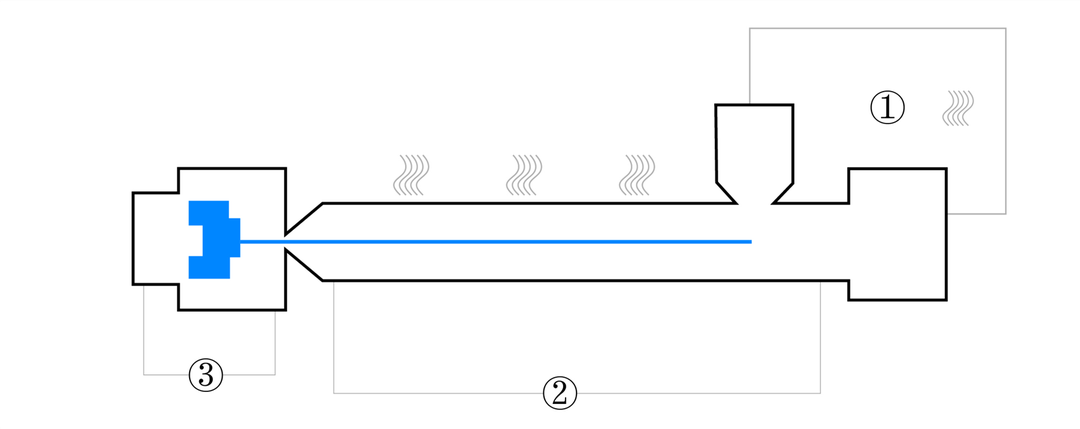
The following values are recommendations. We recommend desiccant / dry air dryers (moisture content below 0.1%).
To minimize fiber breakage and ensure optimal performance, a low-compression, general-purpose screw is highly recommended.
Parameter
Recommendation
Drying Temperature
80 - 100 °C
Drying Time
4 - 6 hours
Melt Temperature (Nozzle ③)
240 - 270 °C
Mold Temperature (Zone ②)
60 - 90 °C
Back Pressure
Low (to minimize fiber damage)
Case Study: High-Speed Railway Fastener
A national railway project needed to replace cast iron rail fasteners. The component must maintain constant tension on the rail track while enduring millions of vibration cycles from passing high-speed trains.
Performance Report
Challenge: Creep & Fatigue Standard PA6 GF30 "relaxed" over time, losing grip tension. Cast iron was too heavy and corroded.
Solution: LFT PA6 LGF30 The long-fiber network provided superior creep resistance to hold tension and high fatigue life to withstand vibration.
Final Result: 50% Lighter than iron. Zero Maintenance required for the first 5 years of operation.
Applications for Structural Nylon LFT
NO SHAKE
Automotive Mirror Brackets
Replaces die-cast zinc. The extreme stiffness and vibration damping of LFT PA6 LGF30 prevent the mirror from shaking at high speeds, ensuring clear visibility.
IMPACT + COLD
Winter Sports Equipment
Used in ski bindings. Unlike standard PA6 which gets brittle in the cold, LFT PA6 retains toughness and stiffness at -20°C, ensuring safety releases work correctly.
HEAT + DROP
Power Tool Housings
Professional drills generate heat and get dropped. LFT PA6 LGF30 resists motor heat deformation and survives job-site drops better than short-fiber nylon.
People Also Ask (Google PAA)
1. What is the difference between PA6 GF30 and PA66 GF30?
A: PA66 is generally harder and has a higher melting point, but it is more expensive and absorbs moisture faster. **PA6 GF30** offers better surface finish and toughness. However, our **LFT-G® PA6 LGF30** (long fiber) actually outperforms standard PA66 GF30 in impact strength and fatigue life, often making it a superior, cost-effective alternative.
2. Does Nylon 6 (PA6) absorb water?
A: Yes, all polyamides absorb moisture from the air. This "conditioning" process makes the material tougher but slightly lowers its stiffness. In our **LFT PA6 LGF30**, the long glass fiber skeleton helps maintain dimensional stability and rigidity even after moisture absorption, solving a common issue with short-fiber nylon.
3. Is PA6 GF30 suitable for outdoor use?
A: Standard PA6 can degrade under UV light. However, LFT-G® PA6 LGF30 can be formulated with UV stabilizers (black grades). Its high structural integrity makes it suitable for outdoor mechanical parts, provided it is UV-stabilized, where it outperforms PP in heat resistance and ABS in chemical resistance.
Ready to Engineer the Next Breakthrough?
Elevate your product's performance with the proven strength and fatigue resistance of LFT-G® PA6 LGF30. Contact our material specialists today to discuss your project or request a material sample.



 For engineers, PA6 GF30 (Short Fiber Nylon 6) is the go-to material for parts requiring heat resistance and stiffness. However, under cyclic loading or high vibration, short fibers often debond, leading to fatigue failure. LFT-G® PA6-LGF30-NG03 is the structural evolution designed to overcome this limit.