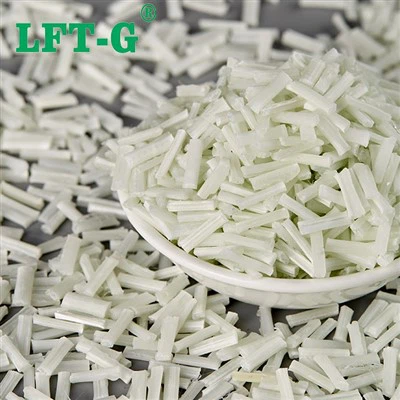


40% Long Glass Fiber Reinforced Nylon 6 Material
The pinnacle of our polyamide portfolio, this 40% long glass fiber composite is engineered for maximum performance. It pushes the boundaries of strength and stiffness, offering an unparalleled solution for replacing structural metal components in the most demanding applications where failure is not an option.

Performance Profile vs. Traditional Materials
Specific Strength (Strength-to-Weight)
Specific Stiffness (Stiffness-to-Weight)
Technical Specifications
Note: As a hygroscopic material, the properties of PA6 are influenced by moisture content. Data is provided for Dry-As-Molded (DAM) and conditioned (50% RH) states.
| Property | Test Method | Metric (DAM) | Metric (COND) |
|---|---|---|---|
| Density | ISO 1183 | 1.44 g/cm³ | 1.44 g/cm³ |
| Tensile Modulus | ISO 527 | 12,500 MPa | 9,000 MPa |
| Tensile Strength | ISO 527 | 189 MPa | 145 MPa |
| Notched Izod Impact (23°C) | ISO 180 | 38 kJ/m² | 29 kJ/m² |
| Heat Deflection Temp (1.8 MPa) | ISO 75 | 208 °C | - |
Download Complete LFT PA6 GF40 Data Sheet PDF
Engineered for Ultimate Structural Performance

Automotive Structural Parts
Cross-car beams, seat structures, battery trays, and other safety-critical components.
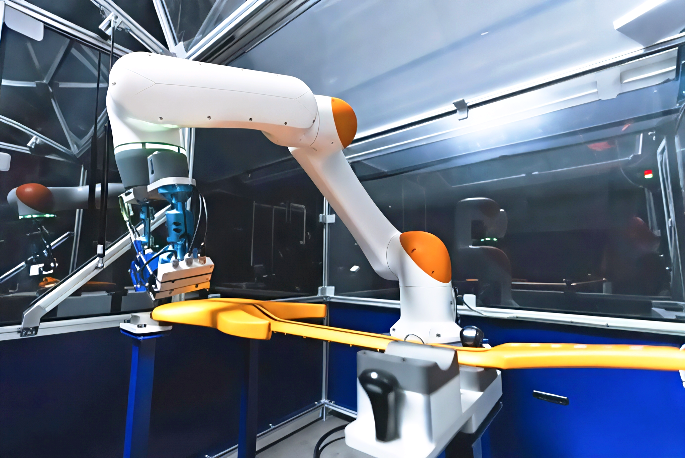
Heavy-Duty Industrial
Robotic arm structures, load-bearing machinery frames, and high-pressure fluid connectors.

Aerospace & Defense
UAV (drone) frames, interior brackets, and equipment housings requiring high stiffness-to-weight ratio.
Design & Processing Excellence
Q: Critical Moisture Management
A: Pre-Drying is Mandatory. Dry pellets for 3–4 hours at 80-90°C (176-194°F) to reduce moisture content below 0.1%. Proper drying is essential to prevent hydrolysis during molding and ensure optimal mechanical properties.
Q: Recommended Injection Molding Parameters
A: Use a general-purpose screw with low shear. Melt temperatures should be in the 260-280°C (500-536°F) range. A high mold temperature of 80-120°C (176-248°F) is crucial for achieving a high-quality surface finish and optimal crystallinity.
Q: Design for Long Fiber Composites
A: Utilize generous radii and uniform wall thicknesses. Gate locations should be chosen to promote fiber alignment in the direction of principal stress. Be aware of anisotropic shrinkage; consult our full design guide or technical team for support.
Frequently Asked Questions
Q: What is the primary advantage of 40% LGF over 30% LGF PA6?
A: The primary advantage is a significant increase in stiffness (modulus) and strength. LFT-G® PA6 GF40 is the choice for applications where maximum rigidity and load-bearing capacity are the most critical design requirements, pushing the performance envelope for metal replacement even further.
Q: How does the higher fiber content affect processing?
A: The higher fiber loading results in a higher viscosity melt. While processing parameters are similar to the 30% grade, it may require slightly higher injection pressures. It's also even more critical to use well-designed, open flow paths (runners, gates) to minimize fiber breakage and ensure the long-fiber network is preserved in the final part.
Ready for Ultimate Performance?
Challenge our engineers with your most demanding applications. Contact us to discuss how LFT-G® PA6 GF40 can elevate your product's performance and provide a competitive edge through advanced lightweighting.
Hot Tags: pa6 gf40 composite, China, manufacturers, suppliers, factory, buy, customized