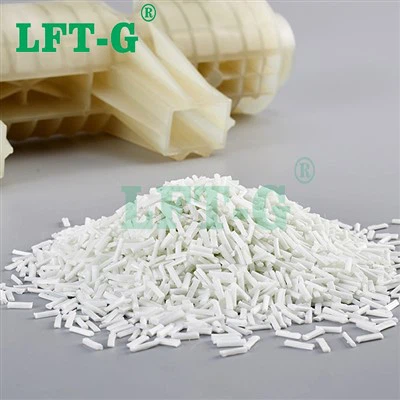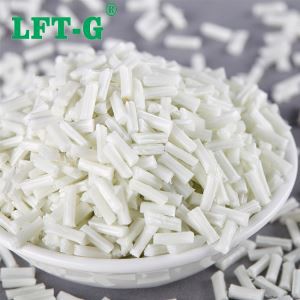


Glass Fiber Nylon 6 GF30 PA6 Compound Resin
What is PA66 GF30 material? GF30 PA6 material (30% Glass Fiber reinforced nylon 6) is an engineering plastic, which is made by using nylon 6 (PA6) as the base resin and adding 30% glass fiber (GF) for reinforcement and modification. This composite material is significantly superior to pure nylon 6 in terms of strength, heat resistance and dimensional stability, and is widely used in the automotive, electronic, industrial machinery and other fields. Polyamide 6, commonly known as Nylon 6, is a synthetic polymer and one of the most widely used types of nylon.
What is PA6 GF30 used for?

Automobile industry
Engine peripheral components: intake manifold, throttle body, engine hood (high-temperature resistant, weight reduction).
Structural components: Rearview mirror bracket, wiper arm, connector (high rigidity, fatigue-resistant).
Functional parts: gears, bearings, sliding components (wear-resistant, self-lubricating).
Electronic appliances
Insulating components: Circuit breaker housing, relay base (flame-retardant, arc-resistant).
Connector: High-frequency plug-in components (dimensional stability, low warpage).
Electric tools: Drill housing, handle (impact-resistant, wear-resistant).

Consumer goods and sports equipment
Sports equipment: ski bindings, bicycle pedals, bicycle handrails (lightweight, high-strength).
Household items: Furniture wheels, kitchenware handles (heat-resistant and deformable).
Industrial machinery
Transmission components: gears, worm wheels, cams (high load, low noise).
Pump and valve assembly: Impeller, valve housing (chemically resistant, pressure-resistant).
Conveying system: conveyor rollers, bearing housing (wear-resistant, long service life).
Other special fields
Aerospace: Unmanned aerial vehicle structural components, interior brackets (high strength-to-weight ratio).
What are The Advantages of GF30 PA6?
Ultra-high mechanical strength and rigidity
High tensile strength: up to 160MPA
High flexural modulus (stronger resistance to deformation).
Long-fiber network structure: The fiber length is better retained (usually 5-25mm), forming a three-dimensional reinforcing skeleton, and the load distribution is more uniform.
Excellent impact resistance and toughness
High notched impact strength: (higher than short glass fiber), especially maintaining toughness at low temperatures.
Fatigue resistance: Suitable for dynamic load scenarios (such as automotive suspension components, sports equipment).
Lower anisotropy
Long fibers reduce anisotropy, making the performance of components more balanced and reducing the risk of warping.

High-temperature resistance and dimensional stability
Heat distortion temperature (HDT) : It can reach 200 degrees at 1.82MPa (comparable to short glass fiber, but with a higher strength retention rate at high temperatures).
Low shrinkage rate: Suitable for precision structural components (such as gears, electronic housings).
Wear resistance and chemical resistance
Self-lubricating property: Long fibers reduce the coefficient of friction, making it suitable for moving parts such as bearings and sliders.
Oil/fuel resistance: Suitable for automotive fuel system components.
Why is GF30 Nylon 6 used?
30% Long glass fiber reinforced Nylon 6 (PA6) compound resin is a widely used engineering thermoplastic with excellent mechanical properties, chemical resistance and cost-effectiveness. It offers a powerful balance of tensile strength, toughness and wear resistance, making it an ideal choice for automotive parts, industrial components and consumer goods.
Compared with nylon 66, PA6 pellet has a lower melting point, making it easier to process through injection molding or extrusion while remaining more economical. Its performance can be further enhanced by glass fiber reinforcement (such as GF30 PA6 composite), significantly improving stiffness, heat resistance (up to ~200°C HDT) and dimensional stability.
However, nylon 6 absorbs moisture more easily than some substitutes and needs to be pre-dried before processing.
Despite this, its versatility, ease of manufacturing and good performance-to-cost ratio ensure its dominant position in applications where high-temperature resistance (such as nylon 66) or ultra-low moisture absorption (such as nylon 12) is not critical.
For demanding environments, additives or alternatives to nylon may be needed, but for most structural and wear-resistant applications, nylon 6 remains the preferred choice.
FAQ
Q: What is the difference between PA6 and PA66?
A: Although they have a similar set of properties, there are still slight differences. PA6 has slightly lower temperature resistance than PA66, and is also slightly less ductile. Compared to PA6, PA66 has the following characteristics: A slightly lower moisture absorption capacity. When the same conditions require glass fiber materials with lower water absorption, GF pa66 can also be a good choice.
Q: What are the disadvantages of PA6? Can it be improved after adding glass fiber?
A: Higher water absorption can lead to warpage. Lower strength and stiffness compared to PA66. Adding glass fiber can enhance the strength better than the original nylon material.
Q: Does GF PA6 absorb water?
A: PA 6 absorbs water molecules to deteriorate its elastic property. Absorbed water dissociates intermolecular hydrogen bonding between PA 6 chains in the amorphous region. Even when fibers are added, it still has strong water absorption.
LFT-G® has extensive research experience in nylon materials, whether they are long carbon fibers or long glass fibers. And it has long-fiber nylon materials of different contents. If you are interested in this type of material, you can obtain more relevant information through our material experts. Click below,
LFT-G® LFT-PA6-NG03 Composite
Through such data, we can better understand the advantages of long glass fiber materials and understand the reasons why they can be applied to a variety of different industry fields.
Mechanical PropertiesProperty |
Value |
Unit |
Test Standard |
|---|---|---|---|
| Tensile Strength | 160-180 | MPA | ISO 527 |
| Tensile Modulus | 10000-11000 | MPA | ISO 527 |
| Elongation at Break | 1.5-3 | % | ISO 527 |
| Flexural Strength | 245-255 | MPA | ISO 178 |
| Flexural Modulus | 7500-8500 | MPA | ISO 178 |
| Notched Izod Impact Strength | 24-34 | kJ/m² |
ISO 180
|
| Notched Charpy Impact Strength | 25-35 | kJ/m² |
ISO 179
|
Other Properties
| Property | Value | Unit | Test Standard |
|---|---|---|---|
| Specific Gravity | 1.2-1.6 | g/cm³ | ASTM D-792 |
| Molding Shrinkage | 0.1-0.5 | % | ASTM D-955 |
|
Deflection Temperature (1.8 MPA) |
200-220 | °C |
ISO 75-2
|
| Melt Temperature | 240-270 | °C | |
| Mold temperature | 55-95 | °C |
Product Material
We use the world's best materials and ultra-high standard fibers to make our products. The correct use of these materials ensures the high quality of our products, and also enhances their wear resistance, durability and high strength.
Download GF30 PA6 plastic pellet technical data by clicking the button below.
Hot Tags: glass fiber nylon 6 gf30 pa6 compound, China, manufacturers, suppliers, factory, buy, customized