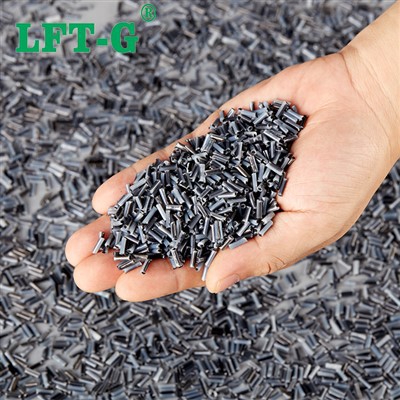


What is carbon fiber nylon: long carbon fiber nylon66 compound.
A carbon fiber nylon 66 composite is a high-performance engineering thermoplastic created by reinforcing a Polyamide 66 (PA66 or Nylon 66) matrix with carbon fibers (CF). PA66 itself is a robust polymer known for its high strength, excellent thermal stability, and superior wear resistance. When infused with carbon fibers-renowned for their extreme stiffness and low density-the resulting composite achieves a level of performance far beyond that of unreinforced plastics. This combination makes carbon fiber nylon 66 a sought-after material for lightweight structural components.
However, the ultimate capability of this composite is determined by the length of the carbon fibers. LFT-G® PA66 CF30 represents the cutting edge, utilizing Long Carbon Fiber Technology (LFT). Unlike conventional Short Carbon Fiber (SCF) composites, the "long fiber" in LFT-G® PA66 CF30 (a 30% long carbon fiber nylon) forms an integral, interlocking 3D skeletal network within the PA66 matrix. This LCF structure is paramount for maximizing mechanical properties, delivering vastly superior impact strength, exceptional fatigue endurance, and metal-like stiffness at a fraction of the density. This positions LFT-G® PA66 CF30 as a premier choice for replacing metals like aluminum and steel in the most demanding applications.
How strong is CF nylon?
LFT-G® PA66-CF30 Datasheet
Mechanical PropertiesProperty |
Typical Value |
Unit |
Test Standard |
|---|---|---|---|
| Tensile Strength | 240 - 255 | MPa | ISO 527-1/-2 |
| Tensile Modulus | 23,000 - 25,000 | MPa | ISO 527-1/-2 |
| Elongation at Break | 1.0 - 2.0 | % | ISO 527-1/-2 |
| Flexural Strength | 330 - 350 | MPa | ISO 178 |
| Flexural Modulus | 14,000 - 15,000 | MPa | ISO 178 |
| Notched Izod Impact Strength (23°C) | 35 - 50 | kJ/m² |
ISO 180/1A
|
Other Properties
| Property | Typical Value | Unit | Test Standard |
|---|---|---|---|
|
Density
|
1.23 - 1.24 |
g/cm³
|
ISO 1183
|
|
Linear Mold Shrinkage (Flow / Transverse)
|
0.1-0.2 / 0.2-0.4 | % |
ISO 294-4 |
|
Heat Deflection Temperature (1.8 MPa) |
250 - 255 | °C |
ISO 75-2/A
|
| Melting Temperature (DSC) | 260 - 295 | °C | ISO 11357-3 |
Download Complete PA66 CF30 Data Sheet PDF
Discover The Benefits Request a Quote
Core Advantages of Carbon fiber Nylon
LFT-G® PA66 CF30 is engineered as a transformative metal replacement solution. The key to its superior performance lies in the 30% long carbon fibers that form an interconnected, skeletal network within the robust Polyamide 66 matrix. This structure is fundamentally better at dissipating energy and distributing stress compared to the random dispersion of short fibers. For your applications, this unlocks the following core advantages:
- Exceptional Specific Strength & Stiffness (Strength-to-Weight)
- Extreme Rigidity & High Flexural Modulus
- Significant Lightweighting for Viable Metal Replacement
- Superior Fatigue & Creep Resistance Under Load
- Outstanding Dimensional Stability & Very Low CTE
- High Heat Resistance and Thermal Stability
- Tunable Electrical Conductivity for ESD/EMI Shielding
- Excellent Wear & Abrasion Resistance

What is carbon fiber nylon used for?
The extreme performance profile of LFT-G® PA66 CF30 makes it a critical enabling material for the most challenging applications where metal replacement delivers significant advantages in weight, performance, and design freedom.
Automotive Part
In the automotive industry, LFT-G® PA66 CF30 is specified for high-stress structural and under-the-hood applications. Its combination of high strength, stiffness, and thermal resistance makes it ideal for engine covers, intake manifolds, structural reinforcements, chassis components, pedal boxes, and parts for electric vehicle powertrains where lightweighting and long-term durability are paramount.

Industrial Tool Part
For industrial machinery and robotics, LFT-G® PA66 CF30 provides unparalleled performance. It is used to manufacture lightweight yet incredibly rigid robotic arms, high-speed machinery components requiring minimal deflection, and durable jigs and fixtures. Its excellent wear resistance and dimensional stability ensure precision and long service life in demanding, continuous-use factory environments.
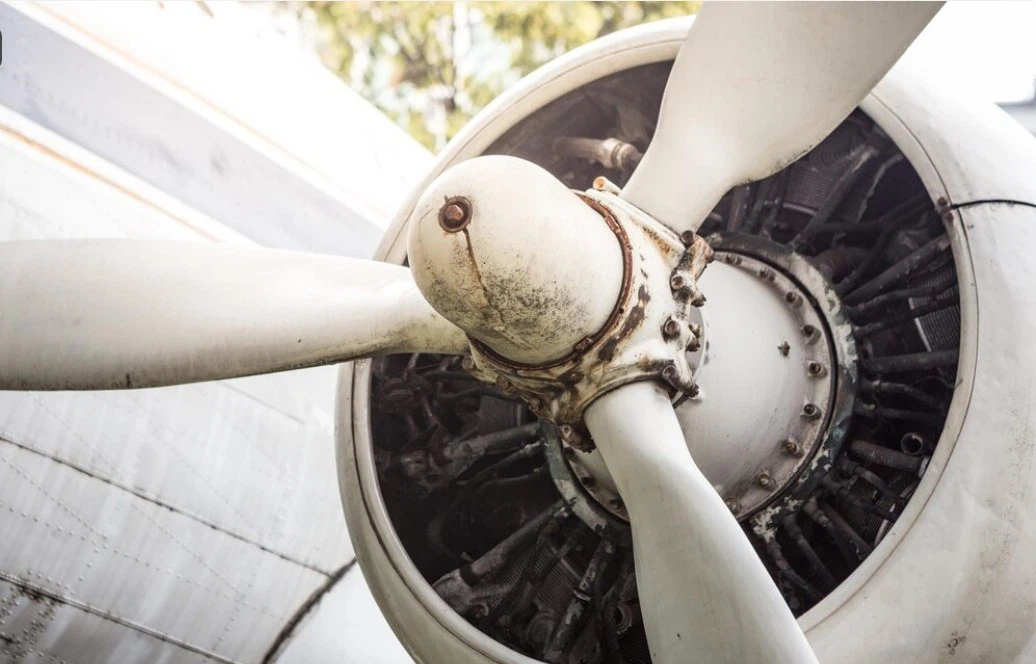
UAV Propeller Part
The aerospace and UAV (drone) industries rely on LFT-G® PA66 CF30 for its exceptional strength-to-weight ratio. It is an ideal material for drone frames, landing gear, and high-performance propellers. The material's extreme stiffness allows for thin, aerodynamically efficient propeller designs that maintain their shape at high rotational speeds, while its low weight maximizes flight time and payload capacity. Its fatigue resistance ensures reliability during operation.

LFT-G®PA66 CF30 VS. Other Materials
Understanding how LFT-G® PA66 CF30 compares to other common engineering materials is key to smart material selection.
| Property |
LFT-G® PA66 CF30(LCF30) |
PA66 SCF30 | Die-Cast Aluminum | High-Strength Steel |
|---|---|---|---|---|
| Density (g/cm³) | ~1.23 | ~1.24 | ~2.70 | ~7.85 |
| Tensile Strength (MPa) | ~250 | ~200 | ~310 | ~700 |
| Impact Strength (Notched Izod, kJ/m²) | ~50 | ~12 | N/A (Ductile) | N/A (Ductile) |
| Specific Strength (Strength/Density, kNm/kg) | ~200 | ~161 | ~115 | ~89 |
| Flexural Modulus (GPa) | ~24 | ~20 | ~69 | ~200 |
Frequently Asked Questions (FAQ)
Q: Is carbon fiber nylon stronger than aluminum?
A: It depends on how you measure "strong". While high-strength aluminum alloys can have a higher absolute tensile strength, LFT-G® PA66 CF30 exhibits a superior specific strength (strength-to-weight ratio). This means for the same weight, a part made from our long carbon fiber nylon 66 can be significantly stronger and stiffer than an aluminum part, making it a powerful choice for lightweighting without compromising performance.
Q: How long does it take for CF nylon to dry?
A: Nylon (Polyamide) is hygroscopic and must be dried before injection molding to prevent processing issues and ensure optimal part properties. For LFT-G® PA66 CF30, a typical recommendation is to dry the pellets for 4-8 hours at 80-120°C (176-248°F) to reduce moisture content to below 0.2%. Exact times can vary based on initial moisture level and drying equipment.
Q: How about your payment term?
A: We offer a range of flexible payment terms to accommodate our global clients.FOB,CIF,DAP,DDP, With TT,L/C, Credit even Alibaba. For detailed information on payment options for LFT-G® PA66 CF30, please contact us to discuss your project.
Why choose US
Partner with the Experts in Long Fiber Technology
✓ Uncompromising Quality: Our LFT-G® PA66 CF30 is produced under strict IATF 16949 certified quality control systems, ensuring batch-to-batch consistency for critical applications.
✓ Collaborative Technical Support: We provide expert guidance on material selection, part design optimization for LCF composites, mold flow analysis, and processing support.
✓ Custom Formulation Expertise: We can develop custom LFT-G® PA LCF formulations with tailored properties, including varying fiber contents, lubrication, and heat stabilization packages.
✓ Reliable Global Supply Chain: With robust production capabilities and an agile supply chain, we ensure your production lines remain operational.
Certified Quality
Years Experience
Global Customers
Technical Support
Hot Tags: Nylon carbon Fiber, China, manufacturers, suppliers, factory, buy, customized