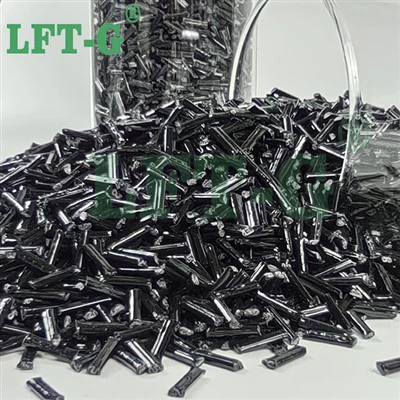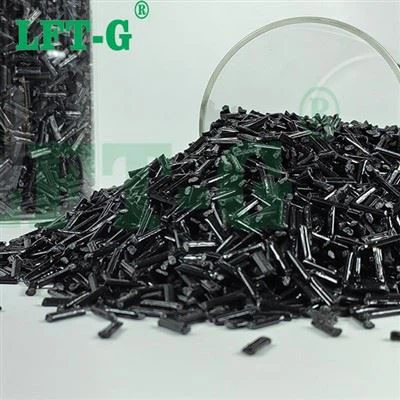


LFT-G® PPS LCF60 | Polyphenylene Sulfide
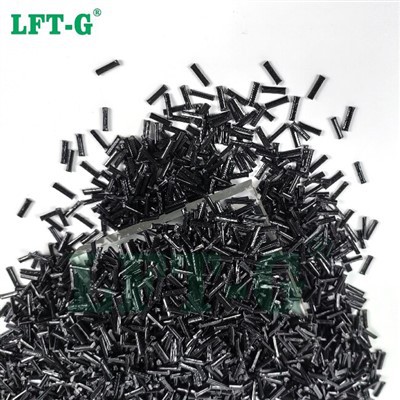
LFT-G® PPS LCF60 is a 60% long-carbon-fiber-reinforced polyphenylene sulfide (PPS) composite engineered for structural components that must withstand the most extreme combinations of heat, chemicals, and mechanical loads. The continuous long-fiber network forms a millimeter-scale, 3D load-bearing skeleton inside the part, delivering stiffness and strength that approach die-cast metal while preserving the PPS matrix's inherent flame retardancy, near-zero moisture absorption, and broad chemical resistance.
Unlike short carbon fiber reinforced PPS, where fragmented fibers provide only localized reinforcement, PPS LCF60 retains fiber length through the entire molding process. This continuous architecture translates directly into higher flexural modulus, better impact toughness, longer fatigue life, and significantly lower creep deformation under sustained high-temperature stress. The result is a material that bridges the gap between ordinary reinforced engineering plastics and high-end metal alternatives for electric drive systems, aerospace structures, and chemical processing equipment.
Performance Comparison
LFT-G® PPS LCF60 vs Standard Short Carbon Fiber PPS CF60

Continuous Reinforcement
LFT-G® PPS LCF60
Millimeter-Scale Fiber Network: Fibers remain long and interlocked, forming a continuous 3D skeleton that carries load across the entire part geometry.
Metal-Level Stiffness at Low Weight: Flexural modulus of ~24–26 GPa approaches cast aluminum territory, enabling lightweight structural substitution.
Superior Creep & Fatigue Endurance: The continuous network resists permanent deformation under sustained load and cyclic stress at elevated temperatures.
Inherent Flame Retardancy & Chemical Inertness: The PPS matrix achieves flame retardancy without additives and resists fuels, oils, acids, and solvents.
Fragmented Reinforcement
Standard PPS CF60 (Short Fiber)
Discontinuous Load Paths: Short fibers provide localized reinforcement only, leaving weak points between fiber clusters and limiting effective stress transfer.
Compromised Creep Performance: Fragmented fibers allow progressive deformation under sustained high-temperature load, reducing dimensional reliability over time.
Lower Impact & Fatigue Resistance: Stress concentrations at fiber ends accelerate crack initiation and shorten service life under vibration.
Processing-Induced Anisotropy: Fiber breakage during injection molding further reduces the effective reinforcement length and consistency.
Overview of LFT-G® PPS LCF60 Production
|
From Roving to Pellet: Retaining Fiber Length at 60% Loading
The performance of PPS LCF60 depends entirely on keeping the carbon fibers long after they leave the extruder. Our production flow is designed around that single constraint: 1. Roving Tension Control: Premium carbon fiber rovings are unwound under precise tension to prevent filament damage before impregnation. 2. PPS Melt Preparation: Virgin PPS resin is melted to a homogeneous low-viscosity state optimized for wetting the dense fiber bundle at 60% loading. 3. Impregnation Die: The fiber bundle passes through a specialized die where molten PPS fully infiltrates each filament, eliminating dry spots that would become failure initiation sites. 4. Tensioned Cooling: The impregnated strand is cooled under tension to lock in fiber alignment and minimize residual stress. 5. Precision Pelletizing: The strand is cut to uniform 11 mm pellets. When these pellets are injection molded, the long-fiber architecture is preserved, forming the continuous load-bearing network that defines PPS LCF60 performance. Core Applications Scenarios
EV Electric Drive Unit Housings & Motor SupportsIn electric drive systems, PPS LCF60 replaces aluminum for motor housing structural supports, inverter internal frames, and electronic control module brackets. It maintains dimensional stability and load-bearing capacity under continuous high-temperature operation while eliminating the risk of metal conductivity and electromagnetic interference. Compared with aluminum, it achieves 15–30% weight reduction without sacrificing structural rigidity. Metal Replacement 15–30% Weight ReductionEMI Risk Elimination
Aerospace & Defense Load-Bearing BracketsFor flight-critical brackets, thermally insulated mounts, and high-strength structural frames, PPS LCF60 combines maximum stiffness with chemical stability and thermal resistance. The continuous carbon fiber network delivers the load retention and fatigue durability required for weight-sensitive aerospace components that must perform across wide temperature swings and vibration spectra. Flight-Critical Stiffness Thermal Cycling StabilityFatigue Durability
Processing Pump & Valve ComponentsIn corrosive oil and gas or chemical equipment environments, metals suffer oxidation and fatigue damage. PPS LCF60 resists acids, bases, fuels, oils, and industrial solvents while maintaining structural integrity. It is specified for pump body components, valve body assemblies, and connection hardware where both chemical inertness and load-bearing capacity are mandatory. Base/Solvent ResistanceNear-Zero Moisture UptakeLoad-Bearing in Wet Conditions
Robotic Joints & Automation FramesIndustrial robot joint components, high-temperature conveying systems, and corrosion-resistant mechanical frames require a balance of stiffness, wear resistance, and environmental durability. PPS LCF60 provides the high rigidity and low creep needed for precise motion control while withstanding repeated stress cycles in chemically aggressive or high-wear production environments. High Rigidity for Precision Motion Low Creep Under Cyclic Load Chemical & Wear Resistance
FAQQ: How does PPS LCF60 perform under continuous high-temperature load compared with short-fiber PPS? A: The continuous millimeter-scale fiber network in PPS LCF60 distributes stress across the entire part rather than concentrating it at fiber ends. This results in significantly lower creep deformation and longer fatigue life under sustained high-temperature load. Short-fiber PPS, with fibers typically in the 0.2–0.4 mm range, provides only localized reinforcement and allows progressive deformation over time. Q: Does PPS LCF60 require flame retardant additives? A: No. The PPS matrix itself is inherently flame retardant and can achieve high flame-retardant levels without added halogenated or phosphorus-based additives. This simplifies formulation, reduces migration risk, and supports compliance with stringent electrical and transportation safety standards. Q: What tooling considerations are critical when molding PPS LCF60? A: Because of the high 60% carbon fiber loading, PPS LCF60 is abrasive. Hardened or ceramic-coated tooling is recommended to manage wear. Process control should focus on maintaining fiber orientation and length: moderate injection speeds, generous gates, and low-compression screws help preserve the continuous fiber architecture that delivers the material's structural performance. |


Contact: Emily
Email: sale04@lfrtplastic.com
WhatsApp / Mobile: +86 188 5034 4811
Hot Tags: aerospace‑grade carbon pps compound, China, manufacturers, suppliers, factory, buy, customized